WASHINGTON — In a landmark decision sharply curtailing the extraterritorial jurisdiction of the federal judiciary over corporate conduct abroad, the U.S. Supreme Court ruled 6–3 on Tuesday that foreign plaintiffs cannot deploy the Alien Tort Statute or the Torture Victim Protection Act to sue American corporations for allegedly aiding and abetting human rights violations in other countries.
The ruling in Cisco Systems, Inc. v. Doe (No. 24-856) decisively insulates multinational technology firms and global manufacturers from expansive domestic civil lawsuits arising from commercial ties, equipment deliveries, and infrastructure sales to repressive foreign governments.
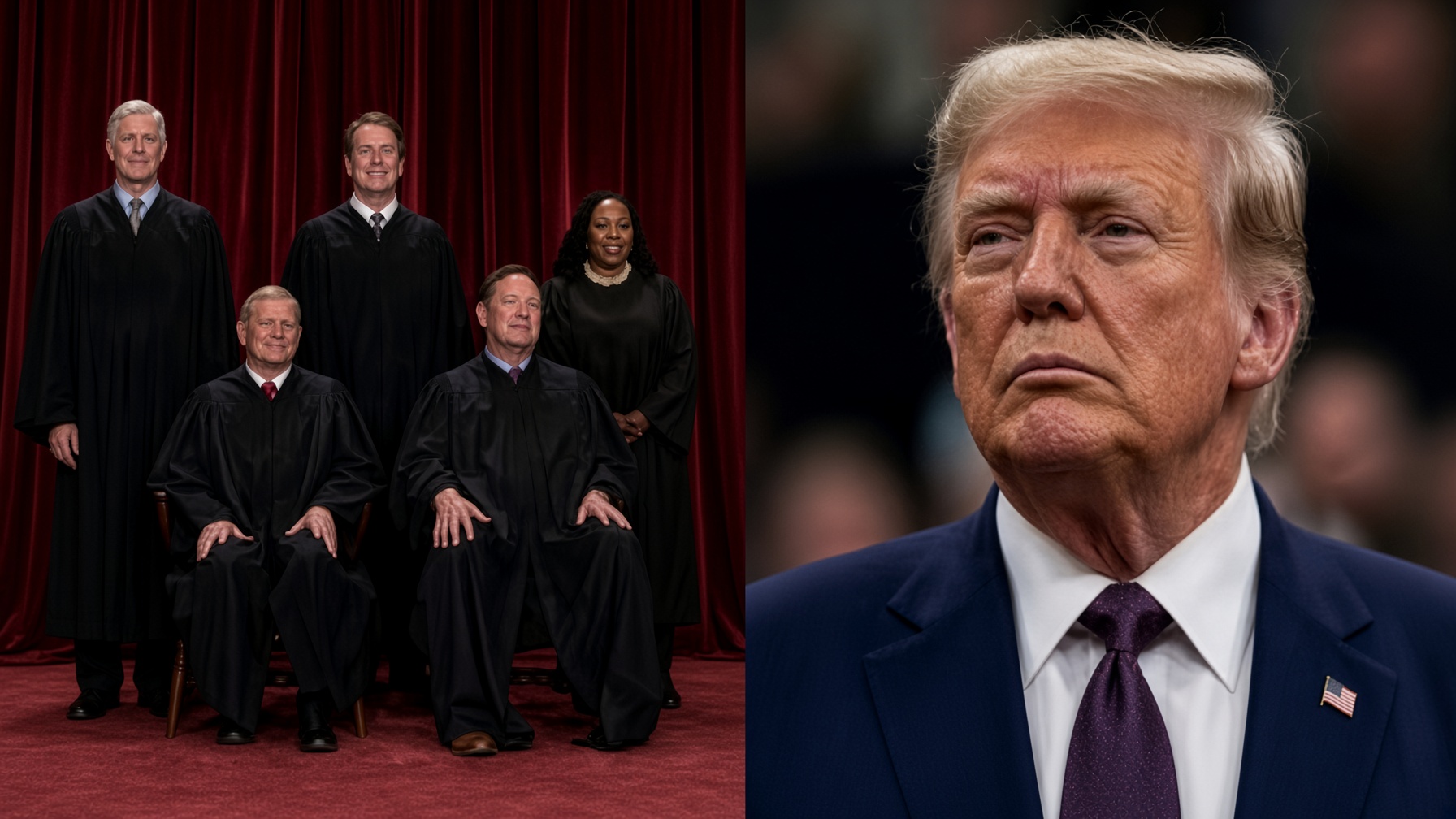
Writing for the conservative majority, Justice Amy Coney Barrett held that federal courts lack the constitutional authority to construct new private rights of action under the 1789 Alien Tort Statute (ATS) and concluded that the statutory text of the Torture Victim Protection Act of 1991 (TVPA) does not encompass secondary aiding-and-abetting liability. Barrett was joined by Chief Justice John Roberts and Justices Clarence Thomas, Samuel Alito, Neil Gorsuch, and Brett Kavanaugh.
“Today, we close the door that Sosa cracked and hold that courts may not create new causes of action for violations of international norms,” Barrett wrote, referencing the high court’s foundational 2004 precedent in Sosa v. Alvarez-Machain. “We also hold that the Torture Victim Protection Act of 1991, which contains an express cause of action, does not provide for aiding-and-abetting liability.”
Silicon Valley in the Crosshairs of Foreign Crackdowns
The underlying litigation stemmed from an expansive federal lawsuit brought by anonymous practitioners of Falun Gong, a spiritual movement outlawed and aggressively suppressed by the Chinese government.
The plaintiffs alleged that Chinese security forces subjected them to systematic surveillance, arbitrary detention, forced labor, and severe physical torture. Crucially, the complaint alleged that this state-sponsored campaign was enabled, designed, and optimized by San Jose-based networking giant Cisco Systems and several of its senior corporate executives.
According to court filings, plaintiffs claimed Cisco engineers specifically customized and integrated hardware and software for China’s sprawling public-security surveillance apparatus, widely known as the “Golden Shield” project. The lawsuit argued that the company designed bespoke monitoring modules engineered to identify, track, and catalog Falun Gong adherents, knowing the data would be used to detain and abuse them.
A federal district court in California originally dismissed the action, finding that the federal judiciary lacked jurisdiction over the foreign conduct. However, the U.S. Court of Appeals for the Ninth Circuit revived the case, ruling that both the ATS and the TVPA permitted secondary aiding-and-abetting suits against American corporate entities that knowingly facilitate gross violations of customary international law. Tuesday’s Supreme Court reversal terminates that theory.
Separation of Powers and Foreign Relations
In dismantling the Ninth Circuit’s holding, Barrett grounded the majority’s rationale in constitutional separation-of-powers principles. The power to establish private causes of action that allow civil litigants to recover monetary damages, Barrett reasoned, is an extraordinary legislative authority vested exclusively in Congress.
Allowing unelected federal judges to formulate common-law tort actions based on the fluid, evolving contours of international law, the majority emphasized, introduces profound judicial interference into international relations—an arena constitutionally reserved for the executive and legislative branches.
Because the Alien Tort Statute functions strictly as a jurisdictional jurisdictional grant passed by the First Congress in 1789, and because the TVPA’s explicit statutory text contains no language attaching secondary liability to non-state third parties, the court held that Cisco could not be subjected to trial in federal court.
The ruling aligns with the position advanced by the Department of Justice. Participating at oral argument in support of Cisco, the Solicitor General’s office urged the justices to rein in extraterritorial litigation, warning that permitting foreign nationals to haul American companies into domestic courtrooms over overseas operations disrupted delicate bilateral diplomacy, invited foreign states to initiate reciprocal retaliatory litigation against American interests, and chilled technological innovation and commerce abroad.
Corporate defense bars and multinational trade associations praised the decision as a decisive end to decades of legal ambiguity. For more than thirty years, global corporations facing commercial footprint overseas have operated under the threat of massive class-action suits alleging complicity in the sovereign abuses of foreign states, spending tens of millions of dollars defending complex jurisdictional motions.
Liberal Justices Issue Sharp Dissent
The court’s three liberal members registered a forceful dissent, warning that the majority’s holding effectively immunizes American corporations from accountability when they knowingly profit from atrocities abroad.
Leading the primary dissent, Justice Sonia Sotomayor, joined by Justice Elena Kagan, sharply criticized the majority for artificially stripping the TVPA of its remedial power. Focusing on the statutory language of the 1991 act, which authorizes civil lawsuits against any individual who “subjects an individual to torture,” Sotomayor argued that established tort principles consistently recognize that individuals who intentionally facilitate or assist severe abuse are directly subjecting victims to that harm.
“Because the plain text of this statute includes individuals who aid and abet the victim’s torture, I would affirm the Ninth Circuit’s judgment on this score as well,” Sotomayor wrote, warning that the majority had rewritten a congressional statute to create a liability shield for commercial entities.
Justice Ketanji Brown Jackson authored a separate opinion concurring in part and dissenting in part, joined by Kagan. While Jackson concurred that aspects of the Alien Tort Statute’s jurisdictional reach had to remain disciplined, she maintained that the TVPA was deliberately designed by Congress to provide an effective federal forum for victims of state-sponsored brutality, and that its scope was more than broad enough to encompass entities that provide material, knowing assistance to torture.
An End to the Human Rights Tort Era
Tuesday’s decision marks the culmination of a decades-long effort by conservative jurists to circumscribe the reach of U.S. courts in transnational human rights cases.
Beginning with Sosa in 2004, and continuing through Kiobel v. Royal Dutch Petroleum Co. in 2013 and Nestlé USA, Inc. v. Doe in 2021, the Supreme Court has methodically narrowed the avenue through which foreign abuses could be litigated on American soil.
By formally closing off aiding-and-abetting claims under both the ATS and the TVPA, the high court has established a rigid constitutional boundary: foreign victims of state-sponsored torture cannot seek redress against American corporations in federal courts unless Congress explicitly and unambiguously authorizes such lawsuits by statute.