Eight crew members died Monday morning when a B-52 bomber crashed shortly after takeoff from Edwards Air Force Base northeast of Los Angeles, marking the deadliest B-52 crash since 1982.
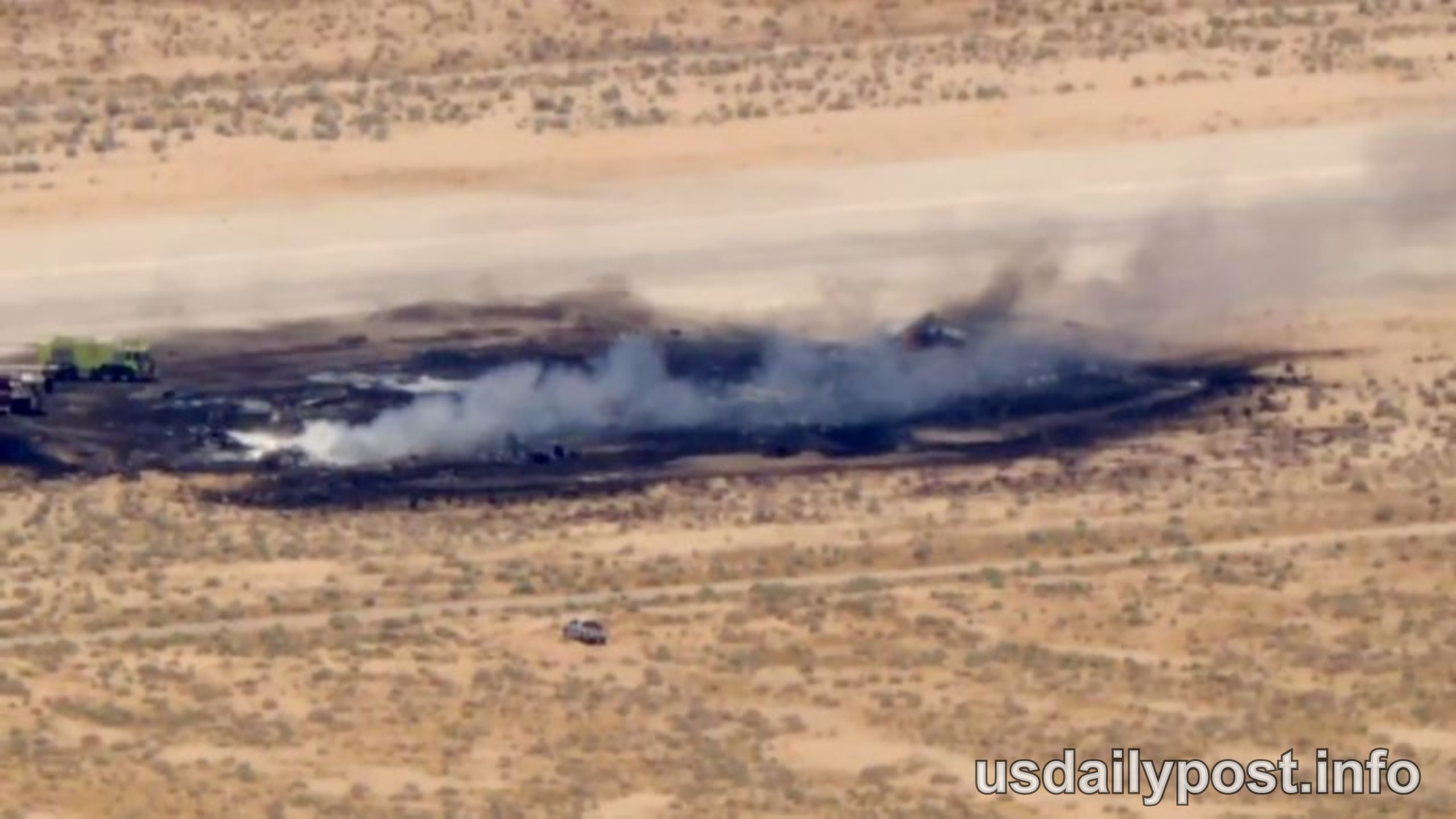
The aircraft was on a routine test mission supporting a radar modernization program when it crashed at 11:20 a.m. local time. The crash site left a large blackened scar on the sandy runway with residual smoke visible from news helicopters.

What Happened
The B-52 Stratofortress took off from the remote testing facility and crashed moments later. “It was tragic and unsurvivable,” Colonel James Hayes said at a news conference.

The crew consisted of a mix of military personnel, government civilians and government contractors. Boeing confirmed that two of its employees were aboard the flight, stating “We are in contact with their families and are offering support.”

Emergency teams responded immediately and the operation shifted to recovery efforts. Base officials began notifying families of the deaths.

The Response
Secretary of the Air Force Troy E. Meink and House Speaker Mike Johnson shared condolences on social media. California Governor Gavin Newsom offered sympathies to the Edwards community and thanked first responders.

The base has reopened but operations were suspended through Tuesday. Officials will conduct an investigation, though findings typically take around six months to release publicly.

About Edwards Air Force Base
Edwards serves as the primary testing site for Air Force aircraft, helicopters, drones and space shuttles due to its extensive runways. Retired US Navy Commander Richard Kolko noted the facility employs “some of the best test pilots and best engineers out there.”

Test flights typically carry experienced pilots along with civilian engineers or manufacturer personnel depending on what systems are being evaluated.
The B-52 Stratofortress
The B-52 first entered service in 1955 and remains one of the Air Force’s oldest active aircraft. The long-range heavy bomber carries a typical crew of five and can transport up to 70,000 pounds of ordnance.
The Air Force operated 76 B-52H variants before Monday’s crash. This version can carry conventional bombs, nuclear weapons and nuclear-armed cruise missiles and has flown missions in current Middle East operations.
Boeing ceased B-52 production in 1962. The Air Force is investing $48.6 billion in a modernization initiative focused on new engine development.
The most recent fatal B-52 accident occurred in 2008 when six personnel died in a crash near Guam. A non-fatal 2016 crash in Guam destroyed another B-52H, with replacement aircraft sourced from the “Boneyard” facility at Davis-Monthan Air Force Base in Arizona.