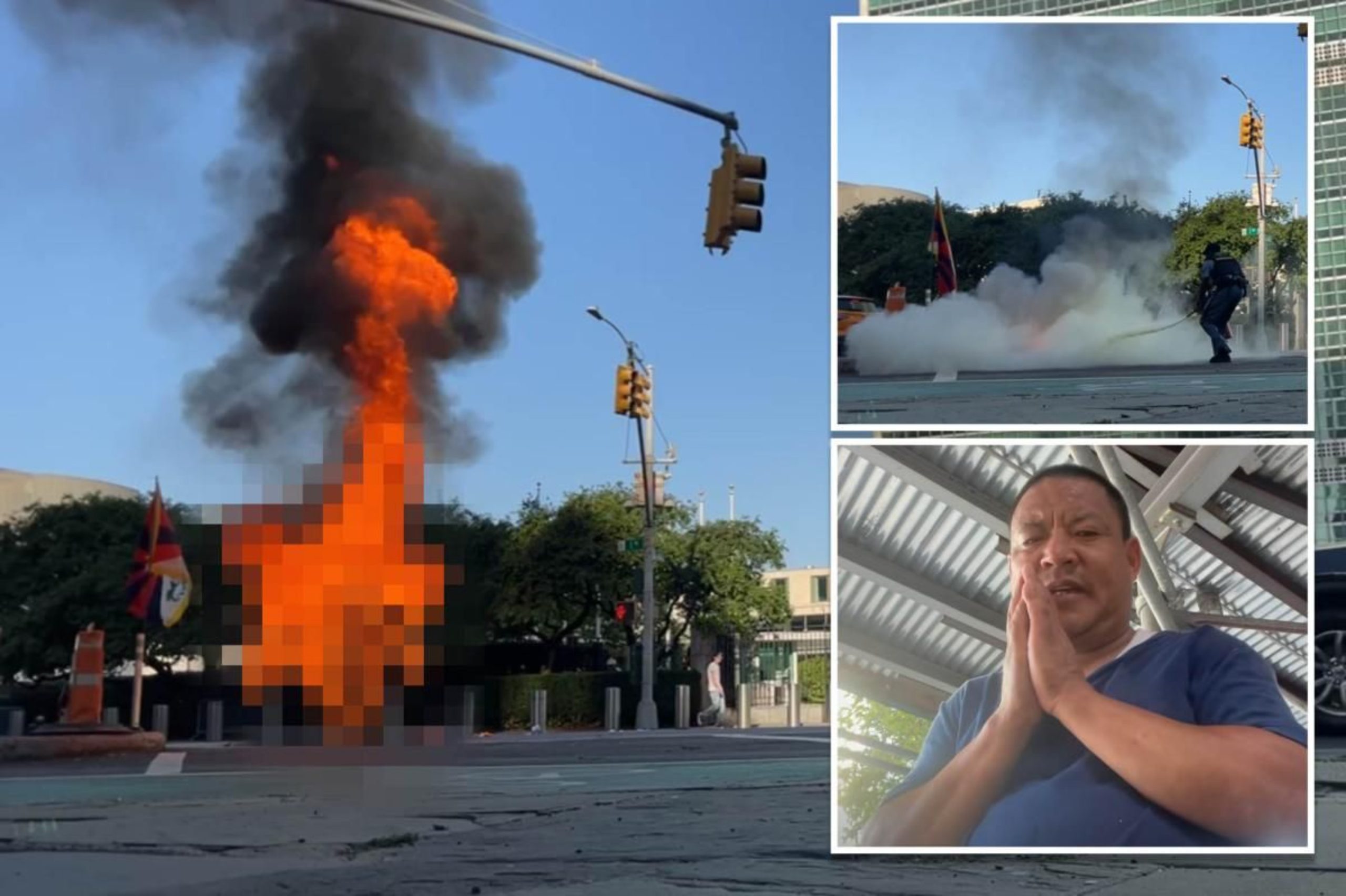
A 42-year-old Tibetan man died Thursday evening after setting himself on fire outside United Nations headquarters in Manhattan while protesting China’s control of Tibet.
The protester, identified by acquaintances as Lobga Rangzen, ignited himself on a Manhattan sidewalk during evening rush hour while wearing monastic robes and displaying a Tibetan flag. Video footage captured the incident as passing vehicles honked and pedestrians witnessed the scene unfold.
Rangzen, who had lived in the United States for approximately two decades and worked as an Uber driver, collapsed within seconds of catching fire. First responders arrived roughly 15 seconds later with fire extinguishers to extinguish the flames.

He was transported to Bellevue Hospital, where medical staff pronounced him dead. Police recovered scattered papers at the scene, including one bearing the words “CHINA OUT OF TIBET,” a slogan associated with the Tibetan Independence Movement.
Community Response
Lobsang Paljor, a fellow Uber driver and friend, told reporters that Rangzen consistently advocated for peaceful protest methods. “No, never aggression,” Paljor said. “But he was always like, you know, peaceful protest, as always.”
Paljor confirmed that Rangzen opposed Chinese control of Tibet and desired “a complete, free Tibet.” The Tibetan community in New York expressed shock at the dramatic method of protest.
Pattern of Protest
Since March 2009, more than 150 individuals have set themselves on fire in Tibet to protest what activists describe as Chinese occupation, according to Free Tibet, an advocacy organization.

These self-immolations typically occur as acts of political and religious resistance. Protesters have historically shouted slogans during these incidents, calling for the Dalai Lama’s return to Tibet and demanding human rights and freedom in the region.

The Chinese government has imposed severe penalties on individuals accused of assisting, encouraging, or publicizing such protests, Free Tibet reported.

Historical Context
Tibet’s relationship with China dates to the Seventeen Point Agreement of May 1951, which formalized the region’s incorporation following the People’s Liberation Army’s entry into Tibetan territory.

Prior to Communist Party rule, Tibet maintained de facto autonomy under its own administrative structures. The modern Tibetan Independence Movement gained international prominence during the 1990s through “Tibetan Freedom Concerts” held across the United States, featuring bands including U2, Red Hot Chili Peppers, and Rage Against the Machine.
Many individuals engaged in self-immolation come from secular professions rather than formal monastic backgrounds, yet these demonstrations remain significant expressions of political and spiritual resistance.
This story has been updated. CNN’s Staff contributed to this report.