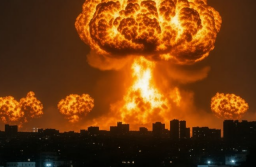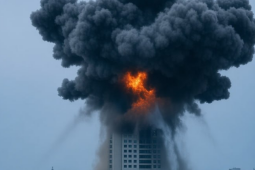
Explosions, missile alerts and thick columns of smoke were reported across parts of the Middle East as the conflict involving Iran, Israel and the United States entered another dangerous stage, raising fresh concerns that the fighting could expand beyond its current front lines.
Reports from Iran described explosions in and around Tehran and other locations, with fires and smoke visible over parts of the capital. Israeli and U.S. forces have continued targeting Iranian military and strategic infrastructure, while Tehran has responded with missile and drone attacks against Israel and U.S.-linked positions across the region.
The rapidly developing situation has placed millions of civilians on alert.
In Israel, air-raid warnings sent residents toward shelters as incoming missiles triggered repeated defensive operations. Israeli air-defense systems intercepted many of the projectiles, although falling debris and impacts caused damage and injuries in some areas.
The threat has also reached Gulf countries.
Authorities in Qatar, Bahrain, Kuwait, Saudi Arabia and the United Arab Emirates have reported heightened security measures and aerial threats linked to the conflict. Residents in affected areas have been urged to remain indoors, stay away from windows and follow instructions issued by local authorities.
The widening geographic scope of the fighting has increased fears that the conflict could develop into a broader regional war.
Lebanon has also remained a major point of concern. Hezbollah and Israel have exchanged attacks, while Israeli strikes have targeted areas associated with the militant group. Evacuation warnings in parts of Beirut have added to fears among civilians already living under the shadow of escalating violence.
The conflict is also creating significant economic consequences.
Oil prices have surged as markets respond to growing concerns over regional energy supplies and shipping routes. Investors are particularly focused on the security of the Strait of Hormuz, a critical passage for global oil transportation. Any prolonged disruption could have consequences for energy prices and economies far beyond the Middle East.
Financial markets have reacted nervously, reflecting uncertainty over how long the conflict could continue and whether additional countries or armed groups will become directly involved.
The information environment has become increasingly difficult to navigate as well. Videos and claims spreading across social media have provided glimpses of explosions and military activity, but officials and independent organizations have warned that some material may be unverified, misleading or taken out of context.
For governments across the region, the immediate challenge is preventing further escalation.
Diplomatic efforts continue alongside military operations, but the prospects for a rapid reduction in hostilities remain uncertain. Each new missile launch or airstrike carries the possibility of triggering another round of retaliation.
The central fear among regional and international officials is that an isolated incident could quickly become a much larger confrontation involving multiple nations.
For civilians, the uncertainty is becoming a daily reality. Sirens, emergency alerts, shelter warnings and disrupted services are increasingly common in areas affected by the fighting.
As the conflict continues, international leaders are urging restraint and warning of the potentially devastating consequences of further escalation.
The Middle East remains on high alert, with the next phase of the conflict likely to depend on decisions made in the coming hours and days.