ARABIAN SEA — Tensions between U.S. and Iranian naval forces have escalated following a reported confrontation involving an Iranian vessel that approached the USS Abraham Lincoln at close range, prompting American forces to open fire, according to two U.S. officials briefed on the incident.
The officials, who spoke to CBS News on condition of anonymity because they were not authorized to discuss the operation publicly, said the confrontation occurred earlier this week in the Arabian Sea. The incident reportedly began when an Iranian vessel moved dangerously close to the American carrier.
A U.S. Navy ship initially attempted to engage the Iranian vessel with its 5-inch Mark 45 naval gun. The officials said several rounds were fired but failed to hit the target. It remains unclear whether the initial gunfire was intended as warning shots or represented an attempt to directly disable the Iranian vessel.
The situation escalated when a U.S. military helicopter was deployed and fired two Hellfire missiles at the Iranian ship, according to the officials. Both missiles reportedly struck the vessel.
The condition of the Iranian ship and the status of its crew remain unknown. U.S. authorities have not publicly disclosed whether there were casualties.
U.S. Carrier Strike Group at Center of Tensions
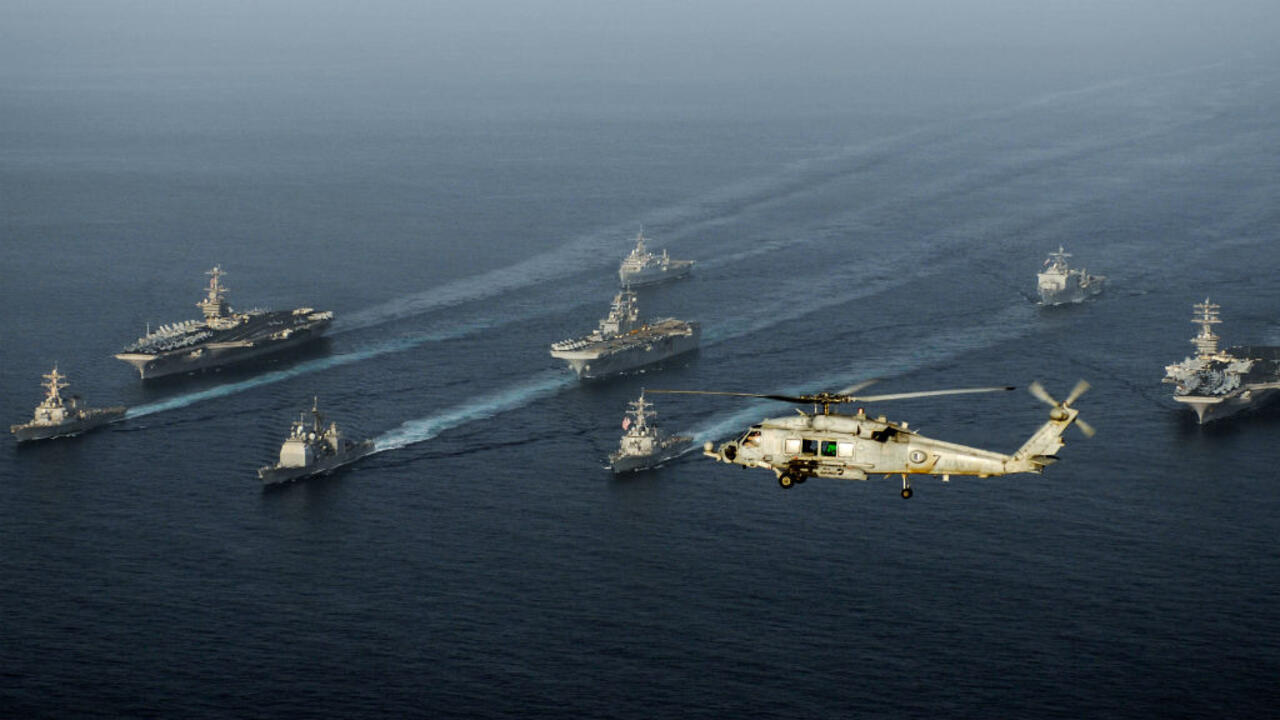
The USS Abraham Lincoln is one of the Navy’s most powerful aircraft carriers and serves as the centerpiece of a carrier strike group operating in the region. The group includes destroyers such as the USS Spruance and USS Michael Murphy, while additional guided-missile destroyers have also been operating in the Arabian Sea.
Officials have not identified which American vessel fired the Mark 45 gun during the reported confrontation.
The helicopter involved has also not been publicly identified. Both the Navy’s MH-60R Seahawk and Marine Corps AH-1Z Viper are capable of carrying Hellfire missiles, although there is no official confirmation regarding which aircraft participated in the strike.
U.S. Central Command, which oversees American military operations across much of the Middle East, declined to provide details when contacted about the incident. A defense official told CBS News that there was no information available for release.
Latest in a Series of Naval Confrontations
The reported encounter comes amid a broader pattern of increasingly dangerous interactions between U.S. and Iranian forces.
Earlier this year, an Iranian Shahed-139 drone reportedly approached the USS Abraham Lincoln in what U.S. Central Command characterized as aggressive and unnecessary maneuvering. An American fighter jet subsequently shot down the drone.
The Lincoln carrier strike group entered the region in late January as tensions between Washington and Tehran intensified. President Donald Trump publicly described the expanding U.S. naval presence as an “armada,” underscoring its role as a signal of American military strength.
Since U.S. military operations against Iran began, Central Command has reported extensive attacks against Iranian naval assets. U.S. officials have claimed that more than 90 Iranian vessels have been damaged or destroyed, although independent verification of those figures remains limited.
Questions Surround the Engagement
The reported use of a Mark 45 gun followed by Hellfire missiles highlights the rapidly changing nature of the confrontation. The Mark 45 has served aboard American surface warships for decades and can engage a variety of surface and aerial targets.
Hellfire missiles, meanwhile, provide a more precise strike capability and can be deployed against maritime targets under appropriate circumstances.
The incident nevertheless raises questions about the circumstances that led to the engagement, including the distance between the vessels, the Iranian ship’s behavior and the applicable rules of engagement.
Neither Washington nor Tehran has publicly provided a detailed account of what happened.
For military planners, the episode underscores the danger of miscalculation in increasingly crowded and contested waters. A confrontation that begins with warning shots or maneuvering can quickly escalate into a lethal exchange, particularly when heavily armed naval forces operate in close proximity.
For now, the full circumstances remain unclear. The status of the Iranian vessel, the fate of its crew and the precise sequence of events are expected to remain subjects of investigation as officials assess the encounter.
The reported clash serves as another warning of how quickly tensions between American and Iranian forces can escalate—and how decisions made within minutes at sea can carry consequences far beyond the Arabian Sea.