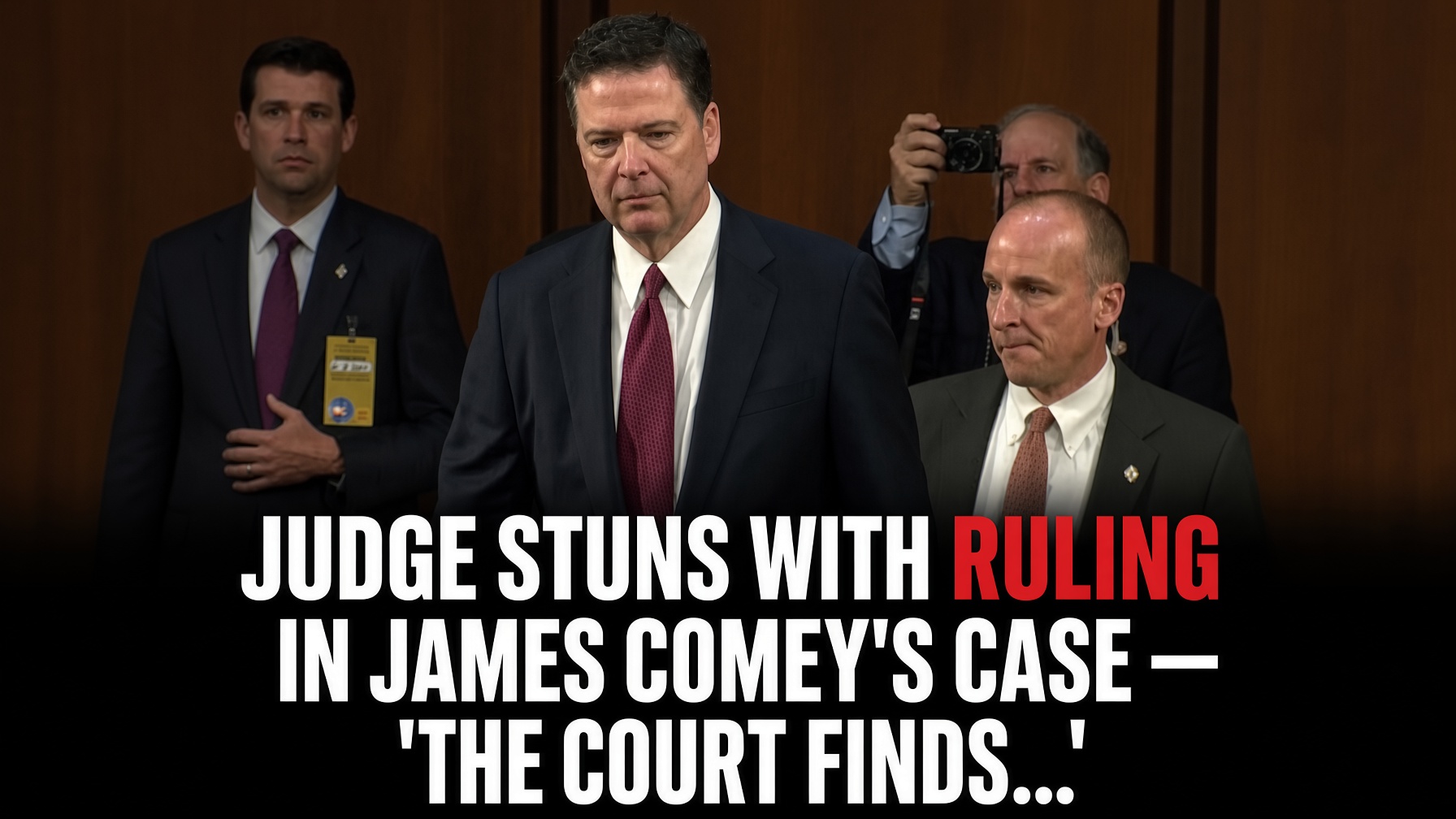
A federal judge has ruled that outside organizations and individuals will not be permitted to submit friend-of-the-court briefs in the high-profile criminal case involving former FBI Director James Comey.
U.S. District Judge Louise W. Flanagan issued the order Friday, rejecting efforts by nonparties to participate in the proceedings through amicus curiae filings. Such briefs allow outside experts, organizations and interested parties to offer legal arguments or specialized perspectives even though they are not directly involved in the case.
Flanagan determined that additional participation was unnecessary because both sides already have capable legal representation. “Defendant and the government are ably represented by competent counsel,” she wrote.
The decision effectively limits the case to arguments presented by federal prosecutors and Comey’s defense team as the proceedings move forward.
The ruling is notable because the prosecution has attracted significant national attention, given Comey’s former position as the nation’s top federal law enforcement official and his long-standing role in politically sensitive investigations.
Friend-of-the-court briefs are common in major cases before federal appeals courts and the U.S. Supreme Court, where outside legal scholars and organizations frequently provide additional research and analysis. They are considerably less common in federal district courts, where judges must manage trial schedules and focus on resolving disputes between the parties.
Legal scholars described Flanagan’s decision as unusual but within a judge’s authority.
Scott Holmes, a law professor at North Carolina Central University, said the court could have been concerned that allowing outside participation would open the door to a potentially large number of filings in an already closely watched case. At the same time, he acknowledged that carefully selected briefs can sometimes provide valuable research and legal analysis.
University of Richmond law professor Carl Tobias likewise characterized the ruling as uncommon, noting that outside parties can offer specialized expertise on complicated legal questions.
Flanagan’s decision also contrasts with proceedings involving Comey in 2025, when numerous former Justice Department officials, legal scholars, lawmakers, retired judges and former U.S. attorneys sought to file amicus briefs in an earlier criminal prosecution.
That case was ultimately dismissed after a judge determined that the prosecutor who secured the indictment had been unlawfully appointed.
The latest ruling does not address whether the allegations against Comey have merit. Instead, it represents a procedural decision governing who may participate in the litigation.
The underlying case centers on allegations that Comey threatened President Donald Trump through a social media post published in 2025. Comey has denied wrongdoing.
For now, the court has made clear that the case will proceed without additional legal arguments from outside groups, keeping the focus squarely on the prosecution and the defense as the proceedings advance.