WASHINGTON — A tense exchange between President Donald Trump and CNN anchor Jake Tapper has reignited a broader national debate over presidential influence, media independence and the role of journalism in holding political leaders accountable.
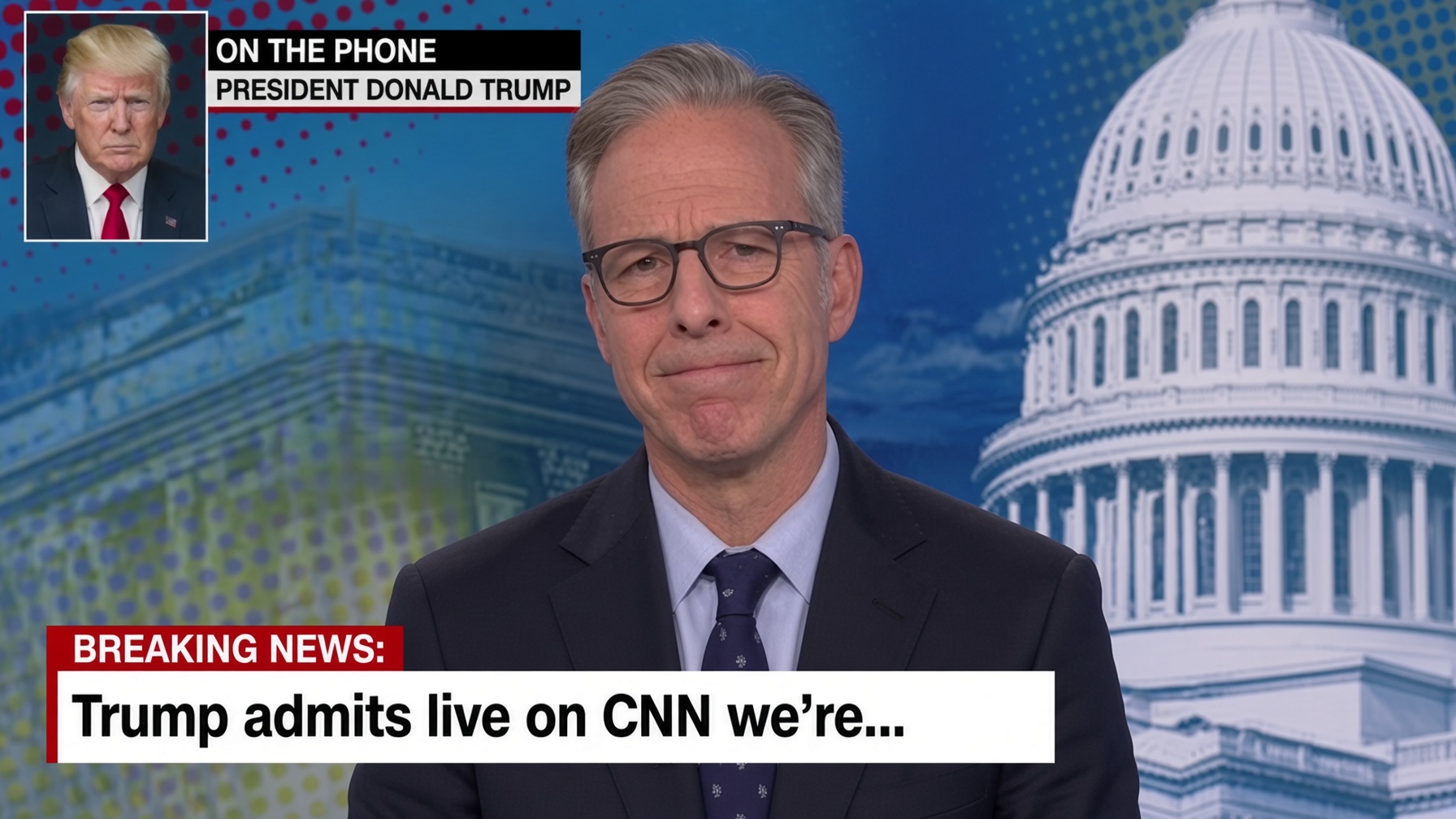
During a recent CNN appearance, Trump said his administration was working to push the network toward what he described as a “normal path,” a comment that quickly drew attention from media critics and political observers concerned about the relationship between the White House and independent news organizations.
“We’re trying to have CNN go on a normal path, and we’ll do that,” Trump said.
The remark prompted questions about what the president meant by influencing the direction of a major news organization and whether such comments could create pressure on journalists and media executives.
Tapper responded by thanking Trump for participating in the conversation, telling the president that he was on a “normal path” during the interview and expressing interest in having him return.
The exchange quickly circulated online, where critics accused Tapper of failing to challenge the president more aggressively. Some commentators argued that the interaction illustrated the difficulties journalists can face when interviewing powerful political figures, while others defended the exchange as an example of maintaining access to the president.
Trump had reportedly called into the program to discuss the death of Sen. Lindsey Graham and declined to address other subjects, including questions concerning U.S. military operations involving Iran. The limits placed on the conversation subsequently became another point of discussion among viewers and media commentators.
The controversy comes amid a broader debate over the independence of major American news organizations and their relationships with political leaders.
Critics of Trump argue that presidents should not attempt to influence the editorial direction of independent media outlets. They contend that the press has a constitutional responsibility to scrutinize government officials regardless of political affiliation and that maintaining journalistic independence is essential to a functioning democracy.
Trump’s supporters, however, have long argued that major media organizations have demonstrated political bias and that elected officials have every right to criticize coverage they believe is inaccurate or unfair. From that perspective, Trump’s comments represent criticism of the media rather than evidence of direct government control.
The discussion has also unfolded against the backdrop of major changes within the American media industry, including corporate mergers, ownership transitions and increasing competition from digital platforms and independent commentators.
Those developments have raised additional questions about how financial and political pressures can affect editorial decision-making.
For journalists, the challenge is particularly complicated. Access to senior government officials can provide valuable information and opportunities for public questioning, but critics warn that access should never come at the expense of independent reporting.
At the same time, media organizations face their own responsibility to maintain accuracy, transparency and professional standards while clearly separating reporting from commentary.
The latest Trump-CNN exchange therefore represents more than a dispute between a president and a television anchor. It reflects a continuing national argument over how political power and the press should interact in an increasingly polarized information environment.
Presidents will continue to criticize journalists, and journalists will continue to scrutinize presidents. The central question is whether both sides can maintain the boundaries that allow the public to receive independent, credible information.
As the debate continues, the exchange has once again placed press freedom, presidential influence and journalistic independence at the center of America’s political conversation.