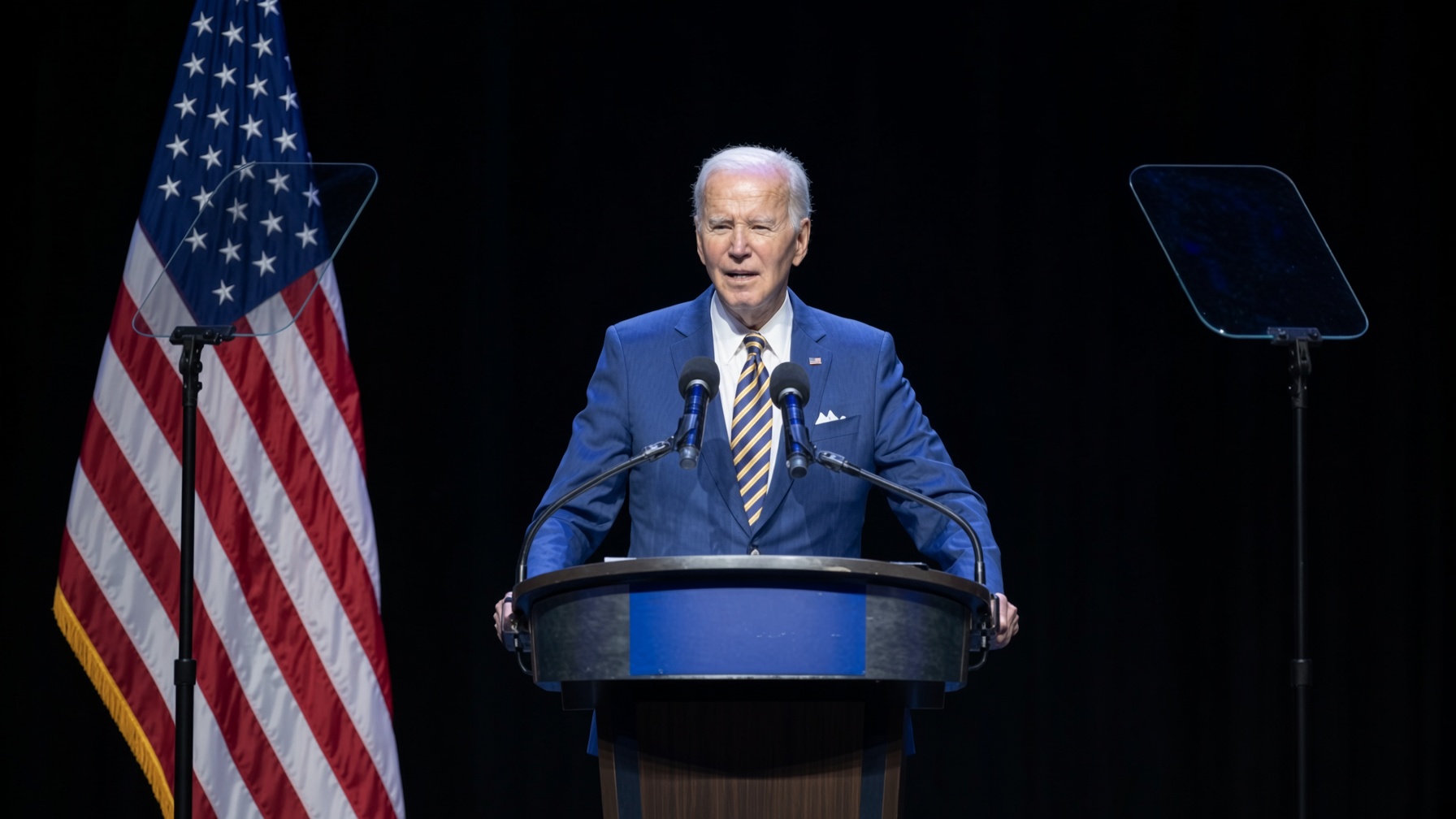
WASHINGTON — Former President Joe Biden sharply criticized President Donald Trump over his personal finances during a Democratic Party fundraiser in Maryland, accusing Trump of benefiting financially from his return to the White House and questioning the relationship between presidential power and private business interests.
Speaking at the event on June 27, Biden said Trump had “made billions of dollars” since returning to the White House. Biden described the claim as “stunning” and said the situation was embarrassing for the country. His remarks were part of a broader criticism in which he accused Trump of using the presidency to advance personal financial interests.
The comments immediately placed renewed attention on the longstanding debate over presidential ethics, conflicts of interest and the financial activities of Trump and members of his family.
Biden Raises Questions About Presidential Finances
Biden argued that elected office should serve the public rather than provide opportunities for personal enrichment. In his remarks, he characterized Trump’s financial activity as evidence of what he considers an unusually close relationship between political power and private business.
“Trump has made billions of dollars since returning to the White House,” Biden said, according to a transcript of the remarks. He also questioned whether financial considerations were among the reasons Trump sought the presidency.
Those statements represent Biden’s political assessment and allegations, rather than a finding by a government investigation or court that Trump improperly profited from the presidency.
The distinction is significant because Trump’s wealth and business interests have long been the subject of political debate, both during his first presidency and since his return to office.
Trump’s Business Interests Under Scrutiny
Questions about Trump’s finances have received renewed attention as his administration has pursued policies affecting industries in which his family and political allies have financial interests.
An ABC News report in July, citing mandatory financial disclosure forms, said Trump reported at least $2.2 billion in income for the previous year, roughly three times the amount reported for 2024. The report noted that Trump’s financial activities have generated questions from ethics experts and Democratic critics.
Separately, reporting in September has focused on financial interests involving members of the Trump family and the rapidly expanding artificial-intelligence and defense-technology sectors. The Guardian reported that Trump family members and allies have benefited from investments and government-linked business opportunities, while Democratic lawmakers and ethics watchdogs have raised questions about potential conflicts of interest.
Such reporting does not, by itself, establish that any particular transaction violated federal law.
Trump Camp Rejects Democratic Criticism
Trump and his administration have repeatedly disputed accusations that his policies are designed to improperly benefit his personal interests.
The White House has emphasized Trump’s policy agenda and economic objectives while defending his administration’s actions. The administration has also argued that its policies are producing economic benefits for Americans.
Trump himself has continued to promote his business background while presenting his return to government as an effort to change federal economic policy. His public statements frequently connect his business experience with his approach to trade, investment and economic policy.
The competing arguments illustrate the broader political dispute surrounding Trump’s second presidency: supporters emphasize his business experience and policy objectives, while Democratic critics have focused heavily on ethics, financial disclosures and possible conflicts between government decisions and private interests.
A Continuing Political Divide
Biden’s remarks also underscore the continuing political confrontation between the former president and his successor.
Although Biden has largely withdrawn from day-to-day political activity, Trump continues to invoke his predecessor frequently. A Reuters review published September 21 found that Trump had mentioned Biden nearly 900 times during 2026, often in connection with economic conditions, immigration and foreign policy.
The financial debate is therefore part of a larger political argument over the direction of the country and the responsibilities of public officials.
For Biden, Trump’s financial activities raise questions about presidential ethics and public trust. For Trump and his supporters, such criticism represents a continuation of partisan opposition to his administration.
As scrutiny of presidential finances continues, the central questions are likely to involve documented financial disclosures, specific business transactions and whether government decisions create legally or ethically significant conflicts. Those questions remain separate from political accusations and require evidence-based examination of individual cases.