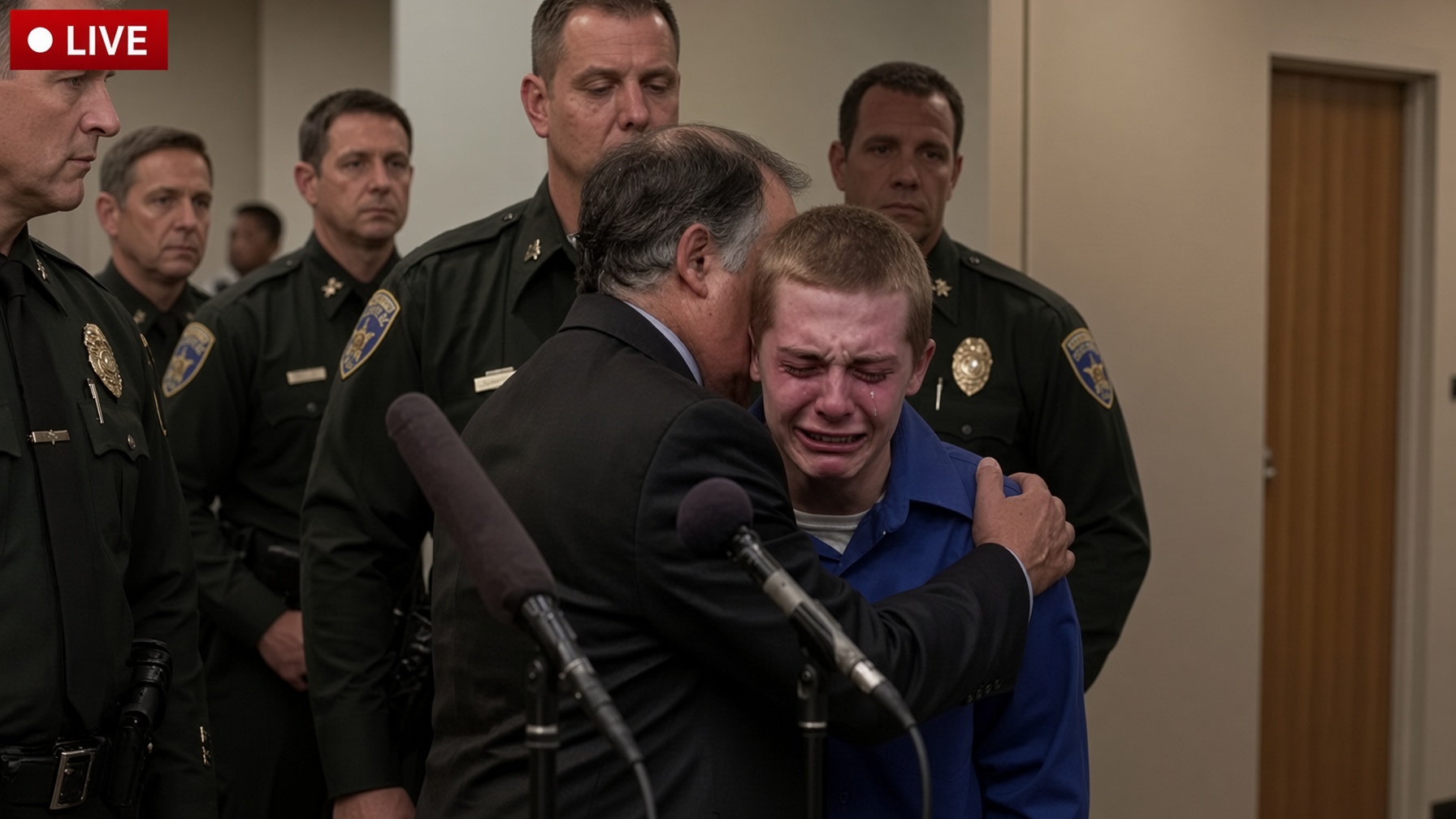
NATIONAL — A state court’s decision to impose an extraordinary 452-year prison sentence on a teenage offender has ignited fierce debate across the American legal community, reviving fundamental disputes over whether juvenile offenders possess the capacity for rehabilitation or should be permanently removed from society for egregious criminal acts.
The judicial ruling effectively ensures that the defendant will spend the rest of his natural life behind bars without any realistic expectation of parole. The sentence emerged from a high-profile prosecution in which the state secured multi-count felony convictions spanning violent, aggravated charges.
By applying consecutive statutory maximums across each distinct count rather than allowing the sentences to run concurrently, the presiding judge handed down a term that extends across four and a half centuries—a structural reality defense attorneys have characterized as cruel, unusual, and practically equivalent to lifetime incarceration without recourse.
The Prosecution’s Arguments for Absolute Retribution
During prolonged sentencing hearings, prosecutors presented a relentless case for maximum deterrence, asserting that the defendant’s actions crossed an unforgivable threshold of societal violation.
The state called forward survivors, medical examiners, and surviving family members to deliver emotionally wrenching victim-impact statements. The testimony detailed irreversible physical trauma, profound psychological grief, and persistent community fear left in the wake of the crimes. State attorneys argued that the severity, cruelty, and premeditation of the conduct demanded an uncompromising institutional response, maintaining that mitigating circumstances tied to youth could not shield an offender from full accountability.
Prosecutors further contended that public safety and the restoration of judicial justice necessitated permanently incapacitating the teenager. By stacking multiple decades per individual count, prosecutors argued that justice could only be validated if every distinct victim received an individualized measure of penal retribution, effectively precluding any possibility of community reintegration.
The Defense and Developmental Science
In stark contrast, the defendant’s legal team argued that sentencing an adolescent to hundreds of years in adult penitentiaries ignores established neurological science and Supreme Court precedent regarding adolescent development.
During the defense’s allocation phase, attorneys introduced expert testimony from adolescent psychologists and neuroscientists detailing the physiological development of the human brain:
-
Prefrontal Cortex Immaturity: Cognitive research demonstrates that the brain’s frontal lobe—the region responsible for impulse control, long-term consequence evaluation, and emotional regulation—does not fully mature until an individual reaches their mid-to-late twenties.
-
Heightened Susceptibility to External Coercion: Adolescents are statistically far more vulnerable to peer pressure, environmental chaos, and impulsive decision-making, which defense experts argue diminishes subjective moral culpability.
-
Documented Potential for Reform: Clinical studies indicate that juvenile offenders exhibit significantly higher capacities for psychological maturation and sustained behavioral rehabilitation compared to adult counterparts convicted of comparable offenses.
Defense counsel argued that stacking consecutive sentences to reach 452 years serves as an unlawful circumvention of landmark judicial precedents, specifically targeting decisions that curtail mandatory life sentences without parole for non-homicide juvenile crimes. They argued that a term extending hundreds of years represents a purely de facto life sentence, designed to subvert constitutional protections that require judges to afford youthful offenders a “meaningful opportunity to obtain release.”
Constitutional Battles and Civil Rights Scrutiny
The ruling has mobilized civil rights organizations, legal scholars, and juvenile justice reform advocacy groups, who signaled plans to file amicus curiae briefs in upcoming appellate challenges.
Constitutional scholars point to evolving Eighth Amendment jurisprudence governing cruel and unusual punishment. While the judicial record allows for substantial trial-judge discretion in fashioning consecutive sentences, critics argue that centuries-long terms for teenagers contradict global human rights standards and modern correctional doctrines that champion restorative justice.
Conversely, law-and-order advocates and victims’ rights organizations strongly defended the judicial outcome. They argue that when adolescents commit horrific crimes, the protective privileges of minority status must yield to the rights of victims and the rule of law. Proponents insist that erasing the severity of consecutive terms risks devaluing the suffering endured by affected communities.
The case now transitions to state and federal appellate courts, where judges will evaluate whether stacking sentences to a biological impossibility violates the constitutional threshold established for juvenile sentencing. As the appeals proceed, the 452-year penalty stands as an extreme symbol of the deep ideological divide over whether the American penal system should prioritize total retribution or preserve an avenue, however distant, for adolescent redemption.