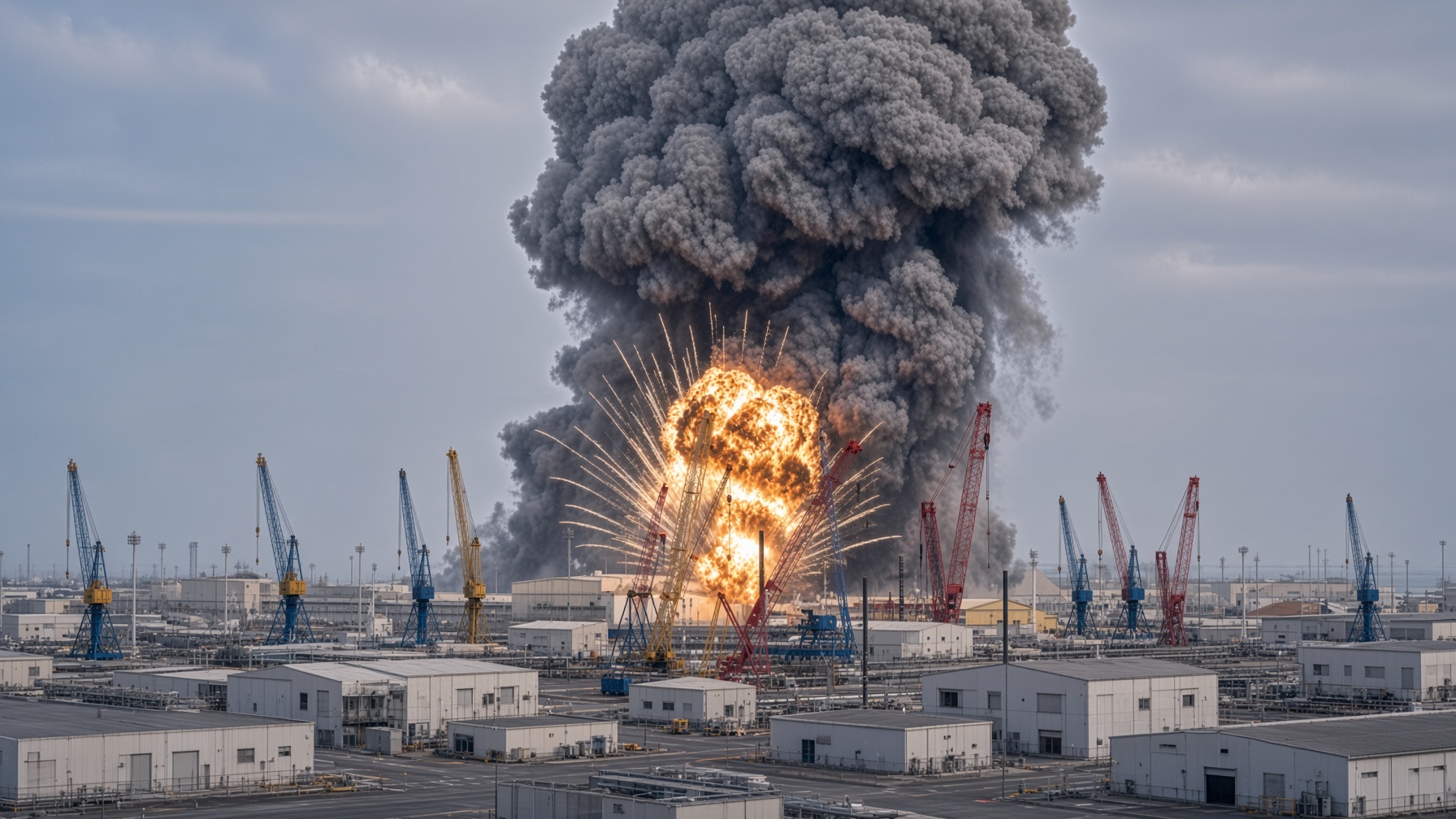
MANAMA, Bahrain — The Persian Gulf has shifted abruptly toward an active war footing after Iranian armed forces launched synchronized waves of ballistic missiles and one-way attack drones against major installations hosting American forces across the region. The multi-axis bombardment activated integrated air-defense networks across several allied capitals, testing regional missile shields and pushing the strategic Middle Eastern waterway toward an open-ended crisis.
The strikes signify a severe collapse of local containment, underscoring Tehran’s strategic doctrine of projecting kinetic retaliation into neighboring host countries rather than absorbing strikes solely within its borders. By launching saturation volleys at forward positions across Bahrain, Qatar, Kuwait, and the United Arab Emirates, Iran has effectively widened its operational theater to encompass the entire Gulf littoral.
Air-defense sirens sounded across industrial and urban corridors in the United Arab Emirates as early-warning arrays tracked incoming ballistic vectors and low-flying suicide drones. Layered regional defense systems—anchored by U.S.-supplied Terminal High Altitude Area Defense (THAAD) units and Patriot PAC-3 batteries—launched multiple interceptors to eliminate threats entering domestic airspace. Defense officials placed particular emphasis on safeguarding Al Dhafra Air Base, a vital complex south of Abu Dhabi that hosts U.S. aerial refueling tankers, airborne early warning aircraft, and advanced combat fighter squadrons.
While Iranian state media reported direct, precision impacts against military assets at Al Dhafra, Western defense analysts and regional authorities advised restraint, noting that verified assessments of runway damage, operational delays, or hangar destruction depend on incoming commercial satellite imagery.
Strategic Command Hubs Under Fire
The assault placed the Kingdom of Bahrain under profound operational pressure. The island nation serves as the headquarters for Naval Support Activity Bahrain, the permanent home of U.S. Naval Forces Central Command and the U.S. Fifth Fleet, which oversees maritime security across the Persian Gulf, the Red Sea, and the Gulf of Oman. Alongside operations at Shaikh Isa Air Base, Bahrain remains a cornerstone of American deterrence in the region.
Throughout the attack, Bahraini surface-to-air missile units operated in close coordination with forward-deployed U.S. Navy Aegis guided-missile destroyers positioned offshore, intercepting inbound trajectories before they could impact coastal installations.
Further north, Qatar’s Al Udeid Air Base confronted a comparable threat. As the forward operating headquarters for U.S. Central Command (CENTCOM) and home to the Combined Air Operations Center (CAOC)—the command post directing all coalition aerial missions across the theater—the base is among Washington’s most strategically sensitive overseas assets. Service members moved to reinforced subterranean bunkers as air-defense batteries engaged hostile contacts above Doha.
Kuwait’s perimeter defenses were likewise engaged. Interceptors neutralized multiple incoming tracks near facilities that support coalition ground operations, pre-positioned logistics stockpiles, and military transit. The synchronized strikes have forced Gulf Cooperation Council partners to expend high-value interceptor inventories to shield sovereign territory from attacks tied to an escalating confrontation.
Commercial Chokepoints and Economic Vulnerability
Beyond the immediate tactical fallout, the cross-border strikes have created severe disruptions across international energy corridors, most critically within the Strait of Hormuz. Handling nearly one-fifth of global petroleum shipments, the narrow passage remains fully within range of Iranian coastal anti-ship missile sites and Islamic Revolutionary Guard Corps fast-attack craft.
With commercial merchant vessels facing mounting risks of collateral hits or drone harassment, shipping through the channel has slowed markedly:
-
Maritime Diversions: International container fleets and petroleum majors have halted scheduled transits, anchoring crude carriers outside the Gulf of Oman or rerouting them around the Cape of Good Hope.
-
Insurance Surcharges: Marine underwriters have increased war-risk premiums toward historic highs, adding significant operational expense to crude and liquefied natural gas shipments.
-
Commodity Market Fluctuations: International energy exchanges experienced immediate intraday volatility as commodity traders weighed the consequences of protracted naval blockades or mine-laying in key transit lanes.
The coordinated strikes underscore the narrowing limits of conventional deterrence throughout the Persian Gulf. With allied and regional forces facing depleting interceptor magazines against mass-produced drone and ballistic swarms, the potential for catastrophic miscalculation grows. A single missile breaching defensive shields to cause significant casualties could permanently dismantle remaining diplomatic backchannels, plunging the region into a broader war.