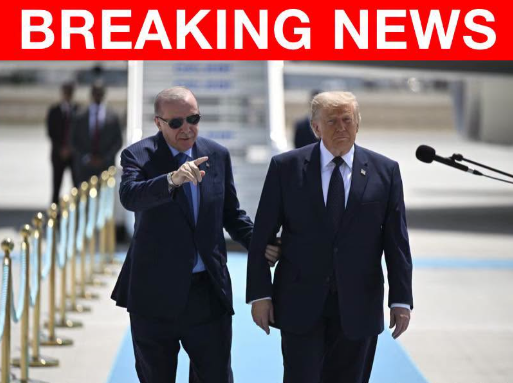
A video from a recent NATO arrival ceremony has attracted significant attention online, quickly becoming one of the most widely discussed moments from the international summit. The footage has prompted extensive debate across social media, television commentary, and political circles, with viewers offering sharply different interpretations of what occurred during the official welcome.
The clip shows former President Donald Trump and Turkish President Recep Tayyip Erdoğan during the ceremonial greeting. Some commentators have interpreted the interaction as Erdoğan directing Trump toward his designated position on the welcome carpet. Others argue the moment has been taken out of context, saying brief interactions between world leaders during carefully choreographed diplomatic ceremonies are common and that short video clips often fail to capture the full sequence of events.
The differing interpretations have fueled renewed discussions about how viral political videos shape public perception. In today’s media environment, brief clips can spread rapidly and generate millions of views within hours, often leading to intense debate before longer footage or additional context becomes widely available.
The incident has also revived broader conversations about the age, health, and physical demands placed on national leaders. Questions about the fitness of presidential candidates have become a recurring topic in recent election cycles, with both major political parties facing scrutiny over the age and stamina of their candidates. Supporters generally caution against drawing sweeping conclusions from isolated public moments, while critics argue that voters naturally pay attention to a candidate’s public appearances and demeanor.
Political communication experts have noted that ceremonial events involving heads of state are highly structured, with precise protocols governing where leaders stand, when they move, and how official photographs are staged. Because these ceremonies involve multiple participants, security personnel, and diplomatic staff, brief moments of direction or adjustment can occur without necessarily indicating anything unusual. At the same time, critics and supporters alike often interpret such moments through the lens of broader political narratives.
The discussion surrounding the video reflects the increasingly polarized nature of political discourse, where the same footage can produce dramatically different conclusions depending on the audience. Some viewers see the interaction as noteworthy and deserving of scrutiny, while others view it as an ordinary diplomatic exchange that has been exaggerated through social media commentary.
As the summit continues, the viral clip remains part of a larger conversation about leadership, transparency, media coverage, and the role of short-form video in shaping public opinion. Regardless of political perspective, the episode demonstrates how a few seconds of footage from a high-profile international event can quickly become the focus of nationwide discussion, often competing for attention with the substantive policy issues being addressed at the summit itself.