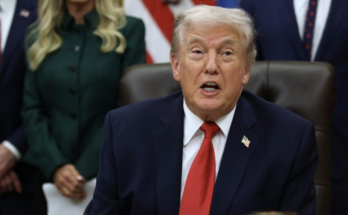
WASHINGTON — President Donald Trump said the U.S. Navy intercepted an Iranian-flagged cargo vessel in the Gulf of Oman after the ship allegedly refused repeated orders to stop near a U.S. naval blockade in the strategically important region.
According to the account provided, the guided-missile destroyer USS Spruance confronted the cargo ship TOUSKA after several warnings were issued over a period of roughly six hours. U.S. officials reportedly ordered the vessel to halt, but the Iranian crew allegedly refused to comply.
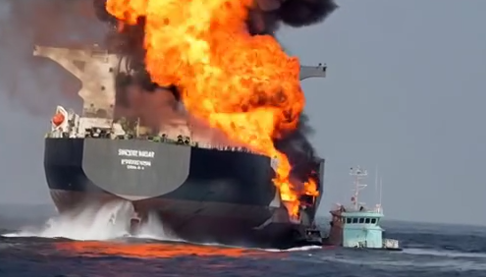
The confrontation escalated when the American warship fired its 5-inch deck gun, striking the vessel’s engine room and disabling the ship, according to the account. U.S. Marines subsequently boarded the cargo ship and took control of the vessel.
Trump characterized the operation as a direct enforcement action, saying the Iranian crew had been given sufficient warning before U.S. forces acted.
The reported incident comes amid heightened tensions surrounding the Strait of Hormuz, one of the world’s most important maritime chokepoints. The waterway carries a significant share of global energy shipments, making any military confrontation in or around the region a potential threat to international commerce and energy markets.
The episode also illustrates the risks facing commercial and military vessels operating in an increasingly contested maritime environment. A confrontation involving a U.S. warship and an Iranian-flagged vessel could have broader diplomatic and security implications, particularly if Tehran disputes Washington’s account of the incident.
The reported seizure has not, based on the material provided, been independently verified by multiple sources, and details surrounding the vessel’s cargo, destination and legal status remain unclear.
Nevertheless, the operation would represent a significant demonstration of U.S. naval power if confirmed. Boarding and disabling a commercial vessel during an active confrontation requires careful coordination and carries the risk of further escalation.
The incident is likely to draw close attention from Iran, regional governments and international shipping companies already monitoring developments around the Gulf of Oman and Strait of Hormuz.
For the Trump administration, the reported operation reinforces its stated emphasis on using military power to enforce U.S. security objectives. For Tehran, however, the interception of an Iranian-flagged ship could become another flashpoint in an already strained relationship.
As officials assess the situation, the key questions will be whether the confrontation leads to additional maritime incidents, how Iran responds and whether commercial shipping through the region remains secure.
If confirmed, the interception could mark another major development in the escalating struggle over control, security and freedom of navigation in one of the world’s most strategically vital waterways.