LOCAL COMMUNITY — What was intended as an intimate, tongue-in-cheek memorial between a grieving family and their late father has ignited an extraordinary standoff with cemetery trustees, sparking a contentious debate over where private grief ends and the public duty of community memorial grounds begins.
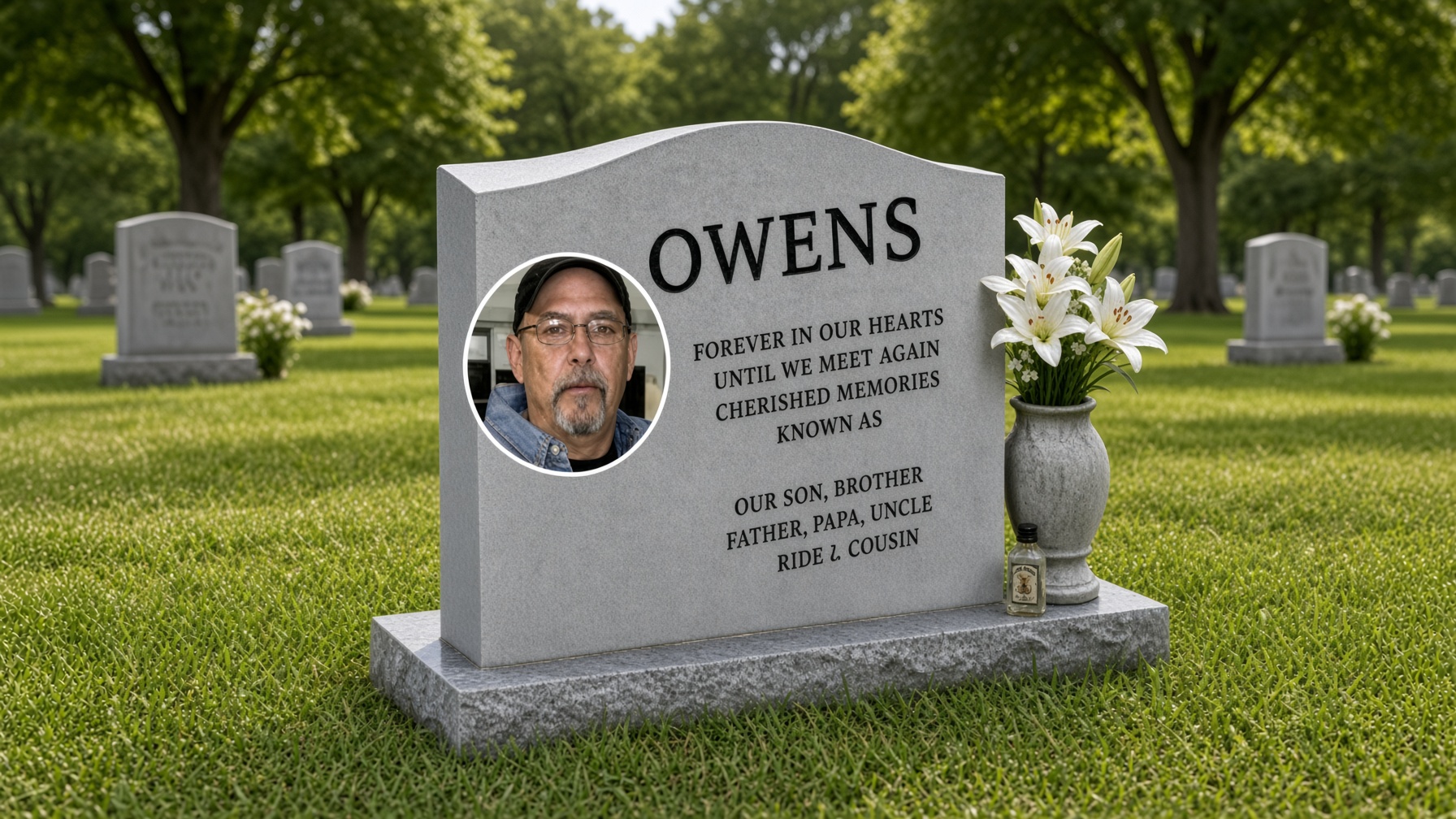
At the center of the dispute is an otherwise conventional granite headstone erected to honor a father celebrated by his children for his irreverent, dry sense of humor. Etched into the polished face of the monument is a heartfelt poem composed of multiple short lines. Read horizontally, the verses offer a seemingly solemn reflection on life, memory, and enduring love. Read vertically, however, the first letter of each stanza forms an acrostic—a deliberate cryptographic wordplay that spells out an unambiguous profanity.
For the surviving family, the inscription is the ultimate homage to a patriarch whose trademark wit defined his life. For cemetery administrators tasked with upholding community decorum, the marker represents a direct violation of institutional standards that threatens to compromise the solemnity of shared memorial grounds.
A Cryptic Tribute Hidden in Plain Sight
The dispute began after visitors and maintenance staff noticed the pattern embedded in the text. According to the family, the hidden message was never designed to cause a public spectacle or demean casual passersby. Rather, it preserved a cherished, decades-long inside joke that the father regularly shared with his children around the dinner table.
“Our dad had an incredible sense of humor; he was never the kind of person who wanted a stiff, generic epitaph that said nothing about who he actually was,” a relative close to the dispute explained. “To anyone just walking past and paying respects, it looks like a lovely, peaceful poem. But to those of us who knew him, it delivers that one last wink and smile from beyond. It wasn’t meant to insult anyone. It was meant for him, and it was meant for us.”
Modern memorial culture has increasingly shifted away from standard scripture and dates, embracing customized artwork, poignant nicknames, and unconventional slogans that highlight individuality. However, when private sentiment relies on language traditionally barred from public display, the tension between personal remembrance and community space becomes acute.
The Duty of the Grounds
Cemetery trustees and municipal boards face a distinct set of operational and ethical mandates. While burial plots are purchased by individuals or families, the land itself operates as a shared, quasi-public sanctuary governed by strict bylaws, deed restrictions, and administrative codes.
Trustees argue that their enforcement of monument standards is not intended to police the emotional legitimacy of a family’s mourning process, but rather to guarantee equity, dignified aesthetics, and mutual respect for hundreds of neighboring families who visit surrounding gravesites.
“Every family walking through those gates arrives in a state of profound vulnerability,” an administrator familiar with cemetery operations noted. “Trustees hold a legal and moral obligation to maintain an atmosphere free from offensive language, regardless of how clever or veiled the execution might be. If an exception is carved out for one marker simply because an offensive phrase is encoded, the board loses the legal footing required to regulate inscriptions across the entire property.“
Reports indicate that cemetery officials have approached the family requesting an amendment to the stone—suggesting either replacing the offending tablet or grinding down the vertical alignment of the lettering so the acrostic is broken. The family, viewing the demand as an affront to their father’s memory and an infringement on their personal expression, has firmly resisted any alteration.
The Legal and Contractual Fault Lines
Should the impasse persist, the disagreement could migrate from cemetery grounds into a civil courtroom, where disputes over monument inscriptions navigate a thorny intersection of contract law, property rights, and First Amendment jurisprudence.
Legal analysts emphasize that resolution typically hinges on the specific language contained in the cemetery’s governing deed and purchase contract:
-
Contractual Discretion: Private and municipal cemeteries routinely include covenants granting trustees the broad right to approve, reject, or remove any monument deemed “injurious to the appearance of the grounds” or “inconsistent with community decency.”
-
First Amendment Boundaries: In municipally owned or state-operated cemeteries, attempts to restrict speech can trigger constitutional scrutiny, though courts have frequently held that cemetery regulations constitute reasonable, content-neutral “time, place, and manner” restrictions designed to preserve solemnity.
-
Property vs. License: In most jurisdictions, plot purchasers acquire an exclusive easement or license for burial, rather than fee-simple ownership of the soil, giving operators substantial authority over structural additions.
If trustees move to remove or modify the marker unilaterally, they risk drawn-out litigation and accusations of administrative heavy-handedness. Conversely, acceding to the family’s wishes could establish a precedent that leaves cemetery boards powerless against future unconventional inscriptions.
Navigating the Architecture of Memory
Beyond the legal technicalities lies the complex psychology of remembrance. A headstone is one of the few enduring, physical markers an ordinary individual leaves behind. In an era where individuality is celebrated, many families view the traditional cemetery landscape as overly sterile, demanding memorials that authentically capture the eccentricities and flaws of the deceased.
Yet that desire collides directly with the nature of a cemetery as a collective commons. While the family reads the stone through the warm lens of shared domestic memories, neighboring mourners—seeking solace for their own losses—read it as an unwelcome intrusion of coarse language into sacred ground.
As both parties deliberate their next steps, the headstone remains standing in the quiet lawn, catching the morning light and drawing curious glances from those who know how to look. The ongoing conflict underscores an enduring cultural dilemma: When a life’s final statement is chiseled permanently into stone, who ultimately holds the veto—the family that mourns, or the community that shares the ground?