WASHINGTON — In a major ruling limiting the reach of federal courts over overseas corporate conduct, the U.S. Supreme Court held Tuesday that foreign plaintiffs cannot use federal statutes to sue American corporations for aiding and abetting alleged human rights abuses abroad.
The 6–3 decision in Cisco Systems, Inc. v. Doe substantially narrows the avenues available to international litigants seeking civil redress in U.S. courts under the Alien Tort Statute (ATS) and the Torture Victim Protection Act of 1991 (TVPA). Writing for the conservative majority, Justice Amy Coney Barrett affirmed that federal judges lack the constitutional authority to create secondary liability standards under the ATS or expand statutory causes of action beyond the express text approved by Congress.
The ruling formally reverses a decision by the U.S. Court of Appeals for the Ninth Circuit, which had cleared the way for a high-profile human rights lawsuit against California-based technology giant Cisco Systems to proceed to discovery.
Decades-Old Statutes at the Center of Global Tech
The underlying litigation was initiated by unnamed practitioners of Falun Gong, a spiritual movement banned and targeted for suppression by the Chinese government. The plaintiffs alleged that Cisco Systems and its senior executives designed, customized, and supplied specialized networking and surveillance technology—widely referred to as the “Golden Shield” or “Great Firewall”—knowing it would be deployed by Chinese security agencies to track, arrest, and torture dissidents.
Cisco denied wrongdoing, contending that it sold standard commercial networking hardware and that federal courts are not the proper forum to adjudicate foreign state actions or secondary liability theories.
Central to the dispute were two federal laws: the ATS, an 18th-century statute originally crafted to address piracy and diplomatic assaults, and the TVPA, passed in 1991 to establish civil liability for state-sanctioned torture and extrajudicial killing.
Addressing the ATS, Barrett held that courts cannot fashion new civil remedies for alleged breaches of customary international law.
“Today, we close the door that Sosa cracked and hold that courts may not create new causes of action for violations of international norms,” Barrett wrote, referring to the high court’s foundational 2004 precedent in Sosa v. Alvarez-Machain. “We also hold that the Torture Victim Protection Act of 1991, which contains an express cause of action, does not provide for aiding-and-abetting liability.”
Barrett anchored the majority’s reasoning in the constitutional separation of powers, writing that creating statutory rights of action “is an extraordinary act that places great stress on the separation of powers” and remains an exclusive prerogative of the legislative branch. She underscored that allowing private lawsuits against domestic firms for foreign state activity threatens to entangle courts in delicate international diplomacy, an area constitutionally reserved for Congress and the executive branch.
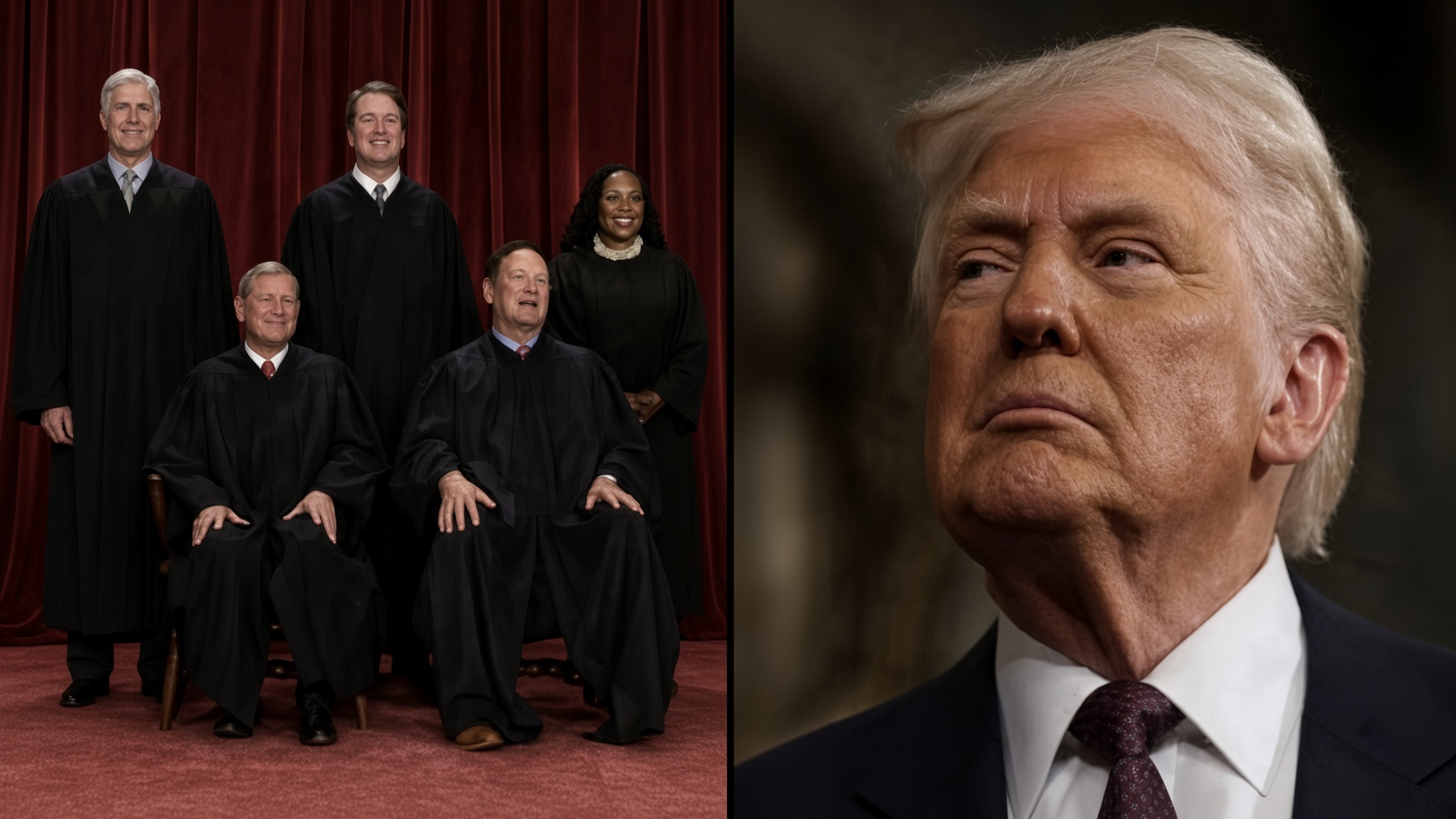
Barrett was joined in the majority opinion by Chief Justice John Roberts and Justices Clarence Thomas, Samuel Alito, Neil Gorsuch, and Brett Kavanaugh.
Administration Backing and Business Relief
The decision marks a significant victory for the U.S. business community and represents a direct validation of the legal posture advanced by the Trump administration. The Department of Justice had intervened in the case to urge the justices to dismiss the claims, arguing that subjecting domestic companies to unpredictable cross-border litigation undermines American technological competitiveness and creates foreign policy friction.
Corporate defense litigators and trade associations welcomed the verdict, noting that the ruling protects American technology and infrastructure firms operating globally from costly, multi-year litigation arising from the downstream use of dual-use products.
Sharp Dissents Over Human Rights Enforcement
The court’s three liberal justices voiced strong concerns that the ruling effectively insulates corporate actors from accountability when assisting authoritarian regimes in grave human rights abuses.
In a primary dissent joined in part by Justices Elena Kagan and Ketanji Brown Jackson, Justice Sonia Sotomayor wrote that the majority had dismantled vital legal tools intended to deter egregious international misconduct.
The ruling, Sotomayor warned, “jettisons two decades of settled precedent,” effectively foreclosing “future reliance on Sosa and shuts the courthouse doors to almost any claimed violation of international law under the ATS.” Sotomayor further argued that the text and legislative purpose of the TVPA naturally cover those who aid and abet state-sponsored torture.
Justice Jackson, joined by Justice Kagan, authored a separate opinion concurring in part and dissenting in part. While agreeing with a narrower construction of the ATS, Jackson maintained that standard principles of statutory interpretation supported aiding-and-abetting liability under the TVPA.
The decision establishes a clear jurisdictional boundary for federal judges, significantly restricting transnational human rights litigation and redirecting future debates over corporate responsibility abroad to Capitol Hill.