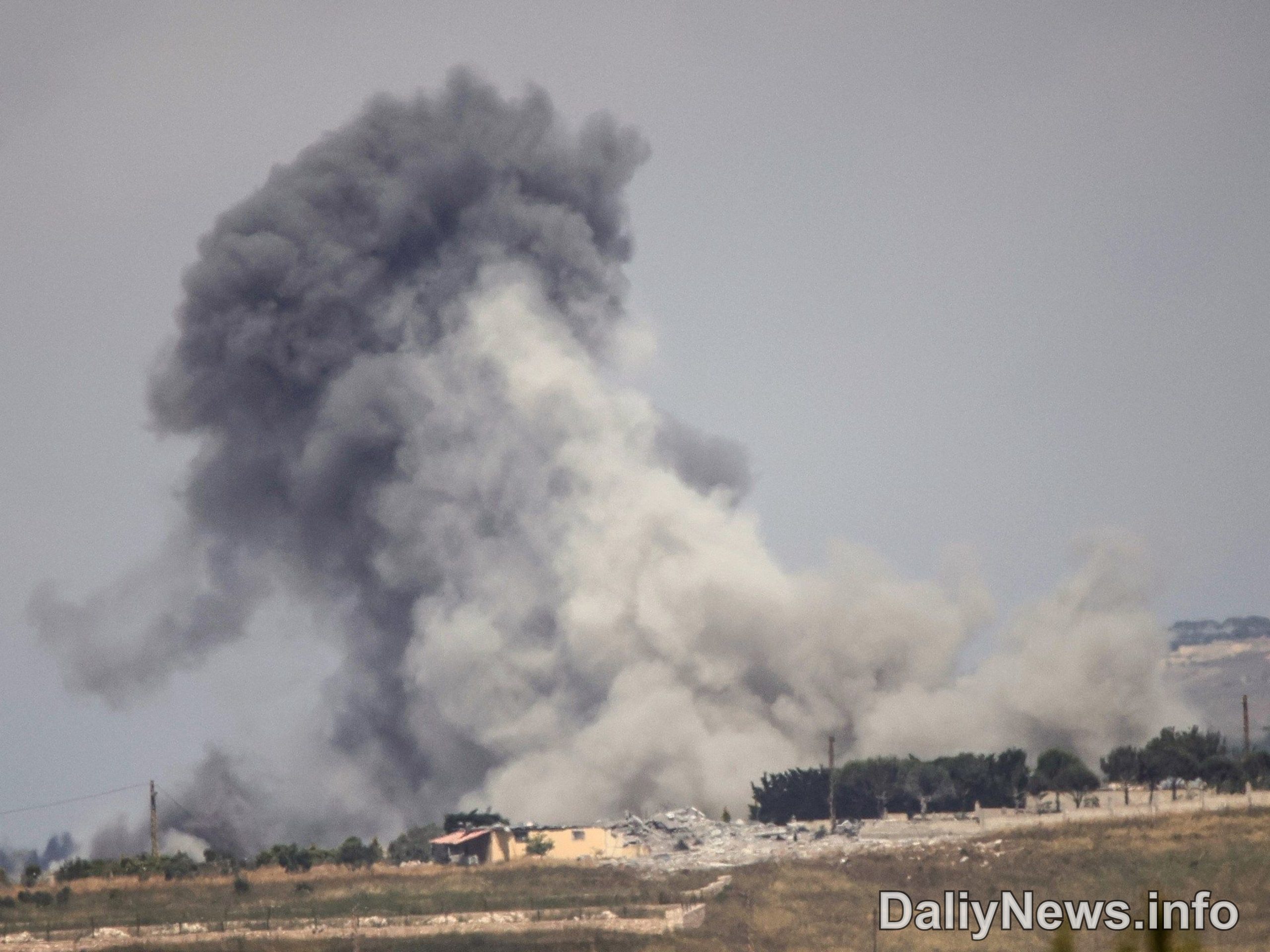
Israeli military forces have crossed southern Lebanon’s Litani River for the first time since 2006 and are now positioned on the outskirts of Nabatieh, a major economic and cultural hub.
Senior Lebanese military sources confirmed to Turkey’s state news agency Saturday that Israeli troops had breached the Litani River, which Israel designated as the boundary of its unofficial buffer zone in Lebanon. The advance marks a significant escalation in Israel’s operations in southern Lebanon, which has been marked by intensive air campaigns and ground movements targeting Hezbollah positions.
Strategic Significance of Nabatieh
Nabatieh holds critical importance to southern Lebanon’s economy and serves as a cultural center for the region. The Shia-majority city is widely regarded by Lebanese as a symbol of resistance due to its historical exposure to Israeli military operations, and its capture would represent a major shift in the conflict dynamics.
“It looks like Israel is trying to make this final push to encircle Nabatieh, breaking through the second and third lines of defence of Hezbollah and isolating the western Bekaa Valley from the south of the country,” Al Jazeera correspondent Obaida Hitto reported from Tyre.
Military Operations and Casualties
Lebanon’s military reported that two soldiers sustained serious injuries when an Israeli drone targeted their vehicle near Nabatieh on Saturday. A paramedic was killed and four others wounded in a separate Israeli drone strike on the village of Jebchit, which also damaged the Lebanese Relief Hospital, according to Lebanon’s National News Agency.
Hezbollah responded with multiple attacks, firing rockets at the Israeli town of Kiryat Shmona and deploying attack drones against Israeli military positions. The group claimed responsibility for ambushing Israeli soldiers near Ghandouriyeh and destroying military vehicles through coordinated drone and missile operations targeting facilities in northern Israel.
Displacement Crisis
Israel issued evacuation orders for at least 10 southern Lebanese villages as military operations expanded, despite ongoing ceasefire negotiations between Israeli and Lebanese officials. Israeli army spokesperson Avichay Adraee instructed residents to leave immediately, warning of potential casualties for those who remained.
The displacement orders add to an existing humanitarian crisis, with more than 1.2 million people-roughly 20 percent of Lebanon’s population-already displaced by fighting. “Those options are turning into basically people living with relatives if they have that option, or people living in makeshift camps in public parks and public spaces,” Hitto said, noting some families have been continuously displaced since 2023.
Diplomatic Efforts and Ceasefire Tensions
Lebanese and Israeli officials met in Washington on Friday to discuss a permanent resolution to the conflict, which escalated in March when Hezbollah began attacking Israel following the assassination of Iran’s supreme leader. Lebanese Prime Minister Nawaf Salam condemned Israel’s actions as “dangerous and unprecedented,” calling for an immediate ceasefire while defending his government’s direct negotiations as “the least costly path” for Lebanon.
The nominal ceasefire, in place since mid-April, has been repeatedly violated by Israeli military operations. Israeli officials justify continued strikes as necessary to target Hezbollah and achieve the group’s disarmament, though Lebanese authorities say progress on that objective has proven extremely difficult.
President Joseph Aoun spoke with US Secretary of State Marco Rubio, emphasizing the importance of Israel respecting the current ceasefire agreement. A new round of talks between the parties is scheduled for Washington next week, with US facilitation of negotiations continuing.
This story has been updated. CNN’s International Desk contributed to this report.