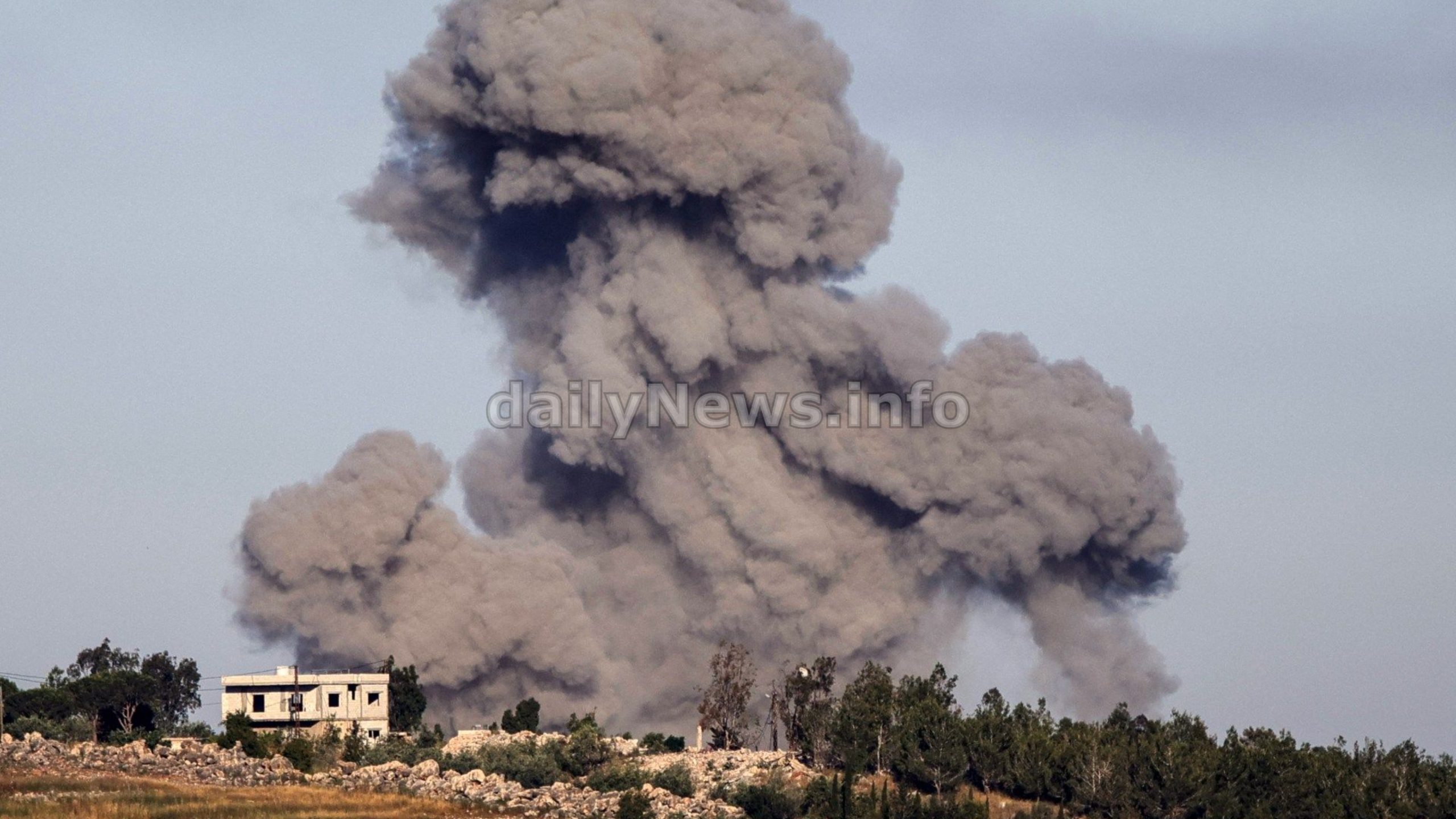
Israel has ordered the forced displacement of residents south of the Zahrani River in Lebanon as its military expands operations and seizes the strategic Beaufort Castle.
The Israeli military issued more than 10 displacement orders within 24 hours as it intensified its offensive against Hezbollah. Israeli military spokesperson Avichay Adraee instructed residents to relocate north of the Zahrani River immediately, warning that those remaining faced potential death.
Israeli forces crossed the Litani River on Friday for the first time since 2006, marking a significant escalation in the conflict. The military subsequently captured Beaufort Castle, a 12th-century fortress perched on a strategic hilltop near Nabatieh, Lebanon’s fifth-largest city.
Strategic Victory and Military Expansion
Israeli Defence Minister Israel Katz called the castle’s capture a significant tactical achievement. “Under Prime Minister Benjamin Netanyahu and my direction, the [Israeli military] expanded the operations in Lebanon, crossed the Litani River, and captured the Beaufort Ridge – one of the most important strategic points for defending the communities of the Galilee,” Katz said.
Israel previously held Beaufort Castle from 1982 until its 2000 withdrawal from Lebanon. Prime Minister Benjamin Netanyahu signaled no intention of halting military campaigns across multiple fronts, stating, “The capture of Beaufort is a dramatic stage and a dramatic shift in the policy we are leading. We have broken the barrier of fear.”
International Condemnation
France condemned Israel’s military operations and requested an emergency United Nations Security Council meeting. French Foreign Minister Jean-Noel Barrot told BFMTV that “nothing can justify the continuation of Israeli military operations in Lebanon and its ever-deeper occupation of Lebanese territory.”
Lebanese Prime Minister Nawaf Salam denounced the invasion as a “scorched-earth policy” and “collective punishment” against southern residents. Reporting from Tyre, Al Jazeera correspondent Obaida Hitto described the humanitarian toll, stating, “The Israeli military has created a zone that is essentially one-fifth of Lebanon’s territory where Lebanese citizens can’t go.”
Hezbollah’s Continued Resistance
Despite Israeli advances, Hezbollah has sustained attacks on Israeli forces. Israel confirmed Sunday that one soldier was killed in a Hezbollah drone strike, bringing total Israeli military deaths since March 2 to 25.
Hezbollah has deployed fiber-optic drones resistant to electronic jamming and radar detection. These low-cost aircraft have penetrated Israel’s multi-layered air defense systems, which cost billions of dollars.
Peace Negotiations at Risk
Israel and Lebanon are engaged in U.S.-facilitated peace talks, with officials meeting at the Pentagon on Friday to discuss a nominal ceasefire that took effect in mid-April. Negotiations are expected to resume next week.
Filippo Dionigi, Senior Lecturer in International Relations at the University of Bristol, told Al Jazeera that Lebanon faces an extremely difficult position. “Israel fundamentally is indicating that it has no significant political plan for Lebanon, it is basically pursuing only a military strategy at this point,” Dionigi said.
This story has been updated. CNN’s International Desk contributed to this report.