WASHINGTON — With a single executive stroke, the normal rhythm of the nation’s capital fractured overnight. Where morning commuters once contended only with gridlock and construction, they now navigate avenues flanked by armored personnel carriers, flashing tactical strobes, and federal agents patrolling street corners in combat gear.
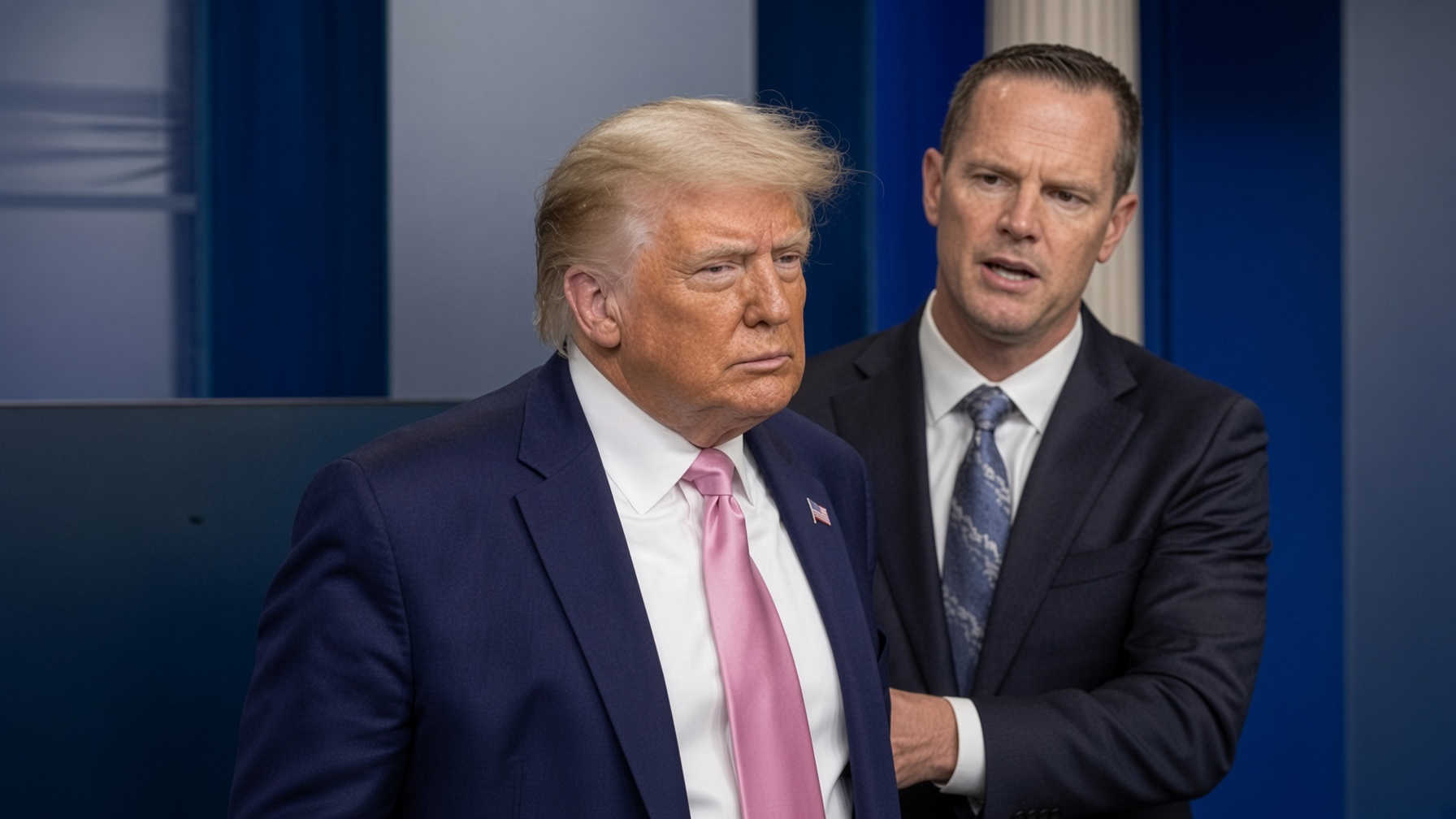
The immediate trigger was President Donald Trump’s sweeping directive to assert federal control over Washington, D.C.’s public safety apparatus, an aggressive posture that bypassed years of local legislative debate, municipal task forces, and community policing initiatives in an instant. The outcome on the ground has been immediate, visceral, and deeply polarizing: an abrupt suppression of street crime that has simultaneously replaced daily law enforcement with an atmosphere resembling an occupied zone.
In commercial corridors and residential blocks across the District, the rapid arrival of uniformed federal authorities—from the National Guard to Department of Homeland Security personnel working alongside the Metropolitan Police Department—has yielded sharply conflicting experiences.
For a vocal contingent of long-frustrated residents, the intervention brought immediate, tangible relief. Following years of sharp spikes in armed carjackings, youth gun violence, and commercial burglaries, neighborhoods that once felt abandoned by municipal leadership saw an immediate retreat in brazen offenses. Neighborhood watch threads, community forums, and digital message boards that previously functioned as round-the-clock repositories of security footage and gunfire reports suddenly fell quiet.
“For the first time in years, people can walk from the metro after dark without clutching their keys between their knuckles,” said one business owner along the H Street corridor. To those who felt trapped by rising disorder, the federal show of force was not an authoritarian overreach, but a long-delayed restoration of the state’s primary duty: keeping streets safe.
Yet just a few blocks away, that sense of security dissolves into sharp anxiety. For many long-time residents, civil rights activists, and marginalized communities, the sudden saturation of heavily armed federal forces has introduced a new species of terror. The daily threat of street crime has not been eradicated so much as substituted for the constant scrutiny of state power.
In neighborhoods east of the Anacostia River, daily routines have shifted defensively. Parents report coaching their teenagers on how to keep their hands empty and visible when walking past federal tactical units on their way to school. Community organizers warn of families memorizing badge identifiers and tracking agency insignia, uncertain whether a passing convoy belongs to federalized guard units, the Federal Protective Service, or tactical teams attached to immigration enforcement.
Among the District’s substantial immigrant communities, the chill has been especially acute. Advocacy groups report a sharp decline in attendance at health clinics, food distribution centers, and public schools, as families shutter their windows and refuse to open doors out of fear that routine civil patrols serve as a pretext for deportation sweeps.
Behind the public-facing deployments, the operational reality has triggered institutional friction. Rank-and-file officers within the Metropolitan Police Department privately voice mounting frustration over ambiguous command structures. With municipal officers, federal agents, and multi-agency strike teams operating in overlapping jurisdictions, basic questions of tactical authority, use-of-force standards, and jurisdictional precedence during active confrontations remain muddled. Local detectives accustomed to navigating community relationships find themselves operating alongside federal units with little institutional knowledge of D.C.’s hyper-localized neighborhood dynamics.
Constitutional scholars and home-rule advocates have framed the move as the most aggressive assault on the District’s self-governance since the passage of the 1973 Home Rule Act. Because Washington lacks the protections of statehood, its unique constitutional status leaves it exceptionally vulnerable to federal preemption, exposing the fragile nature of its local autonomy to executive authority.
What began as an emergency crackdown on urban crime has swiftly broadened into a high-stakes constitutional referendum on governance, civil liberty, and the limits of executive power. The fundamental question now reverberating through the District’s corridors of power is no longer merely whether the tactics are effective at lowering crime charts, but whether an environment maintained through constant surveillance and tactical dominance can ever genuinely be described as peace.
As checkpoints become routine features of the urban landscape and legal challenges wind their way through federal courts, Washington has become a living laboratory for a fraught national experiment. In a city built on the architectural ideals of a constitutional republic, the stark reality of armed federal patrols has intensified the struggle over what safety truly means—and what a democracy must surrender to achieve it.