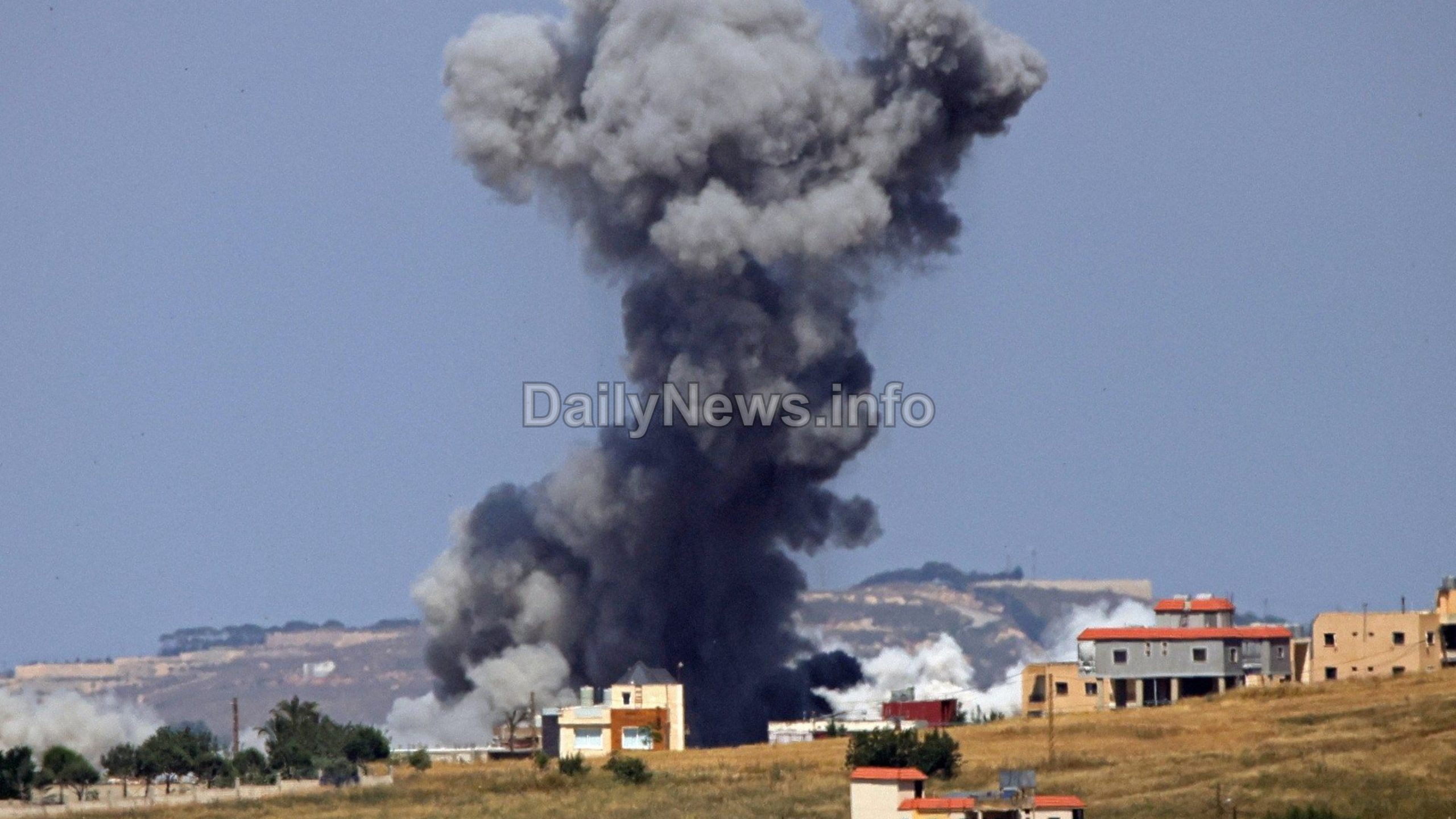
Israeli military forces have pushed north of the Litani River into southern Lebanon, capturing strategic positions including Beaufort Castle and expanding their territorial control as analysts question whether objectives extend beyond removing Hezbollah from border areas.
Israeli troops now occupy approximately 2,000 square kilometers of Lebanese territory, representing nearly one-fifth of the country. The advance marks Israel’s deepest penetration into Lebanon in over 25 years, occurring despite a ceasefire agreement nominally in place since April.
The Military Advance
Israeli forces have reached the outskirts of Nabatieh, a major Hezbollah stronghold in southern Lebanon, and captured Beaufort Castle, a strategically positioned Crusader-era fortress overlooking vast areas of southern Lebanese terrain. The military has issued evacuation orders extending to the Zahrani River, approximately 10 kilometers north of the Litani River that Israel initially claimed as its operational boundary.
Israeli Defence Minister Israel Katz announced that forces from the Golani Brigade had crossed the Litani River and seized Beaufort Castle, which sits about 15 kilometers from the Israeli border. Israeli forces previously occupied the fortress for nearly two decades before withdrawing in 2000.
The position provides Israel commanding views over routes linking southern Lebanon with the western Bekaa Valley and surrounding areas near Nabatieh, enhancing military control over movement and supply lines. Israeli military spokesperson Ella Waweya stated the operation aimed at “destroying terrorist infrastructure and eliminating saboteurs” while strengthening Israeli control in the region.
Strategic Significance of Nabatieh
Imad Salamey, an international relations professor at the Lebanese American University, told Al Jazeera that Nabatieh represents far more than a military objective. “Nabatieh is strategically important because it represents far more than a military hub; it is one of the principal political, economic, and social centres of Lebanon’s Shia community,” Salamey said.
Control of Nabatieh would provide Israel greater operational depth beyond the Litani River while pressuring Hezbollah’s command and logistics networks throughout southern Lebanon. Politically, however, the significance extends further, with the advance potentially suggesting Israeli objectives have evolved beyond pushing Hezbollah north of the Litani into a broader campaign to dismantle the organization’s territorial infrastructure.
Lebanese journalist and analyst Souhayb Jawhar told Al Jazeera that Israeli forces reaching Nabatieh would mark a major conflict shift. “Israeli control over it, or even encircling it, would represent a serious transformation because it would shift the war from a border zone into the political and social heart of southern Lebanon,” Jawhar said.
Questions About Long-Term Objectives
The expanding evacuation zone extending to the Zahrani River has raised questions about Israel’s true strategic aims. Salamey noted that if Israel’s sole objective were removing Hezbollah military presence south of the Litani, operations would likely remain confined to that zone.
“Expanding military activity and evacuation demands farther north may indicate an effort to establish a deeper security belt, create conditions for prolonged territorial control, or secure leverage for future political arrangements,” Salamey said. The advancement suggests Israel is not only pushing Hezbollah fighters and short-range missiles from the border but striking the organization’s military, logistical and command infrastructure deeper inside southern Lebanon.
Jawhar assessed that the expanding evacuation orders indicated Israel’s objectives had moved beyond the Litani River. “The concept of the ‘security belt’ may have expanded from the Litani line to something resembling a deeper buffer zone extending as far as the Zahrani,” Jawhar said.
Israeli Finance Minister Bezalel Smotrich praised the Beaufort Castle capture as correcting past mistakes, stating he would continue pushing for “a permanent territorial conception and exceptional military aggressiveness.” His comments suggest some Israeli officials envision a more extended military presence than initially stated.
Impact on Negotiations and Regional Dynamics
Israeli and Lebanese officials continue US-mediated talks aimed at reaching a permanent conflict resolution while discussing Hezbollah disarmament plans. However, the continued military campaign is undermining these negotiation efforts.
Filippo Dionigi, a professor of international relations at the University of Bristol, told Al Jazeera that continuing Israeli attacks risk weakening the Lebanese government while potentially strengthening Hezbollah’s influence. “If Israel was abiding by the ceasefire entirely, then the Lebanese government could at least claim that its negotiations are bearing fruits,” Dionigi said.
The continuing military operations risk reinforcing Hezbollah’s argument that armed resistance remains necessary for protection. A parallel tenuous ceasefire between Washington and Tehran has become increasingly tied to Lebanese developments, with Iranian officials warning that Israeli withdrawal from southern Lebanon is a prerequisite for meaningful progress in US-Iran negotiations.
This story has been updated. CNN’s international desk contributed to this report.