WASHINGTON — The U.S. Supreme Court on Tuesday issued a landmark ruling curbing the ability of foreign nationals to pursue human rights lawsuits against American multinational corporations in federal court, delivering a decisive victory to the business community while dismantling key legal avenues used by advocates to challenge corporate complicity in abuses committed abroad.
In a 6–3 decision in Cisco Systems, Inc. v. Doe (No. 24-856), the court held that the Alien Tort Statute (ATS) does not empower federal judges to recognize new civil causes of action based on evolving international legal norms. The conservative majority further ruled that the Torture Victim Protection Act of 1991 (TVPA) does not establish secondary aiding-and-abetting liability, shielding domestic companies and their executives from civil damages claims for providing hardware, software, or technical support to foreign security apparatuses.
The ruling dramatically restricts the scope of transnational corporate human-rights litigation, effectively closing courthouse doors to foreign plaintiffs seeking monetary damages in the United States for state-sponsored persecution carried out overseas.
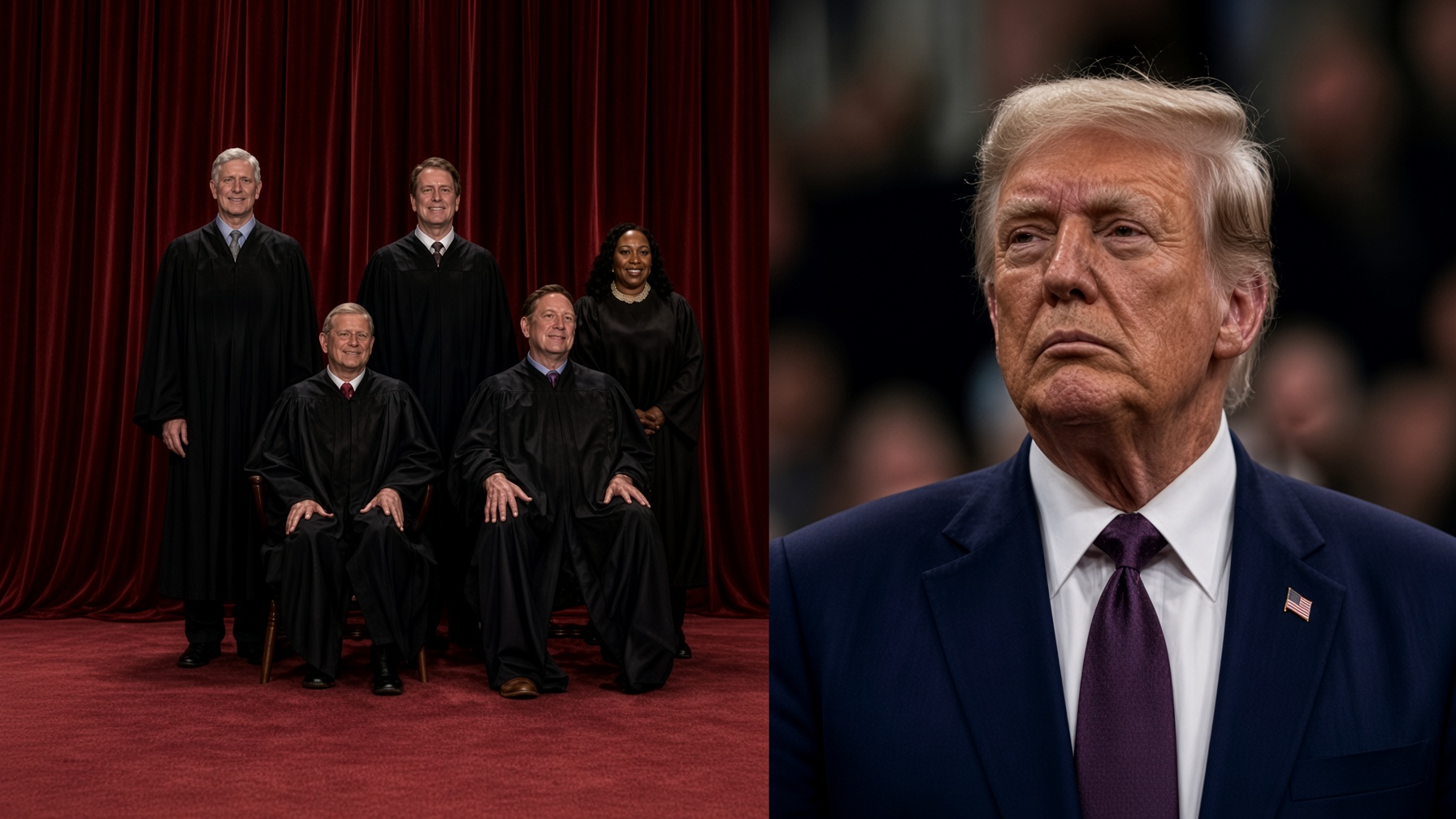
Writing for the six-justice conservative majority, Justice Amy Coney Barrett was joined by Chief Justice John Roberts and Justices Clarence Thomas, Samuel Alito, Neil Gorsuch, and Brett Kavanaugh. The court’s three liberal members dissented, warning that the decision eviscerates statutory mechanisms intended by Congress to hold facilitators of atrocity accountable.
Allegations Centered on China’s Surveillance Apparatus
The litigation originated more than a decade ago when anonymous members of Falun Gong—a spiritual movement banned by the Chinese government in 1999 and subjected to widespread administrative detention, re-education camps, and extrajudicial abuse—filed a federal civil action in California.
The plaintiffs alleged that San Jose-based Cisco Systems and several senior executives designed, customized, and maintained critical components of China’s “Golden Shield” project, an expansive public-security surveillance database. According to the complaint, Cisco engineers customized network hardware and developed specialized algorithms explicitly designed to identify, locate, and track Falun Gong practitioners, facilitating their arbitrary detention, forced labor, and torture by state security agents.
Cisco vigorously denied the allegations, maintaining that it sold standard, off-the-shelf telecommunications infrastructure used universally by governments and private enterprises, and that commercial suppliers cannot be held legally liable for how foreign sovereign regimes choose to deploy commercial technology.
A federal district court initially dismissed the complaint, but the U.S. Court of Appeals for the Ninth Circuit revived the litigation, ruling that the ATS and TVPA permitted claims alleging that corporate actors knowingly facilitated jus cogens violations of international law. The Supreme Court’s ruling formally reverses the Ninth Circuit and terminates the long-running lawsuit.
Separation of Powers and the Limits of Judicial Reach
In delivering the opinion of the court, Barrett framed the central question as an issue of constitutional separation of powers, underscoring that the power to create private causes of action for monetary damages belongs exclusively to Congress, not the federal judiciary.
Analyzing the Alien Tort Statute—a foundational component of the Judiciary Act of 1789 granting federal district courts original jurisdiction over civil suits by noncitizens for torts committed in violation of the law of nations—Barrett emphasized that the measure is strictly a jurisdictional statute. The majority rejected the argument that federal courts possess common-law authority to infer new liabilities against American corporate suppliers based on international human rights conventions.
Addressing the Torture Victim Protection Act, Barrett observed that the statutory text expressly limits liability to any “individual” who subjects another person to torture or extrajudicial killing under color of foreign law. The majority held that Congress deliberately chose not to include aiding-and-abetting provisions within the statutory language:
-
Absence of Textual Authorization: The court concluded that when Congress intends to impose secondary liability for civil infractions, it does so explicitly, as demonstrated in specialized statutes such as the Antiterrorism Act.
-
Foreign Policy Deference: The majority noted that allowing domestic judges to assess the human-rights compliance of foreign sovereigns and their commercial contractors inevitably infringes upon the constitutional prerogatives of the executive branch to manage diplomatic affairs.
Dissents Warn of an Impunity Shield for Facilitators
The court’s liberal minority issued pointed dissents, arguing that the majority’s rigid textual interpretation defies both common-law tort principles and congressional intent.
In a primary dissent joined by Justice Elena Kagan, Justice Sonia Sotomayor wrote that the TVPA was enacted specifically to give effect to international treaties prohibiting torture, which historically encompass aiding-and-abetting liability under basic principles of tort law. Sotomayor argued that intentional, substantial assistance to systemic torture should not escape civil accountability merely because the defendant did not directly apply physical force.
Justice Ketanji Brown Jackson authored a separate opinion concurring in part and dissenting in part, also joined by Kagan, cautioning that the ruling significantly undermines the statutory remedies Congress established to ensure human-rights violators and their commercial collaborators cannot find safe haven within the United States.
A Decisive Shift in Transnational Corporate Liability
The Cisco decision marks the culmination of a two-decade trend by the Supreme Court to narrow transnational human rights litigation. Starting with Sosa v. Alvarez-Machain (2004), and continuing through Kiobel v. Royal Dutch Petroleum Co. (2013) and Nestlé USA, Inc. v. Doe (2021), the high court has progressively dismantled the ATS as an enforcement tool against multinational conglomerates.
For major corporate entities supplying communications infrastructure, artificial intelligence platforms, and defense logistics across global markets, the ruling provides critical legal insulation against costly, reputationally damaging tort actions in domestic courts.
For international human rights advocates and legal aid organizations, the ruling represents a near-total foreclosure of federal civil remedies, leaving foreign victims of state persecution with virtually no viable legal path to hold American commercial suppliers liable without explicit, new statutory authorization from Capitol Hill.