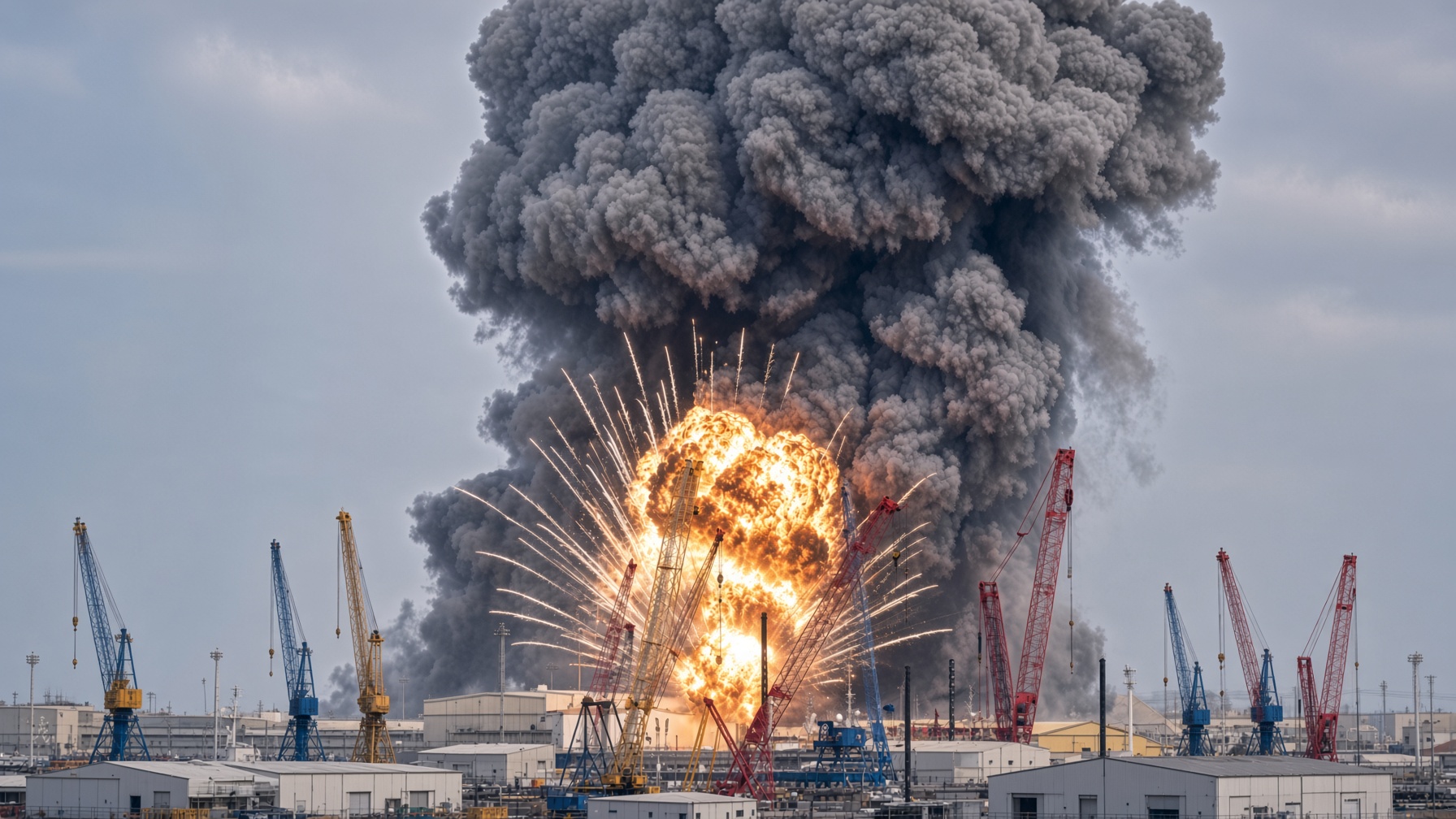
MANAMA, Bahrain — The Persian Gulf has rapidly pivoted to an active war footing following coordinated salvos of ballistic missiles and one-way attack drones launched by Iranian forces against major regional military installations hosting American personnel. The multi-axis offensive triggered widespread air-defense engagements across multiple allied capitals and pushed the strategic waterways of the Middle East toward systemic crisis.
The strikes mark a dangerous breakdown in regional containment, emphasizing Tehran’s established operational posture of projecting kinetic retaliation outward into neighboring host nations. By directing saturation attacks at the forward installations Washington maintains across Bahrain, Qatar, Kuwait, and the United Arab Emirates, Iran has effectively expanded the active theater of operations across the entire Gulf littoral.
Air-defense sirens echoed across urban and industrial centers in the United Arab Emirates as joint early-warning radars tracked incoming ballistic trajectories and low-flying suicide drones. Emtiaz-tier integrated air-defense networks—anchored by U.S.-supplied Terminal High Altitude Area Defense (THAAD) batteries and Patriot PAC-3 systems—fired multiple interceptors to neutralize threats penetrating sovereign airspace. Regional defense commanders maintained intense focus on Al Dhafra Air Base south of Abu Dhabi, a linchpin installation housing critical U.S. aerial refueling tankers, airborne early warning assets, and advanced combat fighter squadrons.
While Iranian state-run media outlets claimed direct, precision strikes against military infrastructure at Al Dhafra, Western defense officials and regional analysts advised caution. Independent commercial satellite imagery and battle-damage assessments are underway to establish verified impact points, operational interruptions, and the scope of structural damage on the airfield.
Strategic Nerve Centers Under Pressure
The barrage placed the Kingdom of Bahrain under unprecedented defensive strain. As home to Naval Support Activity Bahrain, the island nation functions as the operational hub for U.S. Naval Forces Central Command and the U.S. Fifth Fleet, which commands maritime operations across the Persian Gulf, the Red Sea, and the Gulf of Oman. Coupled with operations out of Shaikh Isa Air Base, Bahrain represents an indispensable operational platform for American naval deterrence.
During the assault, Bahraini land-based surface-to-air missile units worked in tandem with forward-deployed U.S. Navy Aegis guided-missile destroyers operating in adjacent waters, firing interceptors to counter incoming aerial tracks before they reached coastline infrastructure.
To the north, Qatar’s Al Udeid Air Base faced an identical operational test. As the forward operating headquarters for U.S. Central Command (CENTCOM) and host of the Combined Air Operations Center (CAOC)—which coordinates all coalition combat aviation throughout the Middle East—the base remains one of Washington’s most strategically sensitive overseas assets. Service members scrambled to hardened subterranean bunkers as air-defense batteries engaged targets in the skies above Doha.
Kuwait’s defensive perimeter was similarly tested. Interceptor batteries engaged incoming tracks aimed near key installations that support coalition ground operations, pre-positioned logistics stockpiles, and aerial transit. The synchronized strikes have forced Washington’s Gulf partners into rapid expenditure of high-cost interceptor inventories to protect their critical infrastructure and domestic airspace.
Economic Peril Along the Maritime Chokepoint
Beyond direct kinetic damage, the cross-border strikes have injected intense volatility into global energy transit routes, most notably the vulnerable Strait of Hormuz. Accounting for approximately one-fifth of global petroleum flows, the narrow waterway sits entirely within range of Iranian coastal anti-ship missile batteries and fast-attack naval craft.
With commercial tankers facing renewed risk of collateral interception or drone strikes, maritime transit through the corridor has decelerated sharply:
-
Shipping Re-routings: Leading international shipping conglomerates and energy majors have suspended standard passage, anchoring vessels outside the Gulf of Oman or opting for costly detours around the African continent.
-
War-Risk Premiums: Marine insurance syndicates have escalated war-risk rates to near-historic levels, significantly compounding the delivery costs of crude oil and liquefied natural gas.
-
Market Exposure: Global commodity exchanges have reacted with sharp intraday swings, as energy traders evaluate the potential supply shock of sustained naval interdiction or mine warfare within the narrow shipping lanes.
The coordinated strikes expose the fragility of traditional deterrence in the Persian Gulf. With both coalition forces and regional militaries confronting dwindling interceptor magazine depth against cheap, mass-produced drone and missile salvos, the risk of a miscalculated escalation remains acute. Any single warhead evading regional air defenses to inflict mass casualties could instantly collapse existing diplomatic backchannels, precipitating an unconstrained regional conflict.