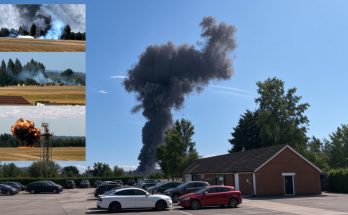
WASHINGTON — A severe, multi-front military confrontation between the United States and Iran escalated sharply in late July after the Islamic Revolutionary Guard Corps launched a concentrated salvo of ballistic missiles targeting American forward installations in the Middle East, precipitating an immediate round of retaliatory precision strikes across Iraq and deep into sovereign Iranian territory.
U.S. Central Command confirmed that the medium-range ballistic weapons were launched directly from Iranian firing positions on July 28 in what defense planners characterized as an orchestrated attempt to overwhelm coalition air defenses at forward bases. Integrated regional defense networks—anchored by Patriot PAC-3 batteries and Terminal High Altitude Area Defense (THAAD) interceptors—tracked and neutralized the inbound salvos before they could hit primary cantonments, preventing coalition casualties but forcing regional commands into an emergency posture.
The intercept operations swiftly yielded to a combined counteroffensive led by American and allied air wings, signaling an aggressive new phase in an expanding conflict that threatens the security of commercial sea lanes and regional energy facilities.
Precision Sorties Neutralize Proxy Hubs in Iraq
Within hours of the missile engagement, fighter squadrons from the U.S. Air Force and the Royal Saudi Air Force mounted a coordinated aerial campaign against logistics arteries, fortified ammunition dumps, and operational command posts maintained by Iran-aligned paramilitary groups across eastern Iraq.
According to CENTCOM mission debriefs, the targeted complexes belonged to prominent Iraqi militia factions operating under the tactical command of the IRGC’s expeditionary Quds Force. The joint strike package followed an intensive 72-hour period during which Iranian proxy elements deployed more than 30 one-way suicide drones against remote coalition outposts and critical Saudi energy installations.
The operation underscored growing operational cohesion between Washington and Riyadh. Saudi defense officials have signaled acute alarm over low-altitude drone routes and terrain-hugging cruise missiles aimed at petroleum facilities in the Eastern Province, which serve as foundational nodes for international oil markets.
CENTCOM noted that proxy networks throughout the Iraqi theater carried out over 600 separate attacks against American troops, diplomatic outposts, and logistical resupply routes between February and April 2026. While operational security limits external verification of that total, the volume illustrates the relentless operational pressure bearing down on forward-deployed personnel across the region.
Direct Kinetic Operations Penetrate Iranian Borders
The military confrontation crossed a historic threshold on July 29, when CENTCOM disclosed that carrier-based naval strike aircraft, strategic bombers, and cruise-missile platforms had carried out high-intensity strikes against high-priority IRGC infrastructure situated well within Iranian borders.
According to military communiqués, the direct strikes systematically focused on three operational sets:
-
Air-Defense Architecture: Integrated surface-to-air missile positions and long-range phased-array early-warning installations.
-
Strike and Assembly Capabilities: Subterranean ballistic missile bunkers, transporter-erector-launcher garrisons, and drone manufacturing facilities.
-
Littoral Interdiction Nodes: Coastal monitoring stations, land-based anti-ship cruise missile sites, and naval command compounds along the Persian Gulf shoreline.
CENTCOM officials stated the direct strikes were calculated to dismantle Tehran’s capacity to jeopardize maritime commerce, coalition forces, and regional allies. The operation marked an overt pivot away from localized proxy skirmishes and gray-zone engagements toward overt, state-on-state kinetic warfare, largely bypassing long-standing diplomatic backchannels.
Multiple Theaters Converge on Vital Chokepoints
The conflict’s expanding footprint has linked disparate operational fronts, stretching across the Mesopotamian plain, through the Yemeni highlands, and into the vulnerable maritime gateways of the southern Red Sea and the Strait of Hormuz.
The Strait of Hormuz remains the most volatile flashpoint. Transiting nearly 20 percent of the world’s petroleum supply, any persistent interdiction, surface harassment, or maritime mining effort immediately roils commercial tanker routes, spikes maritime insurance premiums, and shocks global commodity indices.
Adding to the operational complexity, Houthi forces in Yemen have synchronized anti-ship cruise missile and drone volleys into adjacent waters, compelling coalition naval task groups to disperse defensive interceptor magazines across thousands of miles of open ocean. This multi-axis alignment has made it impossible to isolate local engagements from the overarching regional theater.
The Breakdown of Calibrated Deterrence
For Washington, the late-July exchanges highlight the persistent friction of maintaining forward deterrence against simultaneous ballistic launches from sovereign Iranian soil and asymmetric strikes mounted by distributed proxy networks.
For Tehran, the widening scope of precision bombardment directed at domestic IRGC installations applies severe stress to its home-front defenses, degrading its domestic radar grid and threatening its regional posture.
As each operational strike brings an expanded retaliatory package, military analysts caution that the margin between measured retaliation and uncontrolled regional war has all but collapsed. Forward command posts remain focused on reinforcing critical logistical networks and shielding global maritime routes against an escalating conflict that continues to elude diplomatic off-ramps.