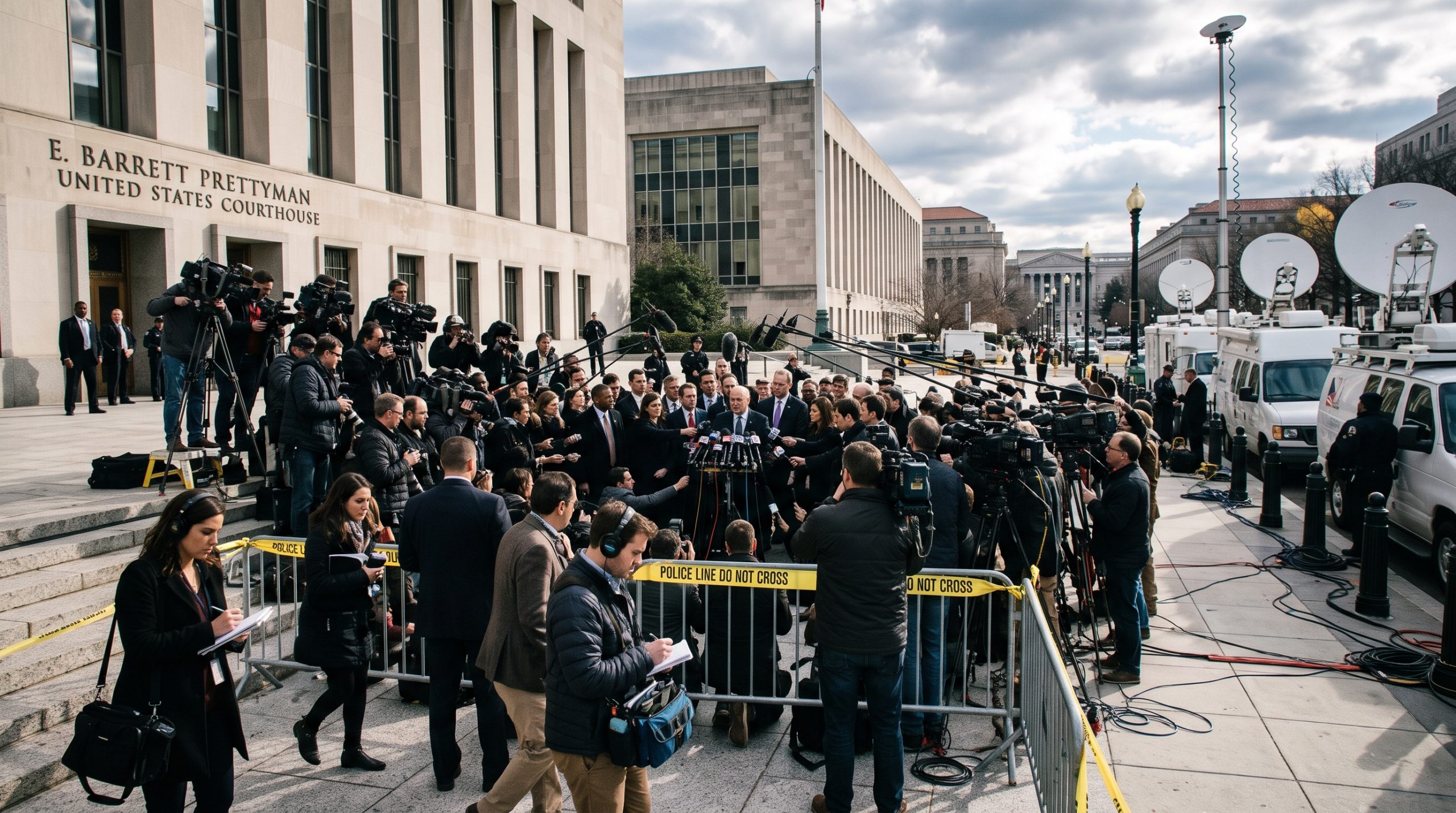
WASHINGTON — In an unprecedented legal chapter testing the structural foundations of the American republic, Donald Trump has become the first former president in United States history to face federal criminal charges over actions taken while occupying the Oval Office. The prosecution, spearheaded by the U.S. Department of Justice, marks an extraordinary stress test for the separation of powers, the scope of executive authority, and the constitutional mechanics governing the peaceful transfer of power.
The indictment culminates an expansive special counsel investigation into the multi-month campaign to challenge, delay, and ultimately overturn the certified results of the 2020 presidential election. Unsealed in the U.S. District Court for the District of Columbia, the charging document lays out four felony counts: conspiracy to defraud the United States, conspiracy to obstruct an official proceeding, obstruction of and attempting to obstruct an official proceeding, and conspiracy against civil rights under Section 241 of Title 18 of the U.S. Code—a post-Civil War statute originally enacted to protect constitutional voting rights.
Federal prosecutors allege that between the November 2020 general election and the joint session of Congress on January 6, 2021, Trump orchestrated an unlawful, multi-front effort to subvert democratic outcomes. According to the filing, the endeavor relied on systematically propagating claims of widespread, outcome-determinative election fraud that the defendant knew to be false, using those claims as a pretext to pressure state administrators, Justice Department officials, and Vice President Mike Pence to disregard certified electoral slates.
The Architecture of the Allegations
The government’s case delineates a concerted, multi-layered enterprise that prosecutors argue traversed the boundary separating vigorous political advocacy from deliberate criminal conduct.
Central to the indictment is the alleged coordination of unauthorized, rival slates of presidential electors across key battleground states won by Joe Biden, including Arizona, Georgia, Michigan, Nevada, New Mexico, Pennsylvania, and Wisconsin. The Justice Department asserts that these alternate certificates were drafted under fraudulent premises and transmitted directly to the National Archives and the President of the Senate in an attempt to manufacture a procedural impasse during the formal congressional certification.
The filings further document persistent pressure campaigns directed against state lawmakers, secretaries of state, and county election boards to rescind or decertify lawful returns. Prosecutors emphasize that these efforts continued despite dozens of state and federal court decisions rejecting fraud challenges, exhaustive state-level audits and hand recounts, and direct briefings from senior national security, intelligence, and cybersecurity officials confirming the technical integrity of the voting infrastructure.
Trump pleaded not guilty to all counts, vigorously disputing the government’s characterizations and describing the indictment as an unconstitutional assault on core political liberties. Defense counsel has contended that a president possesses inherent constitutional duties to ensure electoral fairness, that questioning the administration of elections constitutes protected core political speech under the First Amendment, and that the official actions of a chief executive cannot be subjected to post-tenure criminal prosecution under standard statutory codes.
Uncharted Constitutional Ground
The proceedings have propelled historic, novel constitutional dilemmas before the federal judiciary, requiring trial and appellate judges to rule on foundational doctrines that have never before been litigated in a criminal context:
-
Executive Immunity: The fundamental threshold of whether, and to what extent, a former commander-in-chief enjoys immunity from federal criminal prosecution for official acts undertaken while in office, and the evidentiary criteria for distinguishing official presidential conduct from private political campaigning.
-
The Scope of First Amendment Protection: The precise constitutional dividing line separating protected public criticism, political hyperbole, and the right to petition the government from actionable criminal fraud, corrupt intent, and conspiratorial obstruction.
-
Statutory Construction: The application of federal obstruction provisions—including statutes enacted under the corporate-reform Sarbanes-Oxley Act—to congressional electoral proceedings, alongside the historical reach of Reconstruction-era civil rights legislation to modern presidential elections.
Constitutional scholars across the ideological spectrum agree that the case represents a watershed moment for American jurisprudence. The litigation compels the judicial branch to define the legal boundaries of the presidency itself, determining whether the criminal justice system can hold an outgoing president criminally responsible for efforts to disrupt the constitutional transfer of executive authority.
Political Polarization and the Institutional Horizon
The federal prosecution has intensified partisan fractures across the country, underscoring divergent interpretations of institutional accountability and democratic norms.
Proponents of the indictment argue that judicial adjudication is vital to safeguarding the rule of law, maintaining that no individual, regardless of rank or former office, can be immune from criminal statutes. Legal reform advocates contend that establishing prosecutorial silence in the face of alleged efforts to overturn certified election returns would permanently compromise future presidential transitions and erode public faith in democratic processes.
Conversely, defense advocates and congressional allies characterize the prosecution as an unprecedented weaponization of the federal legal apparatus against a prominent political rival, warning of destabilizing legal precedents that could invite reciprocal, retaliatory prosecutions by future administrations against departing political opponents.
As motions to dismiss, evidentiary disputes, and constitutional appeals make their way through the federal court system, the historic proceeding continues to command intense domestic and global attention. Beyond the immediate evidentiary arguments in the courtroom, the resolution of this prosecution will permanently calibrate the limits of executive power, clarify the legal enforceability of electoral procedures, and define the institutional resilience of the American republic for generations to come.