WASHINGTON — The United States is navigating a high-stakes, double-track strategy in the Persian Gulf, deploying targeted “self-defense strikes” against Iranian military assets while simultaneously pushing for a comprehensive, backchannel diplomatic settlement in Qatar to permanently reopen the Strait of Hormuz.
The parallel efforts underscore the delicate, often contradictory nature of modern conflict resolution in the Middle East. While diplomats in Doha haggle over the precise legal language of a tentative bilateral accord, carrier-based strike groups and coastal defense batteries continue to trade fire, threatening to collapse the entire diplomatic track with a single tactical miscalculation.
An Unyielding Stance on Global Energy
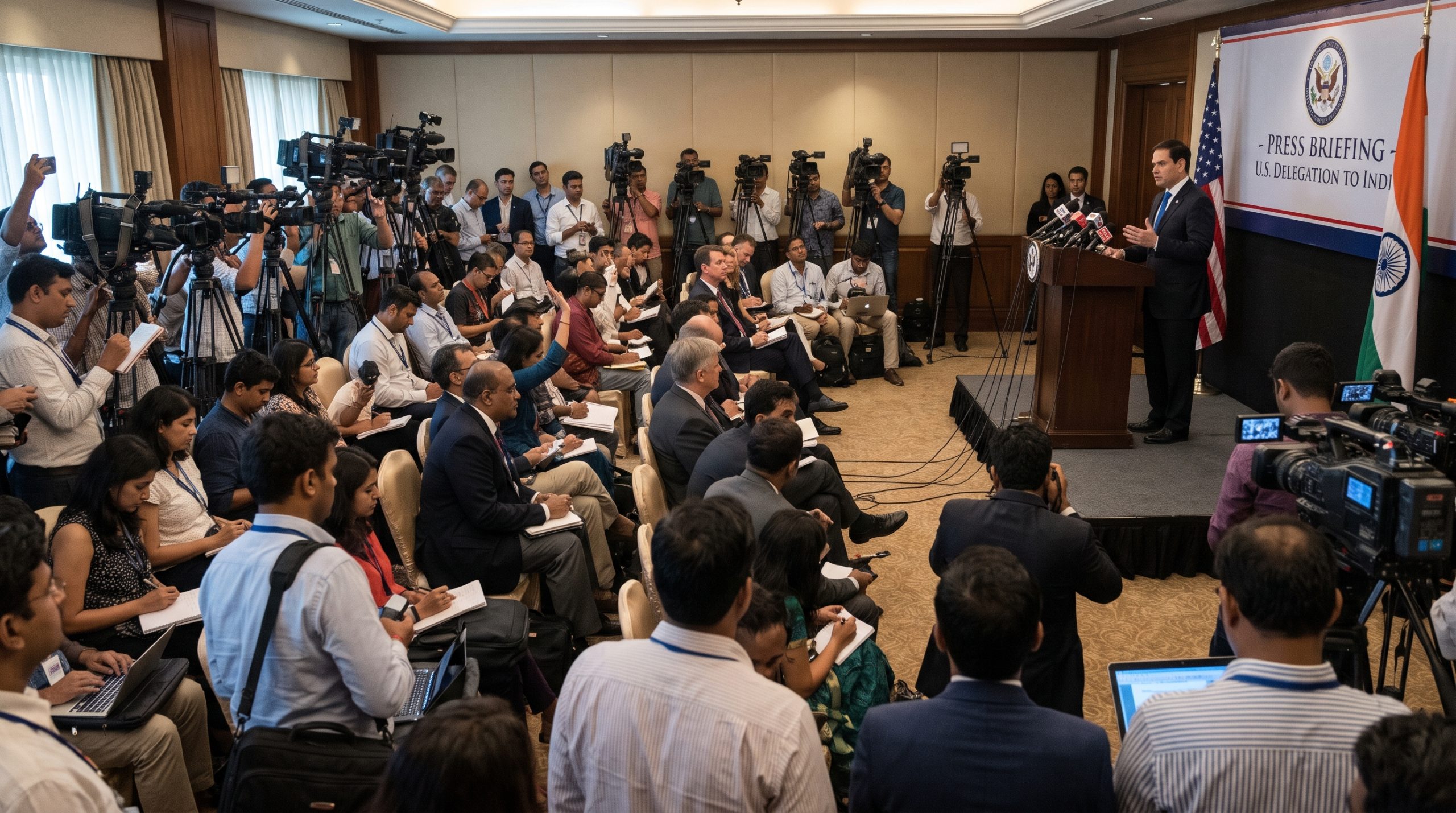
Speaking to traveling reporters during an official diplomatic mission to India, Secretary of State Marco Rubio issued an unyielding assessment regarding the strategically vital Strait of Hormuz, warning that Washington is prepared to take whatever unilateral measures are necessary to ensure the immediate and unhindered resumption of commercial shipping.
“The straits have to be open, they’re going to be open,” Rubio declared during his visit. “What’s happening there is unlawful, it’s illegal, it’s unsustainable for the world, and it’s unacceptable.”
Turning to the indirect negotiations currently coordinated by Qatari mediators, the secretary confirmed that discussions remain active but tamped down expectations of an instant breakthrough. He indicated that the final, legally binding language remains intensely contested.
“There were some talks going on in Qatar today, so we’ll see if we can make progress,” Rubio said. “I think it’s a lot of talking back and forth going on about specific language in the initial document, so it’ll take a few days. The president expressed his desire to make it. He’s either going to make a good deal or no deal.”
The administration’s stance reflects a clear strategic pivot: utilizing maximum military and economic leverage on the water to compel major structural concessions at the negotiating table, while attempting to avoid a wider, unconstrained escalation.
Kinetic Interventions at the Chokepoints
Even as negotiators parse draft texts, the operational reality on the water remains highly combative.
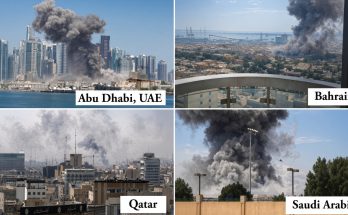
U.S. Central Command (CENTCOM) confirmed on Thursday that American forces had executed multiple “self-defense strikes” in southern Iran, targeting missile facilities, coastal radar installations, and fast-attack vessels. Military officials asserted that these assets were being positioned to place naval mines near critical international maritime routes and threaten allied warships enforcing a blockade.
Capt. Tim Hawkins, a spokesperson for U.S. naval forces in the region, stated that the targeted, preemptive operations were “strictly designed to protect American personnel and assets, as well as ensure the safety of international shipping,” while preserving the broader, fragile cease-fire framework that has loosely held for several weeks.
However, a senior defense official acknowledged that U.S. aircraft and naval vessels operating near the Gulf of Oman and the Arabian Sea continue to face active threats from Iranian surface-to-air missile systems, with the latest kinetic exchanges occurring near the heavily fortified Iranian naval hub of Bandar Abbas.
Military analysts warn that such recurring engagements, though labeled as “self-defense,” carry the constant risk of sparking an all-out, retaliatory escalatory cycle that would instantly implode the diplomatic backchannels.
High-Stakes Diplomacy in Doha
Despite the ongoing military friction, the indirect talks in Qatar have reportedly entered a critical, technical phase.
In Tehran, Iranian Foreign Ministry spokesperson Esmaeil Baqaei offered a reserved assessment of the progress, confirming that the delegations had reached preliminary areas of understanding on several issues, but he cautioned against assuming a final signing was imminent. Baqaei also accused Washington of introducing eleventh-hour shifts to foundational parameters.
In Washington, President Donald Trump reiterated his unyielding standard for any final agreement, characterizing previous diplomatic attempts—such as the 2015 Joint Comprehensive Plan of Action (JCPOA) negotiated under the Obama administration—as fatally flawed. Trump argued that the 2015 accord failed to ensure a permanent, verifiable end to Iran’s nuclear ambitions, instead offering front-loaded economic relief in exchange for temporary restrictions.
“It will be a good and proper deal, or we won’t have one,” Trump told reporters, signaling his intent to extract significantly stricter, longer-term commitments than his predecessors.
The Emerging Architecture of an Accord
According to a senior U.S. administration official, the tentative framework currently under negotiation rests on several interdependent, high-stakes pillars:
-
Complete Nuclear Rollback: Iran must dilute or surrender its stockpiles of highly enriched uranium, dismantle or permanently cap its enrichment infrastructure at standard commercial grades, and accept comprehensive, intrusive inspection protocols.
-
Maritime Guarantees: Tehran must stand down its naval fast-attack squadrons, systematically clear defensive minefields laid near commercial channels, and issue binding security guarantees for civilian international merchant shipping navigating the Strait of Hormuz.
-
Sanctions Relief: In exchange for verified and certified technical compliance, Washington would lift its maritime interdiction cordon, allowing legitimate commercial shipping to re-enter Iranian terminals, and begin a phased reduction of economic and petrochemical sanctions.
The major political issues have largely been resolved in principle, officials said, but the devil remains in the technical details—specifically, the verification procedures, the exact timeline for sanctions relief, and the “snapback” enforcement mechanisms to punish any future Iranian non-compliance.
Whether this double-track strategy of military containment and diplomatic engagement will achieve a landmark geopolitical settlement or plunge the Persian Gulf back into unconstrained conflict remains to be seen. But with American carrier strike groups operating on a hair-trigger alert and technical drafters haggling over clauses in Doha, the next few days will determine the trajectory of the region’s security.