WASHINGTON — In a landmark decision sharply curtailing the reach of transnational human rights litigation across the federal judiciary, the U.S. Supreme Court ruled that federal courts lack the constitutional authority to create new private causes of action under the Alien Tort Statute (ATS) and held that the Torture Victim Protection Act of 1991 (TVPA) does not subject corporate entities or peripheral actors to civil aiding-and-abetting liability for abuses committed on foreign soil.
The 6–3 ruling in Cisco Systems, Inc. v. Doe (No. 24-856), handed down on June 23, 2026, delivers a defining victory to American multinational corporations, bringing a dramatic conclusion to four decades of judicial expansion that permitted foreign citizens to haul domestic enterprises into American courtrooms over alleged secondary complicity in human rights violations carried out by authoritarian regimes.
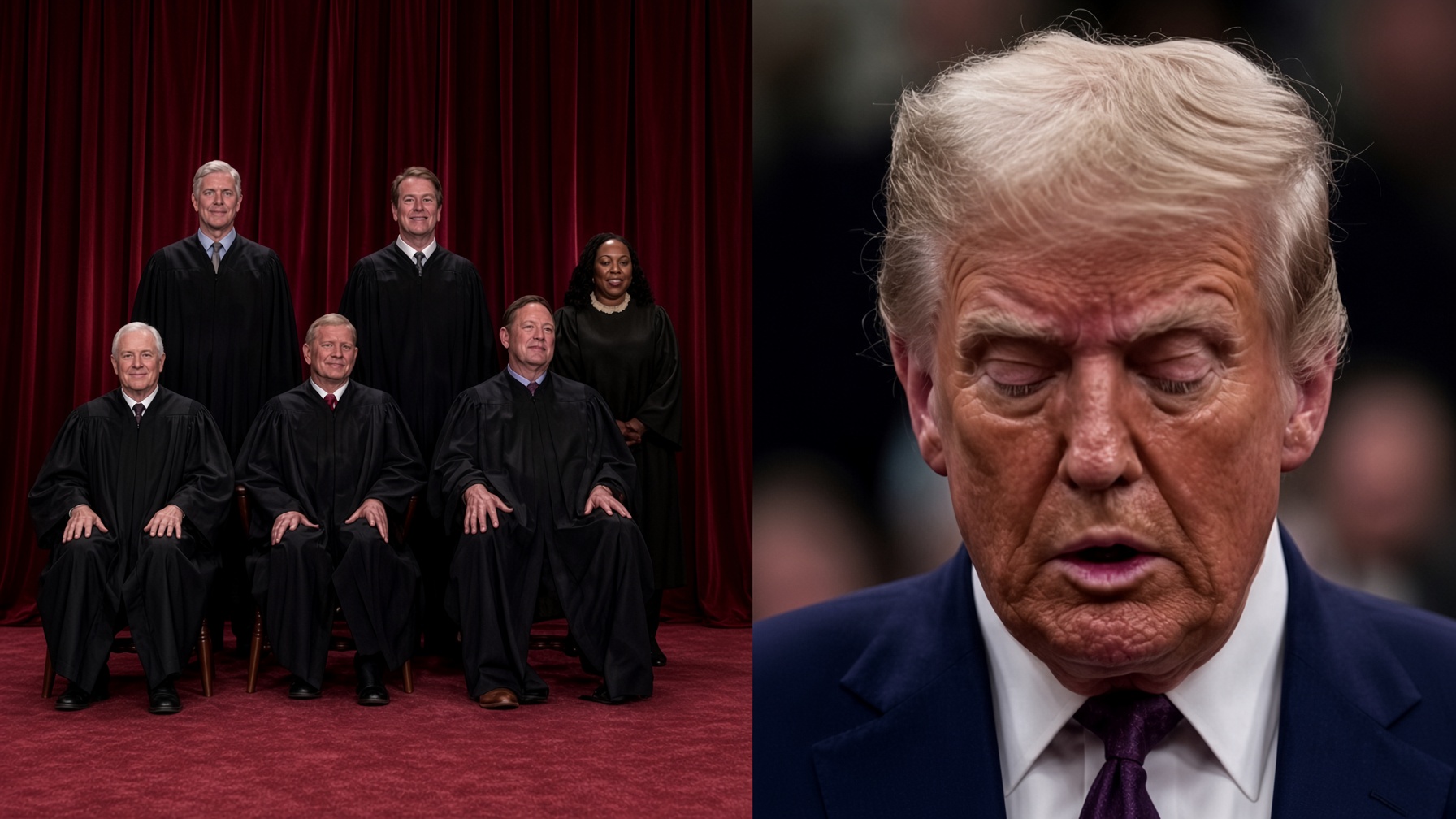
Writing for the conservative majority, Justice Amy Coney Barrett—joined by Chief Justice John Roberts and Justices Clarence Thomas, Samuel Alito, Neil Gorsuch, and Brett Kavanaugh—grounded the holding in strict structural separation-of-powers principles. The ruling formally reversed a contentious decision by the U.S. Court of Appeals for the Ninth Circuit and remanded the decades-long litigation for further proceedings strictly confined to the Supreme Court’s newly constricted statutory framework.
Surveillance Architecture and the Golden Shield
The protracted litigation originated from civil complaints filed by anonymous practitioners of Falun Gong, a spiritual discipline subjected to systematic state crackdowns, arbitrary detentions, and extrajudicial abuses by Chinese security authorities beginning in the late 1990s.
According to the plaintiffs’ filings, Silicon Valley technology giant Cisco Systems and several of its high-ranking executives designed, manufactured, and serviced customized technological components for China’s nationwide surveillance apparatus, known colloquially as the “Golden Shield” or the Great Firewall. The complaint alleged that Cisco engineers specifically tailored database software, behavioral tracking algorithms, and network routing mechanisms to assist Chinese state security services in identifying, isolating, and apprehending Falun Gong adherents, knowing that intercepted targets would face indefinite detention and severe physical abuse.
Seeking accountability in U.S. courts, the plaintiffs invoked the Alien Tort Statute—a brief, enigmatic provision within the Judiciary Act of 1789—alleging violations of universally recognized norms under the law of nations, while an individual plaintiff advanced parallel claims under the Torture Victim Protection Act.
Cisco mounted an aggressive defense, strenuously denying that it designed technology for oppressive purposes and asserting that general-purpose networking products sold globally cannot serve as the legal predicate for vicarious liability under centuries-old federal statutes. In accepting Cisco’s position, the Supreme Court established an unyielding statutory ceiling that effectively closes the door on similar claims across the nation.
‘Closing the Door That Sosa Cracked’
At the heart of the Court’s majority opinion was an exhaustive re-examination of the Alien Tort Statute, an 18th-century jurisdictional mechanism granting federal district courts original jurisdiction over civil actions by non-citizens for torts committed “in violation of the law of nations or a treaty of the United States.”
For decades following the Second Circuit’s groundbreaking 1980 ruling in Filártiga v. Peña-Irala, civil rights litigators routinely utilized the ATS to hold foreign torturers and multinational corporations accountable in domestic courtrooms. Even as subsequent decisions in Kiobel v. Royal Dutch Petroleum Co. (2013) and Nestlé USA, Inc. v. Doe (2021) narrowed the statute’s extraterritorial application, the Court’s 2004 precedent in Sosa v. Alvarez-Machain left open a narrow judicial window to recognize actionable customary international law claims.
Barrett dismantled that remaining opening with unsparing finality.
“Today, we close the door that Sosa cracked,” Barrett wrote for the majority, underscoring that the creation of substantive, private rights of action remains an exclusive legislative prerogative reserved for Congress under Article I of the Constitution.
The majority concluded that judicially invented tort claims impermissibly usurp legislative authority and inevitably entangle unelected judges in sensitive diplomatic negotiations, bilateral trade arrangements, and foreign policy disputes that the Constitution assigns exclusively to the President and Congress. Under the Court’s categorical ruling, federal judges are strictly barred from recognizing new actionable violations under the ATS without explicit, affirmative legislative text enacted by Capitol Hill.
Strict Textualism Defeats Secondary Liability
Turning to the Torture Victim Protection Act, which expressly authorizes federal civil actions against individuals who commit torture or extrajudicial killings under the authority of a foreign nation, the majority declined to read common-law aiding-and-abetting doctrines into the statute.
Barrett emphasized that the statutory text of the TVPA applies exclusively to primary perpetrators who directly subject victims to unlawful conduct. When Congress intends to attach civil secondary liability to third-party facilitators, Barrett observed, it does so expressly through explicit statutory formulations, as demonstrated in federal anti-terrorism and racketeering legislation.
“We decline to rewrite statutory boundaries under the guise of common-law interpretation,” the Court declared, holding that expanding civil exposure to equipment vendors, infrastructure contractors, or commercial suppliers exceeds the statutory mandate established in 1991.
A Fiery Dissent Over Impunity
The decision provoked a scathing dissent from the Court’s liberal wing. Justice Sonia Sotomayor, joined in relevant parts by Justices Elena Kagan and Ketanji Brown Jackson, accused the conservative majority of upending decades of settled precedent and dismantling the delicate compromise established in Sosa.
Sotomayor asserted that the ruling creates an accountability vacuum that shields corporate facilitators from civil scrutiny, leaving foreign victims of state-sponsored atrocities without meaningful avenues for legal redress. The dissent maintained that both the text and legislative history of the TVPA fully supported imposing secondary liability on commercial entities that knowingly provide material, specialized assistance to foreign police states.
Justice Jackson issued a separate opinion concurring in part and dissenting in part. While agreeing with the majority’s textual conclusion that the TVPA does not encompass aiding-and-abetting liability, Jackson joined Sotomayor’s vigorous defense of the judiciary’s traditional authority to recognize international-law torts under the ATS.
A Shield for Multinational Commerce
The ruling fundamentally alters the legal landscape for American corporations operating abroad. Global technology providers, defense suppliers, infrastructure contractors, and energy conglomerates face vastly diminished exposure to costly, multi-year human rights litigation in American federal courts based on theories of indirect complicity.
Corporate legal organizations celebrated the ruling as a long-overdue restoration of judicial restraint that protects international commercial competitiveness from unpredictable civil liability. Conversely, international human rights organizations and legal scholars warned that the judgment insulates domestic companies from the human costs of their foreign commercial dealings.
As the Ninth Circuit prepares to dispose of the remaining claims, the Supreme Court has etched an unmistakable constitutional boundary: the authority to police global conduct and create liability for cross-border commercial facilitation rests entirely with the halls of Congress, not the benches of federal courts.