The Supreme Court struck down President Trump’s executive order denying birthright citizenship to children of undocumented immigrants and temporary visitors on Tuesday, marking the second major defeat for the administration’s immigration agenda in five months.
The order had faced legal challenges since Trump signed it on his first day in office, with courts freezing its implementation while the case proceeded through the judicial system. The central legal dispute centered on whether the executive action violated the 14th Amendment, which guarantees citizenship to all persons born in the United States.

What the Court Decided
The Supreme Court ruled 5-4 that children born in the United States to parents without legal immigration status or on temporary visas are protected by the 14th Amendment’s equal protection clause. “All persons born or naturalized in the United States, and subject to the jurisdiction thereof, are citizens of the United States and of the State wherein they reside,” the amendment states.

Chief Justice John Roberts wrote for the majority, which included conservative Justice Amy Coney Barrett and liberal Justices Ketanji Brown Jackson, Elena Kagan, and Sonia Sotomayor. “Citizenship, then and now, was the right to have rights-to freely participate in our political community,” Roberts wrote.

Justice Brett Kavanaugh agreed the order violated federal law from the 1940s and 1950s, though he did not find a constitutional violation. This distinction prompted Trump allies to explore congressional action rather than a constitutional amendment as a potential path forward.

The Dissents
Conservative Justices Samuel Alito, Neil Gorsuch, and Clarence Thomas dissented, with Alito delivering a forceful critique. “This is one of the most important decisions in the history of the Court, and in my judgment, the Court has made a serious mistake,” Alito wrote.

Alito argued that the 14th Amendment “confers citizenship on only those children who, at birth, owe allegiance solely to this country.” He contended that the court’s interpretation “saddles this country with an ancient British rule that even the United Kingdom has abandoned.”

Thomas similarly criticized the decision, writing that “the Court has repurposed the Fourteenth Amendment to protect its own set of preferred rights that the Reconstruction Congress never contemplated.”

The White House Response
Trump wrote on Truth Social that the court’s decision was unfortunate but that Congress could fix the issue through legislation. “The Supreme Court upheld Birthright Citizenship, which is too bad for our Country, but we can easily make it up in Congress through Legislation,” he posted.

Republican lawmakers began discussing legislative approaches following the decision. “I’m filing legislation to walk through” the potential congressional opening, Sen. Eric Schmitt (R-Mo.) wrote on social media platform X.

Legal experts cautioned that congressional action faces significant hurdles, as most constitutional scholars argue that changing birthright citizenship would require a constitutional amendment rather than statute.

The Stakes
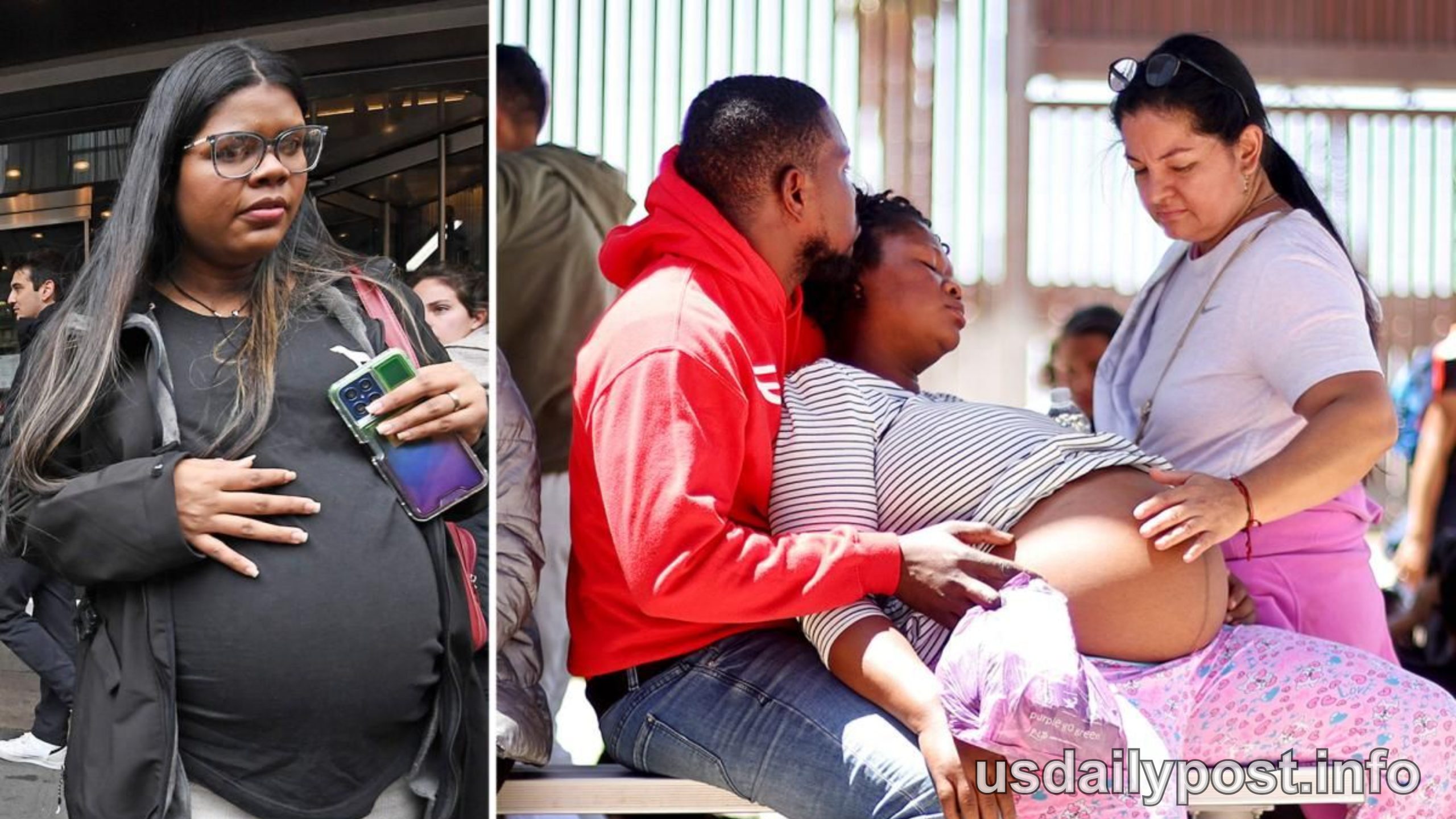
The Migration Policy Institute and Pennsylvania State University’s Population Research Institute estimated that more than 250,000 babies born annually in the United States would have been affected by the executive order. Trump attended Supreme Court oral arguments in April, becoming the first sitting president to do so, underscoring the political importance of the case.

The decision stems from a challenge filed by three individuals identified as Barbara, Susan, and Mark, whose children were affected by the order. Barbara is a Honduran asylum applicant, Susan is a Taiwanese citizen on a student visa, and Mark is a Brazilian seeking permanent residency status.

Historical Context
The court’s decision relied heavily on the 1898 case US v. Wong Kim Ark, which established that nearly all children born in the United States automatically acquire citizenship. The Wong case involved a man born to Chinese immigrants who were legally present but barred from citizenship under the Chinese Exclusion Act of 1882.

Roberts traced the citizenship principle through English common law, the founding era, and the debates surrounding the 14th Amendment’s ratification. “Yet at no point did the Court identify any evidence in the historical record that the ratifiers of the Fourteenth Amendment thought themselves to be imposing a domicile limitation,” he wrote.

The order represented a cornerstone of Trump’s immigration crackdown agenda, which the administration argued would deter birth tourism and illegal border crossings. In February, the Supreme Court similarly blocked Trump’s attempt to use emergency economic powers to impose unilateral tariffs.

This story has been updated. CNN’s legal and politics teams contributed to this report.