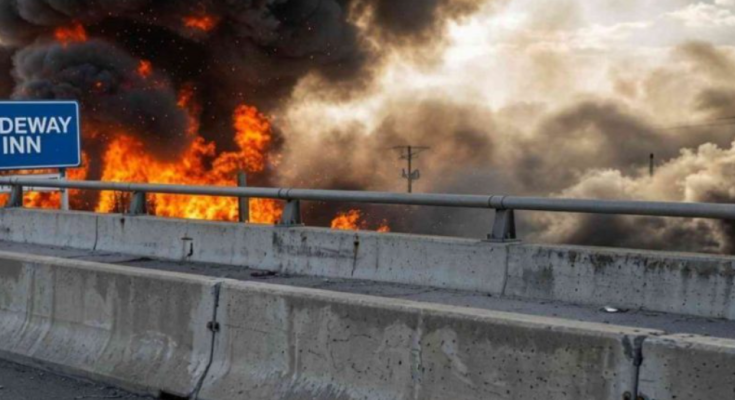
As millions of people across Asia began a new day, a powerful earthquake struck the China–Myanmar border region, unleashing violent shaking that sent shockwaves through towns and cities and leaving communities scrambling for safety. The sudden seismic event served as a stark reminder of nature’s immense and unpredictable power, transforming quiet morning routines into moments of fear and uncertainty within seconds.
Residents described the terrifying experience as buildings swayed violently, windows shattered, and the ground seemed to roll beneath their feet. Families rushed from homes, apartment buildings, schools, and businesses, many with little more than the clothes they were wearing, desperate to reach open areas away from structures that threatened to collapse.
According to seismic monitoring agencies, the earthquake originated near the China–Myanmar border and was strong enough to be felt hundreds of kilometers from the epicenter. Tremors were reported across southern China, northern Myanmar, and neighboring Thailand, where residents in several cities evacuated high-rise buildings, hotels, offices, and shopping centers as alarms sounded and emergency procedures were activated.
In the communities closest to the epicenter, the destruction was particularly severe. Roads cracked under the force of the quake, buildings suffered extensive structural damage, and piles of concrete, glass, and twisted metal filled once-busy streets. Rescue crews were immediately deployed to search damaged buildings for anyone who might have been trapped beneath the debris.
Emergency responders, firefighters, medical personnel, and volunteer rescue teams worked tirelessly throughout the day, racing against time to reach affected communities. Specialized search-and-rescue units equipped with heavy machinery, drones, thermal imaging equipment, and rescue dogs were dispatched to the hardest-hit areas as officials assessed the scale of the disaster.
Authorities also warned residents to remain alert for aftershocks, which commonly follow major earthquakes and can cause additional damage to already weakened buildings and infrastructure. Emergency officials urged the public to avoid damaged structures until engineers could complete safety inspections and determine whether they were safe to enter.
Beyond the immediate destruction, concerns have grown over secondary hazards, including landslides in mountainous regions, damaged bridges and highways, disrupted communications, and interruptions to electricity and water services. Transportation networks in several affected areas experienced delays as officials inspected critical infrastructure for signs of damage.
Hospitals across the region prepared for an influx of injured patients, while emergency shelters were established for families displaced by the disaster. Local governments coordinated with national disaster agencies to deliver food, drinking water, medical supplies, blankets, and temporary housing to communities most severely affected.
Scientists explain that the region lies within an area of significant tectonic activity where major geological faults make earthquakes a recurring natural hazard. While modern monitoring systems can quickly detect seismic activity, earthquakes still strike with little or no warning, leaving residents only moments to react.
As daylight revealed the full extent of the devastation, rescue and recovery operations continued across the affected region. Authorities are working to determine the total number of casualties, injuries, and damaged structures, while emergency crews remain focused on locating survivors and assisting those whose lives have been disrupted.
The earthquake has once again highlighted the devastating impact that natural disasters can have on vulnerable communities. As recovery efforts continue, governments, humanitarian organizations, and international partners are mobilizing support for those affected, while millions across the region hope for the safety of loved ones and the beginning of a long road to recovery.