In one of the largest and most chaotic border breaches in recent European history, approximately 60,000 migrants poured into the tiny Spanish North African enclave of Ceuta from neighboring Morocco over 24 hours ending Friday, leaving at least 34 dead and the city of roughly 85,000 residents on the brink of collapse.
Ceuta President Juan Jesús Vivas described the situation as “absolutely unsustainable,” noting the influx equals about 70 percent of the enclave’s regular population.
Spanish Interior Ministry estimates put the number of illegal crossings since Thursday morning at around 50,000, with roughly half already turning back voluntarily or under pressure by Friday afternoon.
Many of the dead drowned attempting to swim around the breakwater at Tarajal beach or perished in a deadly stampede at the fence.
Bodies and debris—buoys, shoes, and personal belongings—littered the waters.
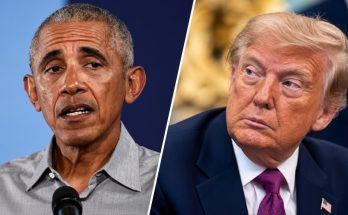
President Trump reacted on Friday morning to the massive migrant surge overwhelming Ceuta, Spain, warning it could happen in America.
“It’s terrible. Remember that picture. That’s going to be us in three years if the wrong side gets in,” Trump told Fox News host Jacqui Heinrich, referring to Democrats winning elections.
Spain is deploying its military after tens of thousands of migrants overwhelmed the North African enclave of Ceuta, with officials confirming at least 18 people died during the crossings.
Trump added, “If the Democrats get in, you will not live a very good life.”
The crisis erupted Thursday as thousands of mostly young Moroccan men, along with families and unaccompanied children, overwhelmed Moroccan and Spanish border forces by land and sea.
Video footage captured crowds scaling barriers, swimming with makeshift floats, and streaming onto local roads while some shouted “Viva España!”
Burned-out vehicles and clashes marked the Moroccan side near Fnideq, where security forces later deployed water cannons, tear gas, and batons to push back further attempts.
Spain’s Civil Guard workers’ association leader Rachid Sbihi called it a “serious humanitarian crisis,” with thousands left sleeping in parks and on sidewalks amid total chaos.
Reinforcements, including Spanish military troops, arrived primarily for humanitarian and injured support rather than full border control initially.
Spanish Prime Minister Pedro Sánchez arrived in Ceuta on Friday, condemning the events as “a violation of Spain’s territorial integrity” and an attack on national sovereignty.
He blamed human trafficking networks for deceiving young people and leading them to their deaths, while praising “constant, fluid” cooperation with Morocco—unlike the 2021 crisis when about 10,000 entered.
Sánchez pledged to use all state resources, deploying hundreds more Civil Guard and National Police officers, and to accelerate expulsions of those who entered illegally, despite a recent Spanish Supreme Court ruling restricting summary returns for those intercepted at sea. Morocco has been actively intervening to halt further crossings and facilitate returns.
Italian Prime Minister Giorgia Meloni denounced the “shocking” images, stating that “uncontrolled illegal immigration poses a real threat to the security of Europe’s borders.”
She declared Italy prepared to take “extraordinary measures” to defend its borders and citizens’ safety, including the possible suspension of the Schengen free-travel zone with Spain.
Italian Foreign Minister Antonio Tajani went further, linking the surge to Spain’s recent decision to regularize hundreds of thousands of undocumented migrants, calling that policy “profoundly wrong” and an incentive for trafficking.
Spain’s foreign minister summoned the Italian ambassador in protest.
European Commission President Ursula von der Leyen labeled the scenes in Ceuta “unacceptable,” demanding that dangerous crossings stop immediately, smuggling networks be dismantled, and returns proceed swiftly under EU rules.
She activated commissioners for operational support, including potential Frontex assistance.
France’s Interior Minister Laurent Nuñez ordered immediate stepped-up controls at the Spanish border, citing risks that migrants could move freely through the Schengen area.
French officials indicated readiness to support Spain with Frontex if requested.
Conservative voices across Europe seized on the disaster as proof of failed open-border approaches.
Spain’s opposition People’s Party demanded the government regain “effective control of the border” and return illegal entrants promptly.