Hillary Clinton Fires Back at JD Vance With Six-Word Response That Quickly Goes Viral
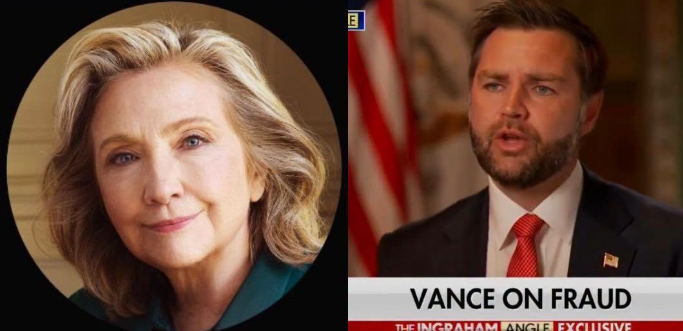
Hillary Clinton drew widespread attention after responding to a clip of Vice President JD Vance with a sharply worded six-word remark that immediately became the center of online political discussion.
The exchange began after a video circulated showing Vance speaking about accountability and government spending. In the clip, Vance argued that individuals who commit fraud against the American people and personally benefit from taxpayer money should face serious consequences, including potential imprisonment.
Clinton responded with a brief line that appeared designed to turn Vance’s own argument back on him: “Local man suggests jailing own boss.”
The former secretary of state and Democratic presidential nominee offered little additional commentary. Instead, the concise response relied on irony, inviting readers to draw their own conclusions about the relationship between Vance’s warning about self-enrichment and the controversies that have surrounded President Donald Trump and his business and political activities.
The post quickly attracted attention across social media, where supporters of Clinton praised the response for its brevity and humor, while Trump and Vance supporters criticized it as another example of partisan political messaging. The exchange became part of a broader online debate over political accountability, government ethics, and the standards public officials should be expected to meet.
What made the response particularly effective for Clinton’s supporters was its simplicity. Rather than publishing a lengthy statement or attempting to rebut every point made in Vance’s remarks, she reduced her reaction to a single sentence. The line was crafted as political satire, using Vance’s own language about punishment and accountability as the foundation for the joke.
The episode also reflects the increasingly influential role social media plays in modern political communication. A political figure no longer needs a lengthy speech or televised interview to dominate a news cycle. A single sentence, particularly one designed to be memorable and easily shared, can generate enormous engagement within minutes.
Clinton has increasingly used social media to comment on major political developments, often responding to statements from Republican officials with brief observations, criticism, or sarcasm. Her latest post follows that broader pattern, allowing her to engage directly with political opponents without delivering an extended political argument.
The response also highlights the intensely partisan environment surrounding discussions of government ethics. Democrats and Republicans frequently accuse one another of applying different standards to political allies and opponents, while debates over conflicts of interest, taxpayer money, and personal financial gain have become recurring features of national politics.
Whether Clinton’s remark will have any lasting political impact remains uncertain, but its immediate resonance was clear. The post transformed a longer discussion about fraud and accountability into a six-word punchline that quickly became part of the day’s political conversation.
In an era when political messages compete for attention against an endless stream of breaking news and social media content, Clinton’s response demonstrated the power of brevity. Instead of explaining the joke, she simply delivered it—and left the internet to debate what it meant.