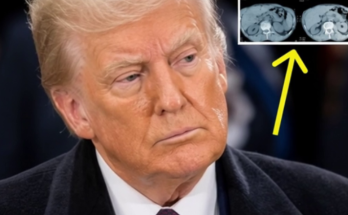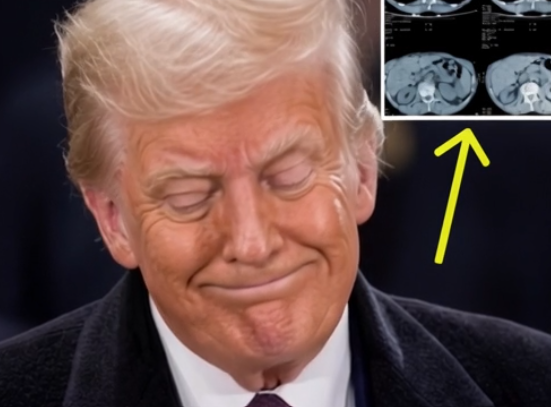
WASHINGTON, D.C. — Questions surrounding President Donald Trump’s recent medical evaluation have continued to attract public attention after the president was asked aboard Air Force One why an MRI had been included in what officials described as an expanded routine physical.
Trump responded by emphasizing the positive results of his evaluation, describing them as “outstanding” and “excellent.” However, he did not provide detailed information about what area of the body was examined through the imaging or explain why the MRI was considered necessary.
The exchange has prompted renewed interest in the scope of the president’s medical assessment and whether additional information will eventually be released.
The White House has maintained that there is no reason for concern. Administration officials have characterized the examination as part of a broader wellness evaluation conducted ahead of an unusually demanding schedule involving domestic travel, international engagements and the responsibilities of the presidency.
Officials have also continued to emphasize that Trump remains capable of performing his presidential duties and have rejected speculation that the medical visit was prompted by an undisclosed health problem.
Despite those assurances, the absence of a detailed medical report has left some questions unanswered.
Presidential medical examinations have historically attracted considerable public attention because voters and the public have a strong interest in the health and fitness of the person occupying the Oval Office. In previous administrations, physicians have sometimes released detailed summaries describing examinations, laboratory results and other aspects of a president’s health.
In this instance, however, a comprehensive public report explaining the specific tests performed and the reasons for the additional imaging has not been made available.
That gap has created room for speculation.
Television programs, political commentators and social-media users have debated why an MRI was performed and what information it may have been intended to provide. Some have accepted the administration’s explanation that the examination was precautionary, while others have called for greater transparency.
Medical experts and commentators have also cautioned against interpreting an MRI as evidence of a particular illness without supporting medical documentation. Imaging tests can be ordered for a wide range of reasons, including routine evaluation, follow-up examinations or precautionary assessments, and the procedure itself does not establish a diagnosis.
So far, no publicly released medical evidence has indicated that Trump was diagnosed with a serious condition as a result of the evaluation. The White House has not announced an ongoing medical concern related to the examination.
The controversy therefore centers less on a confirmed diagnosis than on the amount of information being made public.
The issue has become especially relevant as the political calendar intensifies. Presidential age, health and fitness have repeatedly become subjects of public debate, particularly during periods when voters are evaluating national leadership.
For the administration, providing additional medical information could potentially answer some of the questions surrounding the examination. At the same time, officials have maintained that the president’s reported results are reassuring and that there is no medical issue preventing him from carrying out his duties.
For now, the details surrounding the MRI remain limited.
Until additional medical documentation is released, much of the discussion will continue to involve questions rather than confirmed findings. The president has described his evaluation in highly positive terms, while the public remains focused on understanding why the imaging was performed and whether a fuller medical assessment will eventually be made available.
The coming weeks may determine whether the controversy fades with further clarification—or remains part of the broader political conversation surrounding presidential health and transparency.