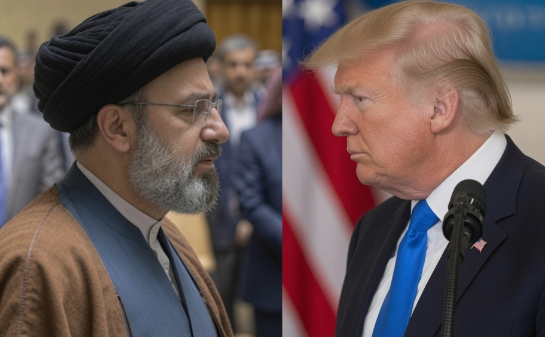
The Trump administration is working to finalize a framework for a potential agreement with Iran as diplomatic negotiations continue in Qatar, even as military tensions remain elevated across the region.
Senior U.S. officials say negotiators are attempting to resolve the remaining language of a preliminary agreement that could establish new restrictions on Iran’s nuclear activities while addressing the disruption of the Strait of Hormuz, one of the world’s most important energy corridors.
Secretary of State Marco Rubio, speaking during a visit to India, emphasized the administration’s determination to reopen the waterway. Rubio described the continued disruption as unlawful, unsustainable and unacceptable, arguing that the strategic passage must be restored.
U.S. and Iranian representatives have been communicating through negotiations in Qatar, with both sides reportedly identifying areas where an agreement may be possible. Rubio said President Donald Trump’s position remains that Washington wants “a good deal or no deal,” while acknowledging that finalizing the details could take additional time.
The diplomatic efforts have unfolded alongside renewed military activity.
U.S. Central Command announced what it described as “self-defense strikes” in southern Iran. According to U.S. military officials, the operation targeted missile facilities and Iranian vessels allegedly involved in efforts to place naval mines near critical maritime routes.
American officials said the strikes were intended to protect U.S. personnel and military assets while supporting the broader cease-fire framework. A senior defense official also said U.S. aircraft and naval forces operating around the Gulf of Oman and Arabian Sea had faced threats from Iranian surface-to-air missile systems.
The reported strikes occurred near Bandar Abbas, a major Iranian naval center, underscoring the risks surrounding the ongoing negotiations.
Despite the military developments, diplomatic contacts continued.
Iranian Foreign Ministry spokesperson Esmaeil Baqaei said Tehran and Washington had reached areas of understanding on several issues but stressed that a final agreement had not been completed. He also accused the United States of changing its positions during negotiations, highlighting the uncertainty surrounding the talks.
Trump has said any eventual agreement must be “good and proper” while continuing to criticize the 2015 nuclear agreement negotiated during the Obama administration. The president has argued that the earlier deal provided Iran with significant economic relief without permanently preventing Tehran from developing the capacity to produce nuclear weapons.
Under the framework reportedly being discussed, Iran would be required to eliminate its stockpile of highly enriched uranium and accept significant restrictions on future uranium enrichment. The proposal would also address the Strait of Hormuz and include mechanisms intended to ensure compliance.
In exchange, the United States would reportedly end its naval blockade and begin reducing economic sanctions in phases.
However, substantial issues remain unresolved. Negotiators still have to determine technical requirements, verification procedures and enforcement mechanisms. For Washington, ensuring that any restrictions on Iran’s nuclear program can be independently verified is expected to remain a central condition of the agreement.
The Trump administration also views recent military pressure as an important factor in encouraging Tehran to negotiate. Officials argue that a stronger negotiating position could produce an agreement with tougher restrictions and enforcement provisions than those contained in the 2015 accord.
For now, diplomacy and military pressure are unfolding simultaneously. Whether the two sides can translate preliminary understandings into a durable agreement will depend on resolving the remaining technical issues and building enough trust to sustain the commitments.
A successful deal could ease tensions, reopen a critical global shipping route and reshape the broader security landscape in the Middle East. But until the framework is finalized and formally accepted, the outcome of the negotiations remains uncertain.