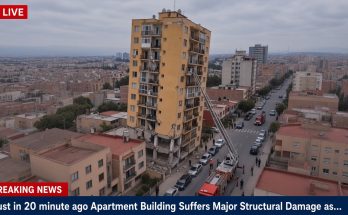
A major emergency unfolded in a densely populated urban neighborhood after a multi-story apartment building sustained extensive structural damage, prompting firefighters and other emergency personnel to rush to the scene.
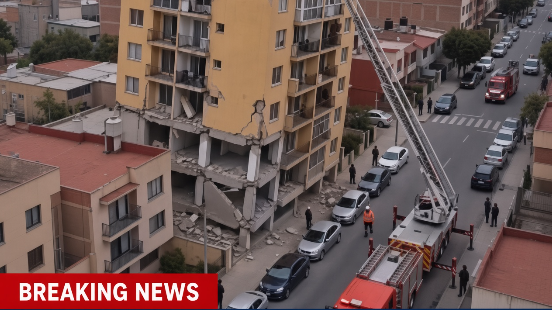
Images from the incident show a yellow residential building with significant damage concentrated along its lower levels. Several floors appear severely compromised, with sections of concrete, walls and other structural materials collapsed or broken away. Large amounts of debris can be seen surrounding the base of the building, raising immediate concerns about the stability of the remaining structure.
Fire crews arrived with multiple emergency vehicles and deployed a large aerial ladder alongside the building. The equipment was positioned toward the upper floors as responders assessed the situation and prepared for possible rescue or evacuation operations.
People could be seen standing along the surrounding streets as emergency personnel worked to secure the area. Several vehicles remained parked along the roadway, while firefighters and other responders moved around the damaged structure. The presence of emergency crews and the extent of the visible destruction suggest authorities were treating the incident as a serious structural emergency.
The available images do not establish the exact cause of the damage, and officials have not been identified as confirming whether the incident was caused by an explosion, fire, structural failure, natural disaster or another event. Determining the cause would require a formal investigation and an assessment of the building itself.
The immediate priority for emergency responders would be protecting residents and first responders from further danger. Buildings that suffer major structural damage can remain unstable even after the initial incident, with weakened floors, columns and walls potentially creating additional hazards.
Authorities would also need to determine whether surrounding buildings were affected and whether residents should be evacuated from nearby properties. Structural engineers may be required to inspect the damaged building before anyone is permitted to return.
The number of people who may have been inside the building at the time of the incident, as well as any injuries or fatalities, cannot be established from the available image alone. Emergency teams would typically conduct searches of accessible areas while medical personnel remain prepared to treat anyone who is rescued.
The deployment of an aerial ladder highlights another critical aspect of the response. Such equipment allows firefighters to reach upper floors and windows when conventional access routes may be blocked or considered unsafe. It can be particularly important when stairways, entrances or lower portions of a building have been damaged.
The incident has drawn attention because of the scale of the visible destruction and the building’s location in a busy residential area. For residents and families potentially connected to the property, however, the most important questions remain whether everyone has been accounted for and whether the surrounding area is safe.
Until authorities provide verified information, speculation about the cause or casualty figures should be avoided.
The dramatic images capture only one moment of the emergency response. A complete understanding of what happened will depend on official assessments, rescue operations and a subsequent investigation into the building’s condition.
For now, emergency crews remain focused on securing the scene, assessing structural risks and determining whether anyone requires assistance. The priority is clear: protect lives first, establish the facts and ensure that no additional danger comes from an already weakened structure.