WASHINGTON — In a major victory for the American business community, the U.S. Supreme Court on Tuesday sharply curtailed the ability of foreign plaintiffs to haul domestic multinational corporations into federal court over human-rights violations committed by sovereign regimes overseas.
The high court’s 6–3 decision in Cisco Systems, Inc. v. Doe (No. 24-856) definitively holds that the Alien Tort Statute (ATS) does not authorize the federal judiciary to fashion common-law causes of action derived from customary international law. Delivering a parallel blow to international civil litigation, the court held that the Torture Victim Protection Act of 1991 (TVPA) does not encompass secondary liability for aiding and abetting, shielding commercial contractors and technology vendors from civil tort claims tied to atrocities carried out by foreign security forces.
The ruling dramatically constricts the reach of transnational human-rights litigation in the United States, cementing a long-running institutional effort to prevent federal dockets from serving as global arbiters of sovereign misconduct abroad.
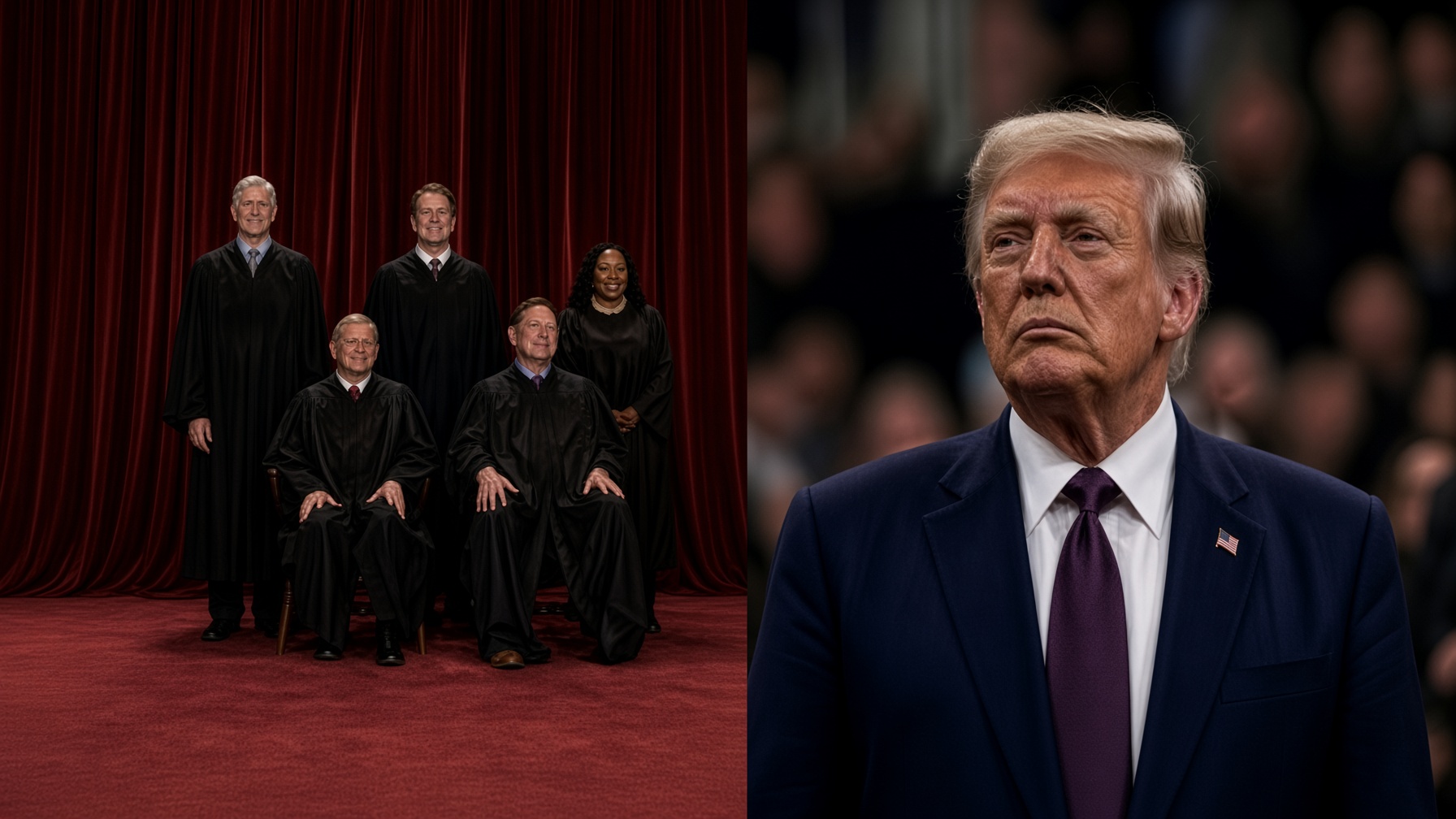
Writing for the six-justice conservative majority, Justice Amy Coney Barrett was joined by Chief Justice John Roberts and Justices Clarence Thomas, Samuel Alito, Neil Gorsuch, and Brett Kavanaugh. The bench’s three liberal members dissented, warning that the opinion effectively insulates commercial enablers of torture from financial and legal accountability.
Decades-Long Dispute Over Surveillance Tech
The dispute dates to a lawsuit initiated by anonymous adherents of Falun Gong, a spiritual discipline subjected to aggressive state-sanctioned suppression, administrative internment, and torture in China since 1999.
The plaintiffs contended that California-based Cisco Systems and several senior corporate officers knowingly customized, integrated, and serviced the infrastructure of China’s “Golden Shield” public surveillance system. The civil complaint alleged that Cisco engineers specifically adapted database modules and pattern-matching algorithms to allow Chinese state security operatives to identify, locate, and arbitrarily detain Falun Gong practitioners for forced labor and physical abuse.
Cisco consistently refuted the claims, maintaining that it furnished standard, commercially neutral networking hardware widely distributed across international markets. Company counsel emphasized that private commercial vendors cannot be held legally liable for how a sovereign government ultimately deploys civilian information-technology systems.
A federal district court in California originally dismissed the action. However, the U.S. Court of Appeals for the Ninth Circuit subsequently reinstated the claims, ruling that the ATS and TVPA permitted secondary civil lawsuits against commercial suppliers that knowingly facilitate jus cogens violations of international law. The Supreme Court’s ruling firmly reverses that appellate determination, formally extinguishing the litigation.
Separation of Powers and Textual Boundaries
Delivering the majority opinion, Barrett framed the central legal question as an issue of constitutional separation of powers, affirming that creating private causes of action for monetary damages belongs exclusively to Congress rather than appointed judges.
Addressing the Alien Tort Statute—a provision of the First Judiciary Act of 1789 granting federal courts jurisdiction over torts committed in violation of the law of nations—Barrett reaffirmed that the measure functions as a purely jurisdictional gateway. The majority rejected the plaintiffs’ assertion that judges retain broad common-law power to fashion private causes of action against American firms based on evolving international consensus.
Turning to the Torture Victim Protection Act, Barrett underscored that the statutory text restricts liability to an “individual” who directly subjects a person to torture or extrajudicial killing under color of foreign law. The majority held that courts lack statutory authorization to graft common-law secondary liability onto the statute:
-
Absence of Express Statutory Authorization: The court noted that when Congress intends to enact civil aiding-and-abetting liability, it does so through unambiguous statutory language, pointing to the federal Antiterrorism Act as a primary model.
-
Separation of Foreign-Policy Prerogatives: The majority cautioned that permitting private tort suits against companies dealing with foreign sovereigns inherently infringes upon the exclusive constitutional domain of the executive branch to manage diplomatic affairs and foreign commerce.
Dissents Cite Corporate Impunity Risks
The court’s liberal minority mounted a vigorous defense of secondary liability, arguing that the majority’s strict textual construction disregards basic tort principles and congressional intent.
In a dissent joined by Justice Elena Kagan, Justice Sonia Sotomayor wrote that the TVPA was enacted to give domestic effect to the United Nations Convention Against Torture, an international framework that recognizes aiding-and-abetting liability as fundamental to remediating state abuse. Sotomayor argued that commercial entities that deliberately furnish specialized tools to enable state torture should not escape liability simply because their employees were not in the room applying physical coercion.
Justice Ketanji Brown Jackson authored a separate opinion concurring in part and dissenting in part, also joined by Kagan, arguing that Congress envisioned the TVPA as a functional deterrent and that eliminating secondary liability sharply dilutes the statute’s capacity to deliver justice to overseas victims.
An Era of Transnational Tort Contraction
The decision in Cisco represents the culmination of a two-decade trend by the Supreme Court to narrow extraterritorial human-rights lawsuits. Beginning with Sosa v. Alvarez-Machain (2004), and followed by Kiobel v. Royal Dutch Petroleum Co. (2013) and Nestlé USA, Inc. v. Doe (2021), the court has systematically constrained the Alien Tort Statute as an avenue for corporate oversight.
For multinational technology vendors, defense subcontractors, and industrial suppliers, the ruling delivers long-sought legal insulation from costly tort suits arising from operations in authoritarian jurisdictions.
For human-rights organizations and victims of overseas repression, however, the verdict virtually closes the American judicial system to foreign abuses, signaling that any future corporate accountability mechanisms must come directly through explicit legislative action on Capitol Hill.