WASHINGTON — The federal prosecution of Donald Trump over his efforts to overturn the 2020 election concluded without a jury verdict, yet the litigation permanently reshaped the constitutional landscape, establishing historic precedents regarding executive power, presidential immunity, and the legal boundaries governing the transfer of authority.
The landmark case, initiated by Department of Justice Special Counsel Jack Smith in August 2023, marked the first time in American history that a former chief executive was criminally indicted on federal charges for actions taken while in the White House. A federal grand jury in the District of Columbia returned a four-count indictment charging Trump with conspiracy to defraud the United States, conspiracy to obstruct an official proceeding, obstruction of and attempting to obstruct an official proceeding, and conspiracy against rights under Reconstruction-era civil rights statutes.
Prosecutors alleged that Trump engaged in a multi-layered criminal enterprise to subvert the constitutional process for certifying Electoral College results, pressuring state election administrators, orchestrating fraudulent slates of presidential electors, attempting to weaponize the Justice Department, and urging Vice President Mike Pence to unilaterally discard certified electoral tallies during the joint session of Congress on Jan. 6, 2021.
The Historic Clash Over Presidential Immunity
Trump pleaded not guilty to all charges, maintaining that his statements and actions constituted protected political speech, lawful challenges to perceived election irregularities, and core executive oversight functions.
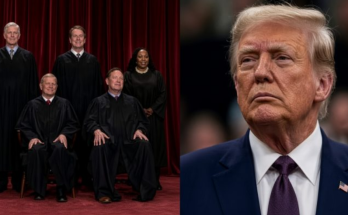
Rather than proceeding immediately to trial, Trump’s defense team mounted an aggressive interlocutory challenge asserting absolute presidential immunity from criminal prosecution for official acts performed in office. The dispute escalated rapidly to the U.S. Supreme Court, which issued a transformative 6–3 ruling in July 2024.
Writing for the conservative majority in Trump v. United States, Chief Justice John Roberts articulated a three-tiered framework of executive immunity:
-
Core Constitutional Authority: A former president enjoys absolute immunity from criminal prosecution for actions falling within exclusive constitutional spheres, such as the pardon power, commander-in-chief authorities, and discussions with the attorney general.
-
Presumptive Official Immunity: Actions within the outer perimeter of official duties carry a strong presumption of immunity, requiring prosecutors to prove that subjecting the conduct to criminal liability poses no danger of chilling executive branch functions.
-
Unofficial Conduct: A former president retains no immunity for purely private acts conducted as a candidate or private citizen.
The high court’s landmark ruling forced the government to reshape its prosecution. In August 2024, Smith secured a superseding indictment that retained the original four statutory charges while expising direct references to Trump’s communications with Justice Department officials and reframing his interactions with state administrators and party officials as private conduct undertaken in his capacity as a political candidate.
Re-Election and Department Dismissal
Before U.S. District Judge Tanya Chutkan could conduct extensive evidentiary hearings to differentiate official from unofficial acts, the judicial process was overtaken by the 2024 presidential election.
Following Trump’s electoral victory, the Justice Department moved to terminate the prosecution in November 2024. Smith’s office cited long-standing Office of Legal Counsel (OLC) memoranda dating to 1973 and 2000, which conclude that the federal indictment or criminal prosecution of a sitting president impermissibly violates the constitutional doctrine of separation of powers by incapacitating the head of the executive branch.
Judge Chutkan granted the government’s motion to dismiss the case without prejudice, formally extinguishing the criminal action before an impaneled jury could evaluate the evidentiary record.
Constitutional Precedents and an Unresolved Evidentiary Record
While the dismissal prevented a definitive determination on the merits, the legal battles produced durable structural changes across the federal judiciary.
The proceedings formally settled the existence of criminal presidential immunity, establishing significant statutory protections for future occupants of the Oval Office. Critics and legal scholars caution that the Supreme Court’s standard significantly narrows the scope of executive accountability, warning that the evidentiary limitations barring courts from probing a president’s internal motives could insulate future unlawful directives from judicial review.
Proponents of the high court’s decision argue that robust immunity safeguards were essential to protect the executive branch from retaliatory partisan prosecutions by successor administrations, preserving the presidency’s ability to act decisively during national emergencies.
Although the four criminal counts against Trump were dissolved without conviction or acquittal, the special counsel’s voluminous investigative filings remain entered into the historical and judicial record. The litigation stands as a defining constitutional inflection point, establishing the modern threshold for where sovereign executive privilege ends and federal criminal accountability begins.