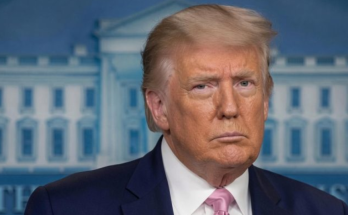
The Trump administration has expanded the federal law enforcement presence in Washington, D.C., citing public safety concerns and a broader effort to combat violent crime in the nation’s capital.
The initiative directs federal agencies to increase their operational involvement in the city, with officials emphasizing stronger enforcement, improved coordination and a more visible law enforcement presence. Administration officials argue that the expanded effort is intended to strengthen public safety and address concerns about criminal activity.
The move has generated a mixed response among Washington residents and community organizations.
Some residents have welcomed the increased presence, saying additional patrols and visible federal enforcement have made them feel safer in their neighborhoods. Supporters argue that a stronger federal response demonstrates a commitment to restoring order and providing residents with greater confidence in their communities.
For those who favor the initiative, the increased deployment represents an opportunity to coordinate resources across multiple federal agencies and address public-safety challenges more aggressively. They contend that cooperation between federal authorities and local law enforcement can provide additional capabilities when addressing serious or persistent crime.
Civil rights organizations and community advocates, however, have raised concerns about the expanded federal role.
Critics argue that increased enforcement could create anxiety in immigrant communities and raise questions about how federal operations are being conducted. They have called attention to the importance of transparency, oversight and accountability as federal agencies assume a more prominent role in local law enforcement.
Some residents have also expressed uncertainty about which agencies are responsible for specific operations and how federal activities are being coordinated with Washington’s local government.
Those questions have renewed a much broader debate over the unique political and legal status of Washington, D.C.
Unlike states, the District of Columbia operates under a distinct constitutional framework in which Congress maintains significant authority over the capital. At the same time, Washington has an elected local government responsible for many aspects of city administration.
That arrangement has historically produced disagreements over the balance between federal authority and local control, particularly when questions of public safety and law enforcement are involved.
The latest expansion has therefore become about more than crime statistics alone. It has raised questions about how much federal involvement is appropriate in the nation’s capital, how local officials should participate in decisions affecting residents and what safeguards should accompany expanded enforcement powers.
As federal operations continue, officials and community groups are expected to closely monitor their impact.
Supporters will likely focus on whether increased enforcement produces measurable improvements in public safety, while critics are expected to scrutinize arrests, interactions with residents, agency coordination and the effectiveness of oversight mechanisms.
The central challenge will be balancing competing priorities: maintaining public safety while protecting civil liberties, ensuring accountability and respecting the role of Washington’s local government.
For residents, the most important measure will ultimately be whether the expanded federal presence produces lasting improvements in safety without creating unnecessary fear or undermining public trust.
The debate is likely to continue as the administration evaluates the operation and Washington residents, officials and advocacy groups assess its consequences. Whatever the outcome, the expanded federal role has placed the complicated relationship between federal authority, local governance and civil liberties at the center of national attention once again.